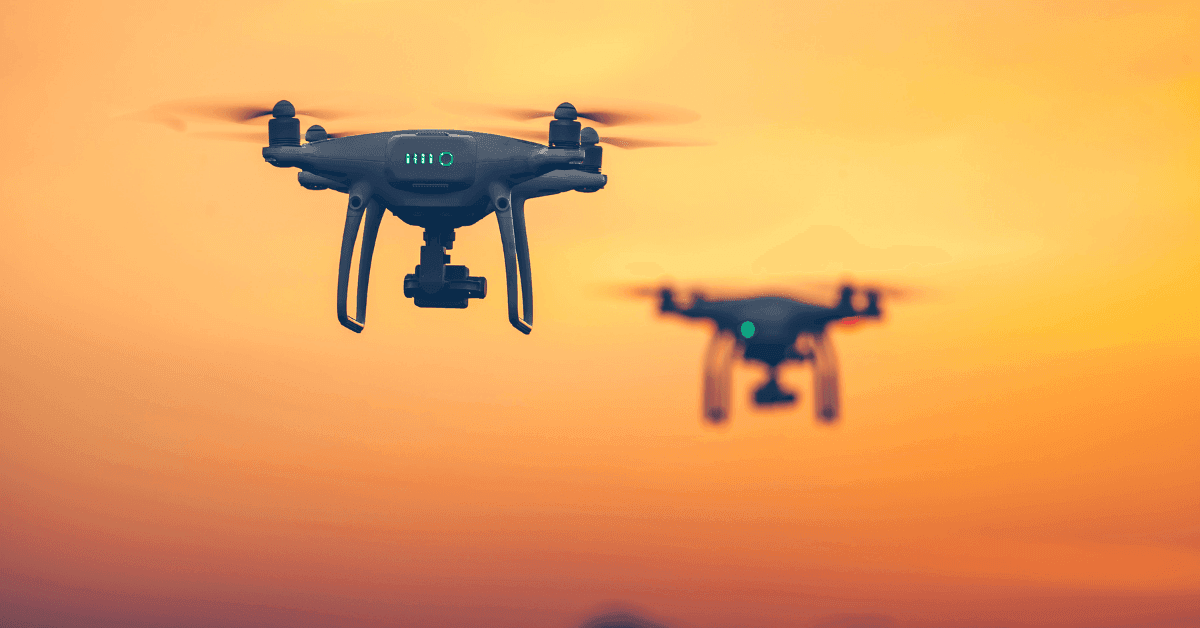
New legal clarifications show that Danish police are not allowed to shoot down harmless drones, even when they disrupt major infrastructure such as Copenhagen Airport. The Ministry of Justice confirms that strict rules on firearm use still apply—unless a drone presents an immediate threat.
Police Bound by Law Despite Drone Incidents
When drone alarms grounded all flights and closed Copenhagen Airport’s airspace for four hours on September 22, 2025, many Danes wondered why authorities did not simply shoot down the drones. As it turns out, Danish law prevents the police from doing so. According to legal experts and the Ministry of Justice, drones that are not directly dangerous cannot be taken down with firearms.
Even though police technically have the capability to take down drones, they must demonstrate an urgent threat to human life or key infrastructure. Without that, using weapons would be illegal. The findings underline how heavily regulated use of force remains in Denmark, even amid uncertainty surrounding airspace security.

Legal Boundaries and Government Policy
The debate over drone regulation reignited after the airport disruption. The Ministry of Justice confirmed that Danish police can only use guns to stop attacks or imminent danger. Current police law defines this as a proportional response standard, ensuring firearms are used only when absolutely necessary.
An academic from the University of Copenhagen specializing in national security explained that if a drone poses no immediate danger, officers must simply let it remain in the air until it leaves on its own. While that may seem counterintuitive, it reflects Denmark’s cautious approach to security enforcement.
On top of that, government agencies have been slow to publicly address these restrictions, giving the impression that technical capability equates to legal authority. In fact, Danish authorities face strict legal limits when responding to non-threatening drones.
Where the Law Allows Drone Neutralization
Until July 2025, even the armed forces were prohibited from shooting down unauthorized drones flying over military zones. A new amendment passed earlier this year changed that. The updated defense law grants the Danish Armed Forces permission to neutralize drones flying near military facilities and royal residences such as Amalienborg and Fredensborg.
However, this legislation does not extend to civilian areas. Over commercial hubs like Copenhagen Airport, police remain restricted. If a drone is shot down there without evidence of danger, the officer could technically face legal consequences for acting outside the law.

New Legislation Still Restrictive
A recent bill now under parliamentary review aims to expand the means of drone control. It would allow police to capture or disable drones using nets, electronic interference, or radio-jamming technology rather than firearms. Despite these new options, the proposal does not change the basic rule: no use of guns unless the drone presents immediate danger.
This narrow interpretation of authority is based on proportionality—a central principle in Danish law. Policymakers prefer strict limits on the use of force by both the military and law enforcement. As a result, even though the government recognizes the potential risk from unauthorized drones, it continues to prioritize legal restraint.
Public Safety and Operational Challenges
The issue is not just legal but operational. During the September airport incident, police and airport officials repeatedly stated that the reported drones were assumed to be peaceful. None of them aimed to harm people or destroy property. Nevertheless, flights were halted out of caution, illustrating how easily modern air travel can be disrupted.
These restrictions on armed response come at a time when Denmark has faced multiple hybrid security threats, including hacking and surveillance. The connection between airspace safety and broader cybersecurity vulnerabilities has prompted national discussions about emergency readiness. For reference, recent cyberattacks on Danish hospitals and city systems raised similar concerns about how effectively national defenses are coordinated.

Balancing Proportionality and Protection
Ultimately, the government’s stance illustrates Denmark’s commitment to measured law enforcement. The Ministry of Justice’s communication to media confirms that police policy on firearms remains unchanged. Even as new drone control tools become available, officers must adhere to proportional response rules.
For now, peaceful or hobby drones remain off-limits from being shot down. The current situation shows that while Denmark continues to modernize its security systems, the country still places its trust in the rule of law over rapid, aggressive reactions.
Sources and References
The Danish Dream: Denmark Under Siege: Cyberattacks Hit Hospitals, Cities
The Danish Dream: Security in Denmark for Foreigners
DR: Drone Alarm Closed Copenhagen Airport: Police Not Allowed to Shoot Down Peaceful Drones