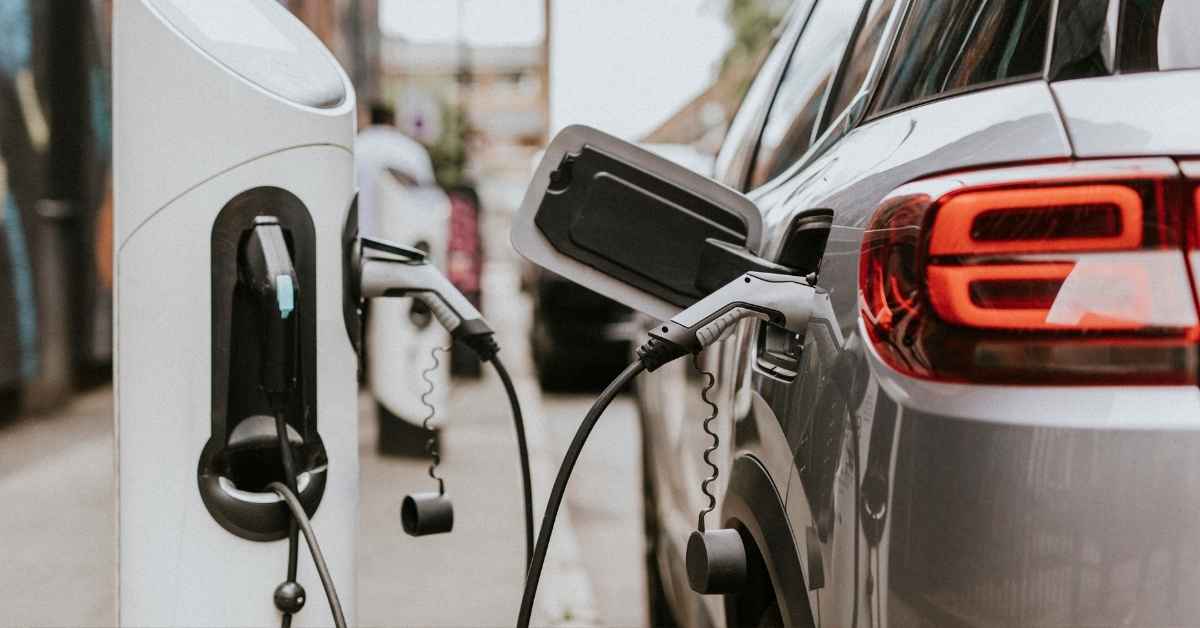
More Danish drivers are learning that their electric cars can keep the lights on when the grid goes dark. Experiments show that modern EVs can power an entire home for several days, and experts say it could change how households and communities handle outages.
When the power fails, some Danes keep everything running
Picture this: dinner in the oven, kids watching TV, machines running, and then the lights suddenly go out. In northern Denmark, this scenario recently became reality when blackouts hit several towns.
Yet, Per Hylle from Hjørring did not panic. As director of the local energy company Nord Energi, he had already teamed up with engineers to test whether his family’s Hyundai electric car could power their house during an outage.
It worked flawlessly. The car’s battery kept the lights, fridge, and freezer running for almost six days, still leaving around 20 percent of its charge. In a country with some of the world’s best energy reliability, this is still a welcome backup.
As Denmark continues expanding solar power and other renewable resources, residents are discovering that their cars can act as their own mini power plants.

The rise of “vehicle-to-home” technology
Known as Vehicle-to-Home (V2H) or Vehicle-to-Load (V2L), this technology lets electricity flow out of the car battery instead of just in. At the moment, only about 12 percent of Danish EVs have the feature, mainly found in models from Renault, Kia, Hyundai, and a few Chinese brands like BYD and XPENG.
Even so, experts see great potential. As one researcher from Roskilde University’s Center for Security Studies pointed out, if so many households have large batteries in their driveways, they might as well put them to use when needed.
Many Danes already use the simpler version, V2L, which allows a standard plug from the car to supply smaller appliances such as a kettle, lamp, or entertainment system during a power cut.
From private backup to neighborhood batteries
Senior scientists at the Technical University of Denmark (DTU) believe electric vehicles could play a much larger role than just home backup. An electric car battery can power a house for several days, yet still retain enough charge to drive a considerable distance.
In the future, multiple EVs could even be linked to support a full apartment building or neighborhood. The batteries could collectively provide energy stability during outages or high-demand periods.
Legal and market barriers currently slow this development, but technology is advancing fast. The Danish energy landscape already shows how dynamic small-scale solutions can reshape supply, much like how solar power in Denmark made daytime electricity uniquely cheap and efficient in recent years.
Government still cautious but monitoring progress
The Danish Emergency Management Agency, which issues household preparedness guidelines, still recommends people keep a regular powerbank at home rather than depend on a vehicle. The reason is simple: not every family owns an electric car, and during severe weather or a crisis, a vehicle may not always be accessible.
Officials note, however, that they are closely following the growing potential of EV energy storage. Once regulations catch up, cars could become an integral part of Denmark’s civilian preparedness.
Preparedness for long outages
Although long blackouts are extremely rare in Denmark, especially within its well-developed energy network, preparedness remains a priority. Households are told to be ready to manage three days without power or fresh supplies. For many, integrating electric vehicles into that plan brings peace of mind.
At his home in Hjørring, Per Hylle says this kind of backup is about reassurance rather than necessity. Denmark’s infrastructure is robust, but a practical energy buffer connects with a growing national focus on resilience and smart power use.
It reflects a broader trend toward local control of electricity. Instead of just consuming power, homeowners may soon play a part in stabilizing it — something Denmark’s energy system, built on renewables and innovation, is already well positioned to support.

Sources and References
The Danish Dream: Denmark: Solar Power Makes Daytime Electricity Cheapest
The Danish Dream: Energy & Electricity in Denmark for Foreigners
DR: Per Hylle Har En Gigantisk Powerbank I Garagen, Hvis Strømmen Svigter