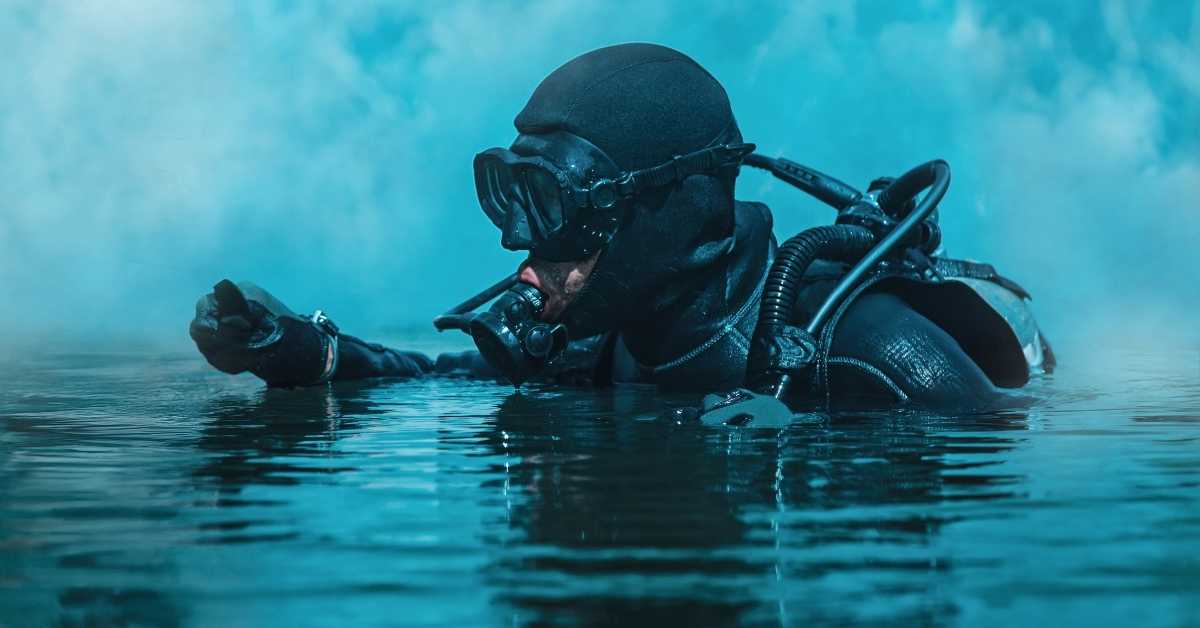
A Danish diver is set to lead a high-risk expedition to the shipwreck of the HMHS Britannic – Titanic’s sister ship – earning the nickname “Mount Everest of diving” due to its depth and complexity. The wreck, which sank in 1916, lies 120 meters beneath the Aegean Sea off the Greek island of Kea.
Historic Wreck with Titanic Ties
The HMHS Britannic was the third and final vessel in a trio of sister ships built for the White Star Line, alongside Olympic and Titanic. While originally intended as a luxury passenger ship, the Britannic was converted into a hospital ship during World War I. In November 1916, only a year after entering service, it struck a German naval mine and sank in less than an hour, claiming the lives of 30 individuals.
At 270 meters long, the Britannic is, larger than the Titanic, and rests on its side deep beneath the Aegean Sea, making it accessible to only the most experienced technical divers. Unlike Titanic, which lies in an advanced state of decay in the North Atlantic, Britannic has remained remarkably well-preserved due to its location, temperature, and lack of strong ocean currents.
Danish Diver to Lead New Expedition
Among the few who have ever set eyes on this underwater giant is Danish recreational diver Søren Bøwadt. Now 64, Bøwadt first explored the Britannic in 2017. Driven by fascination with the ship’s size, structure, and history, he is now preparing to lead a new 10-day diving expedition scheduled to begin on September 28.
This time, he’ll be joined by a small elite team consisting of two Norwegian and two Irish technical divers. The dive is anything but ordinary, each participant must carry up to 100 kilograms of specialized equipment, including backup oxygen tanks and scooters used to navigate the lengthy wreck.
Technical Challenges Demand Years of Preparation
Accessing the Britannic requires descending to depths of approximately 120 meters (nearly 400 feet), where divers face strong currents and limited visibility. The mission requires years of training and experience. Divers must have completed at least 10 dives at 100 meters and possess advanced certifications in deep technical diving.
Divers use rebreathers – closed-circuit breathing systems that recycle exhaled air – to make the three-hour dive more efficient and safer. Each excursion is meticulously planned to allow for sufficient breathing gases, precise time management, and emergency preparedness.
Navigating a Ship the Size of a City Block
Even with underwater scooters to aid mobility, it takes roughly 10 minutes to traverse the 270-meter-long wreck. Certain parts of the ship are considered extremely dangerous due to the risk of dislodged debris and poor visibility. Entering the wreck’s interior is discouraged, as a single misplaced fin kick can stir up sediment and eliminate sightlines completely – turning the site into a death trap.
Despite the risks, Bøwadt emphasizes the awe-inspiring experience of hovering alongside the promenade deck, once filled with wartime patients and medical staff, now a hauntingly serene underwater relic.
Artifacts Recovered for Preservation
In a separate excavation funded and authorized by the Greek Ministry of Culture, a team of 11 deep-sea divers recovered items from the Britannic earlier in September. These recovered artifacts include a ship’s bell, binoculars, a signal lamp, and intricately crafted silver serving trays used during the ship’s time as a floating hospital.
These items are currently undergoing conservation and will eventually be displayed in Greece’s National Museum of Underwater Antiquities, offering the public a glimpse into this chapter of maritime and military history.
No Commercial or Archaeological Intent
The upcoming expedition led by Bøwadt does not have commercial or scientific ambitions. Instead, it serves as a personal and technical achievement for the passionate divers involved. For them, descending to the Britannic’s final resting place is not just an extreme sport, but a pilgrimage into maritime history, a journey that mirrors the level of commitment needed to scale the highest mountain on Earth.
With the wreck lying undisturbed for over a century, each dive is a rare chance not just to witness a remarkable piece of history, but to do so under some of the most challenging diving conditions known to man.