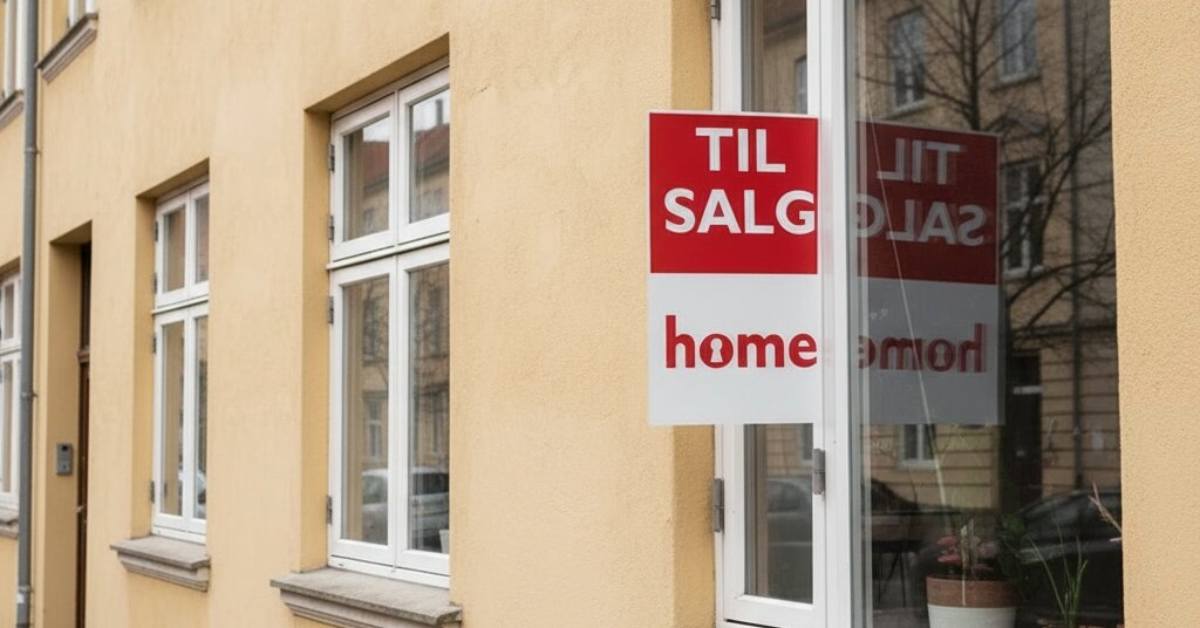
Foreign-origin home buyers in Copenhagen are taking on significantly higher leverage than Danish-origin buyers, according to Statistics Denmark microdata, at a time when new lending guidance and rising property taxes are tightening the city’s housing market.
According to Statistics Denmark’s register-based analysis, buyer households for Copenhagen owner-occupied flats where at least one adult had a non-Danish country of origin accounted for approximately 28 percent of all such purchases in 2024, up from around 20 percent in 2017. These households tend to earn lower median incomes than Danish-origin buyers yet pay broadly similar prices per square metre, implying tighter financial margins. The debt-to-income gap is notable: Statistics Denmark microdata indicate foreign-origin buyers in Copenhagen carry an average debt-to-income ratio of around 5.2, compared with 4.0 for Danish-origin buyers, though these figures come from non-public registers and cannot be verified against standard StatBank tables.
How Danish Lending Guidance Works
Denmark does not operate a universal statutory debt-factor cap. However, Finanstilsynet’s credit assessment guidance states that when a borrower’s total debt exceeds four times household income, banks must conduct a specially justified assessment, and lending above five times income should generally be limited, particularly in areas with high property prices. That supervisory concern level interacts directly with Copenhagen’s prices. According to Statistics Denmark’s BOL tables, the average price per square metre for owner-occupied flats in København Kommune was around 32,000 kroner in 2015 and had risen to approximately 53,000 kroner by 2025, an increase of roughly 65 percent over ten years.

Once buyers approach those supervisory concern thresholds, further price growth requires either higher incomes, more equity from inheritance, or wealthier buyers. Research briefing data suggest that foreign residents may face additional hurdles, including shorter credit histories in Denmark, possible higher reliance on variable-rate mortgages, and employment or residency contracts that some banks treat as elevated risk, though no official primary study quantifies these patterns for Denmark as a whole.
Tax Reform Adds a New Squeeze
Denmark’s new property valuation system is phasing in updated assessments that affect grundskyld and ejendomsværdiskat. According to a technical annex to the housing tax reform, average valuations for owner-occupied flats in central Copenhagen and Frederiksberg are, on average, 30 to 40 percent above previous assessments, directly raising the tax base once transition relief expires. Ministry of Taxation modelling indicates that annual housing taxes for a centrally located flat valued at five million kroner could rise from around 36,000 kroner to between 48,000 and 52,000 kroner per year once transition arrangements phase out, representing roughly 1,000 to 1,300 kroner more per month. Outcomes vary by municipality, valuation, and transition scheme.
Higher recurring taxes tighten borrowing capacity, even for households whose nominal income would otherwise qualify for larger loans. Finanstilsynet’s credit guidance also requires stress-testing borrowers at interest rates of four to five percent, creating a further constraint on maximum approved loan sizes.
Who Gets Locked Out
Research briefing data indicate that 35 to 40 percent of new Copenhagen mortgages in 2024 involved debt-to-income ratios above four, compared with 20 to 25 percent in the rest of Denmark. Foreign-origin buyers, who are on average younger and carry thinner financial margins, are disproportionately represented at the higher end of that leverage range.
The lending guidance and tax reforms do not target foreign buyers by name. However, the combination of stricter supervisory expectations, rising taxes, and high entry prices weighs most heavily on those without local credit histories or inherited equity. According to Skat.dk and Borger.dk, official guidance on valuation appeals and tax notices is predominantly in Danish, with limited English coverage available.

A Structural Shift, Not Just a Slowdown
According to Nykredit’s July 2026 forecast, national house price growth may reach double digits in 2026, but Copenhagen is projected to see only low single-digit growth after 2027. Both Danmarks Nationalbank and Finanstilsynet have repeatedly argued that reducing high household leverage in major cities is necessary for financial stability. Critics, including owner associations and some local politicians, argue that higher taxes and tighter credit guidance disproportionately affect first-time buyers while leaving cash-rich investors largely untouched.
For internationals, this new environment changes the calculus. Entry barriers remain very high, but analysts and forecasters now suggest the potential for rapid capital gains is lower than in the recent past. Living in Denmark increasingly means navigating a high-cost, slower-growth housing market where monthly payment stability matters more than price appreciation prospects.