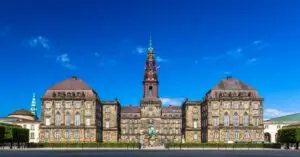
The Folketing held the first reading on Thursday of the government’s bill to expand and raise the Arne-pension, as business group Dansk Industri warned that the change would draw workers out of rural municipalities.
The bill comes from Employment Minister Ane Halsboe-Jørgensen (S) and covers the right to early retirement, known in Denmark as the Arne-pension. It was given its first reading in parliament on Thursday, November 26, Kristeligt Dagblad reports, citing the Ritzau news agency.
According to the same report, the bill is expected to pass, because parties including Enhedslisten and Dansk Folkeparti support it. The government had also planned to tighten the requirements for seniorpension, a scheme that has proved more popular than the Arne-pension, but the political group behind that agreement rejected the idea.
The numbers in the bill
The proposal is registered in parliament as L 98 and was introduced on November 11, according to Fagligsenior. The same outlet reports that the full rate would rise by 3,162 kroner a month before tax, to 19,148 kroner, from January 1, 2027.
Fagligsenior also reports that the Employment Ministry expects the bill to be adopted in December, with effect from the start of 2027. In an earlier piece from September 2026, the outlet described the expansion as allowing people born between 1963 and 1965 to start early retirement at 64 instead of 65, with the government estimating that 2,800 more people would gain the right in 2027.
What DI’s analysis says about rural municipalities
Of the 9,200 people on the Arne-pension in October 2026, 30.4 percent lived in a rural municipality, DI’s analysis found. Those municipalities account for only 17.6 percent of the total workforce. By contrast, 24.5 percent of recipients lived in capital-area and large-city municipalities, which hold 44.3 percent of the workforce.
Lisbeth Gøtzsche, deputy director for labour market policy at DI, said in a written comment that rural municipalities have both the lowest unemployment and the steepest expected fall in the working-age population. Per her comment, making it more attractive to leave the labour market risks adding further pressure on companies trying to find staff. She said the analysis points to the changes pulling labour out of exactly those areas, which sits poorly with the stated ambition of a more balanced Denmark.
Ritzau notes that Danmarks Statistik defines a rural municipality as one where the largest town has fewer than 30,000 inhabitants and access to jobs is below 40,000. Several municipalities in West and North Jutland fall into the category, along with Lolland and Guldborgsund.
What the bill means for foreign residents in Denmark
The Arne-pension is the everyday name for “ret til tidlig pension”, a scheme that lets people leave the labour market before the ordinary state pension age. Neither the Ritzau report nor the other coverage sets out the full seniority conditions for qualifying, and the detailed criteria sit in the text of bill L 98, whose progress is tracked on the Folketing website, as noted by Fagligsenior. Anyone working in Denmark on a foreign passport should therefore check the final rules once parliament has voted.
For internationals looking at where work is available, DI’s warning is about recruitment in specific parts of the country. Gøtzsche’s point is that rural municipalities already have the lowest unemployment and face the largest decline in residents of working age, which she says makes it harder for local companies to fill jobs. The rates and start date reported by Fagligsenior are not final until the bill is adopted, which the ministry expects to happen in December.