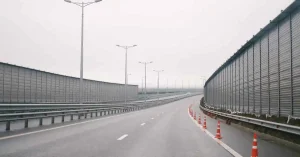
A child from a Danish family died on Italy’s A22 motorway near Bolzano this week after a collision involving their car and a truck, highlighting a persistent Alpine road risk that recurs with troubling regularity for foreign holiday drivers.
The crash occurred on the Autostrada del Brennero, the main route linking Austria and northern Europe to Verona and beyond. According to the motorway operator’s annual safety reports, the A22 recorded 237 injury crashes involving parked heavy vehicles on the hard shoulder between 2019 and 2023, an average of almost one per week. That figure rarely surfaces in public discussion even as large numbers of Danish and other Nordic families drive south each summer.
The Brenner Corridor’s Hidden Collision Pattern
The A22 section near Bolzano has seen several serious crashes in recent years, according to Italian media reports. The Alpine corridor combines steep gradients and heavy freight flows, and when rest areas fill during peak season, drivers sometimes park on ramps or shoulders, as noted in media reports covering the corridor. According to the Autostrada del Brennero SpA annual report, the Brenner corridor presents particular safety challenges due to high heavy-vehicle density, complex Alpine weather conditions, and significant foreign tourist traffic.
According to operator estimates, foreign-registered cars account for a substantial share of traffic on the northern A22 sections in July and August. Danish families often choose to drive the full distance rather than fly. Multilingual safety signage exists at major toll stations, though pre-travel guidance in Nordic languages about specific Alpine motorway risks remains limited.

According to the European Commission’s road safety data, Italian roads carry measurably higher risk than Danish or German motorways. According to Statistics Denmark, Danish residents recorded road deaths outside Denmark in both 2017 and 2022, with the share of Danish resident traffic deaths occurring abroad rising over that period, though detailed breakdowns by destination country remain limited.
Tighter Rules, Persistent Practice
Italian authorities have responded with legal changes. A 2022 update to the national Highway Code clarified rules on stopping on the hard shoulder, raising fines for dangerous motorway parking and allowing licence suspension of up to two months when improper parking contributes to serious injury or death, according to the Italian Codice della Strada. Since 2021, Autostrada del Brennero has operated a Smart Truck Parking reservation system to reduce shoulder stops, though parking pressure during peak periods remains significant along the corridor.

Enforcement remains patchy. Motorway police and cameras are stretched over hundreds of kilometres. Critics, including transport researchers and victims’ associations, argue physical barriers or redesigned lay-bys are needed to make shoulder parking structurally impossible near curves and junctions, rather than relying on fines and behaviour change alone.
Legal and Practical Consequences for Foreign Families
When crashes happen, Danish families face unfamiliar systems. Italy’s criminal investigations can lead to charges of omicidio stradale, road homicide, even in cases involving fatigue or momentary inattention. Liability in mixed-fault crashes, where a driver loses control and a truck is parked in a marginally legal spot, can be contested for years. Bereaved relatives must navigate Italian procedures from abroad, often discovering that their insurance and healthcare entitlements are more complex than assumed.

The European Health Insurance Card covers necessary public treatment in Italy under the same conditions as Italian residents, including emergency care after crashes. It does not cover repatriation or private hospital costs, which require separate travel or accident insurance. The Danish Ministry of Foreign Affairs provides 24-hour consular assistance in serious accidents abroad, helping with hospital and police contact, but cannot intervene in Italian investigations. In crashes where one parent dies and another is hospitalised, consular staff can help coordinate with local authorities regarding the care of minors, in line with Italian child protection procedures.
What Drivers Can Do
Practical steps matter. Carry EHIC cards and insurance documents. Italy uses 112 for emergencies, but on toll motorways, roadside phones connect directly to the A22 control centre and provide automatic location data to operators, according to the A22 Service Charter. Families or relatives in Denmark should contact the Ministry’s Global Vagtcenter immediately after a serious crash to register the case and obtain guidance.

Official Italian guidance for foreign motorists stresses keeping ample distance from heavy vehicles and avoiding the emergency lane except in genuine emergencies. On steep, busy stretches like the A22, using rest stops at regular intervals counters fatigue. The advice sounds obvious but remains crucial on Alpine corridors where losing control for a second can mean hitting stationary steel.
According to the European Transport Safety Council, Denmark has reduced road fatalities per million inhabitants more sharply than Italy over the past decade, leaving Italian roads broadly more dangerous for visitors. Yet Italy remains a popular summer destination for Danes, many of whom travel by car. As Nordic travel patterns shift and more families opt to drive south, the risks embedded in overcrowded Alpine motorways deserve sharper focus than they currently receive.