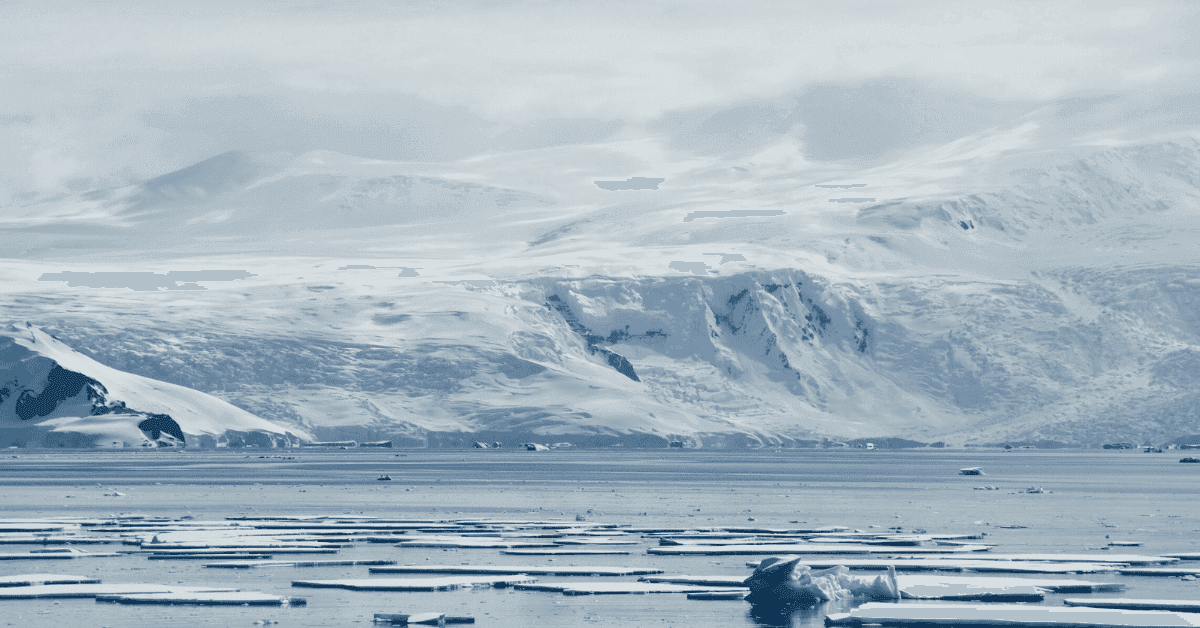
Ice melt in Antarctica is accelerating faster than previously thought, and its impact on rising sea levels could dramatically affect Denmark by the end of the century. Though 14,000 kilometers away, the southern continent may hold the key to Denmark’s future. A new study shows that the ice loss is accelerating in Antarctica.
Melting in the South Mirroring the North
For years, scientists believed the Antarctic ice sheet was more stable than the rapidly melting terrain in Greenland. However, new research suggests that this perception is changing. A study published by the National Center for Climate Research (NCKF) in the journal Nature Geoscience reveals that ice loss in Antarctica is accelerating and increasingly resembling the conditions in Greenland.
Researchers are now referring to this trend as the “Greenlandification” of Antarctica. This term describes the alarming parallels between the melting of Greenland’s ice sheet and the recent collapse of ice shelves in the southern hemisphere, where rising ocean and air temperatures are causing unprecedented ice retreat.
Serious Implications for Denmark’s Future
Denmark may lie thousands of miles from Antarctica, but the polar ice sheet’s retreat could have profound effects on the country. Contrary to popular belief, melting ice doesn’t raise sea levels equally across the globe. Due to gravitational forces and ocean circulation, sea level rise stemming from Antarctica is expected to have a greater impact on Northern European countries like Denmark compared to similar processes occurring in Greenland.
Gravitational pull from massive ice structures like Greenland actually draws ocean water toward it. When this ice melts, water redistributes, causing levels to drop locally around the source but rise elsewhere, particularly in Denmark’s case from Antarctic melt.
One stark metric highlights this imbalance: each centimeter of sea level rise caused by Antarctic melt contributes more to Danish sea levels than the same amount from Greenland.
Melt Accelerating Faster Than Models Predicted
Scientists have long warned that climate models may underestimate real-world changes in polar ice. This recent study only reinforces that concern. Since the 1990s, Antarctica has contributed about 7 millimeters to global sea level rise, about two-thirds of the contribution from Greenland during the same time.
But Antarctica holds far more ice, and if all of it melted, it could cause sea levels to rise by nearly 50 meters. Greenland’s total melt potential is around 7 meters.
Tracking the Changes Impacting Denmark’s Future
The study combines several data sources to determine ice loss patterns. Satellites like GRACE and GRACE-FO detect minute changes in gravity and surface height, indicating ice mass changes. Radar and laser altimetry monitor how fast ice streams are flowing. In addition, ocean buoys and research vessels collect temperature and salinity data to track ocean currents that are melting ice from below.
All this data feeds into complex climate and ice dynamic models to project future scenarios, which help policymakers plan around a wide range of outcomes.
Uncertain but Urgent Forecasts
While it’s certain that Antarctic ice is melting, the pace remains difficult to predict, largely due to the complexity of ice-ocean interactions and the possibility of extreme weather events that could either accelerate or temporarily slow changes.
Some models suggest sea level could rise by about 0.5 meters by 2100. However, in light of the new findings, experts now warn that this figure may be underestimated, possibly needing to be doubled. The potential lack of stabilization after 2100 adds another layer of concern, meaning sea levels could continue rising well beyond our century’s end.
A Climate Challenge for Coastal Nations
Denmark is particularly vulnerable due to its low-lying coastal geography and high population density near shorelines. The nation faces increasing needs for storm surge management, flood defenses, and sea-level adaptation strategies.
If significant parts of West Antarctica, known for its instability, melt, sea levels could rise by several meters, which would be catastrophic for Denmark’s cities and infrastructure.
Denmark’s Future: Preparing for a Warming Future
As the threat from Antarctic melt grows, understanding its influence on Denmark’s future becomes ever more critical. Authorities are called upon to adapt their coastal planning, reinforce climate resilience strategies, and consider the long-term realities of sea level rise that extend far beyond national borders.
Scientific efforts will continue focusing on when these changes will occur and how best to prepare for a world increasingly shaped by melting ice from thousands of kilometers away.