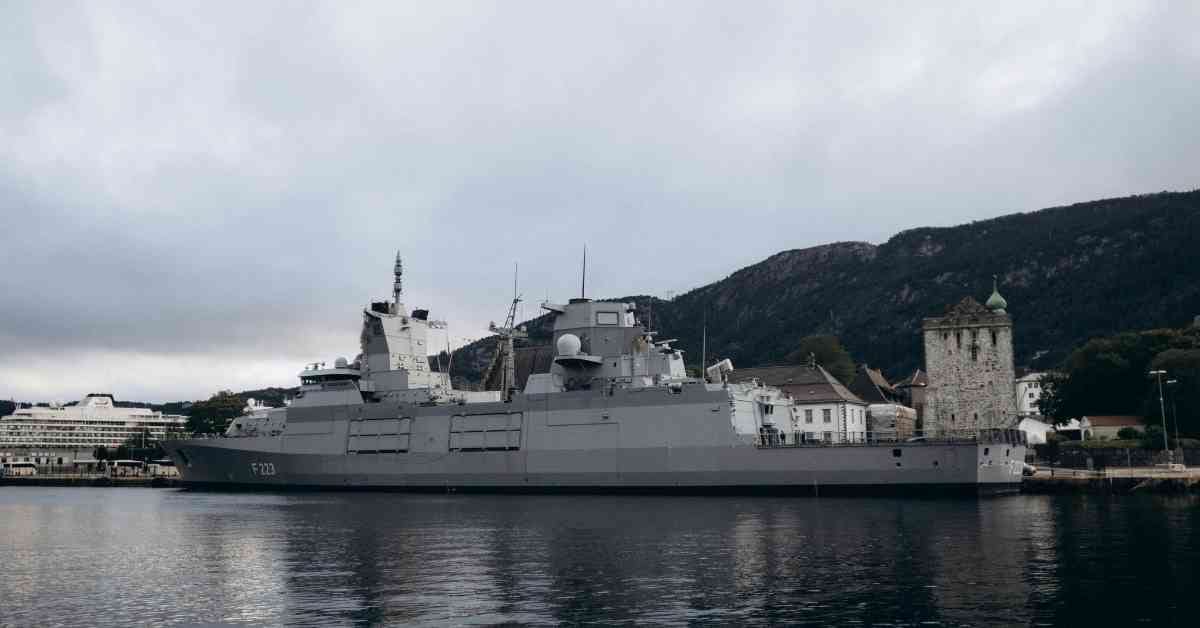
A Russian frigate fired two flares toward a Danish military helicopter near Gedser late on Monday, and one of them passed close to the aircraft.
The Danish Armed Forces say the AS550 Fennec helicopter was on a routine mission to photograph a Russian naval vessel in international waters. According to Information, the helicopter broke off its mission and flew away after the flares were fired.
Reuters reports that Denmark said there was no warning or radio contact before the flares were fired. As noted by The Copenhagen Post, nobody was injured and the helicopter was not damaged.

Prime Minister Mette Frederiksen called the Russian action reckless and said Moscow was trying to intimidate and divide, per Reuters. European Commission President Ursula von der Leyen described the episode as part of a broader pattern of Russian aggression against Europe.
Denmark summoned the Russian ambassador, Vladimir Barbin, after the incident, Reuters reports. Barbin told Information that Russia will investigate the circumstances, and he accused Danish helicopters of dangerous manoeuvres near Russian naval vessels. Foreign Minister Lars Løkke Rasmussen rejected that account in comments to DR, calling Danish monitoring fully legal.
Experts point to earlier incidents
Anders Puck Nielsen, a military analyst at the Royal Danish Defence College, said the episode was not unprecedented. He pointed to a case in 2024 south of Bornholm, where the Russian corvette Merkuriy fired two flares at a German helicopter.
Flemming Splidsboel, senior researcher at the Danish Institute for International Studies, said comparable incidents are moving closer to Denmark. Björn Palmertz of Lund University’s Psychological Defence Research Institute described the behavior as recurring and familiar.

The frigate involved has not been publicly identified. DR has published satellite radar images from Monday morning showing two vessels sailing without AIS signals east of Falster. DR assesses the vessels to be between 90 and 110 meters long, shadowed by the Danish patrol vessel P523 Najaden and the German patrol vessel Neustadt.
Major General Jan Dam, head of the Royal Danish Air Force, told Berlingske on Tuesday that authorities are still examining how close the helicopter was to the ship. He said the situation was not safe, because the flare could have hit the aircraft.

At a press conference in October 2025, Thomas Ahrenkiel, head of the Danish Defence Intelligence Service, described several incidents in the Danish straits. He said air force helicopters and navy vessels had been illuminated by target-tracking radars from Russian warships.
Splidsboel said European countries need a discussion about imposing costs on Russia. He mentioned speeding up the 22nd sanctions package or increasing weapons support to Ukraine as possible measures.

Both Nielsen and Splidsboel questioned whether the flare firing fits the definition of a hybrid attack. Splidsboel noted that the action was carried out openly by a Russian frigate.