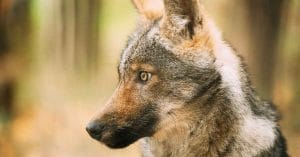
Danish authorities are trying to shoot a wolf near Nørre Nebel in West Jutland after several close encounters with people, including repeated visits to private gardens.
The operation follows three separate incidents in Nørre Nebel on August 5, Avisen Danmark reports, citing the news agency Ritzau. Because of those incidents, a new regulation zone was established, meaning the animal may legally be shot within the area.
Naturstyrelsen, the Danish Nature Agency, has been searching for the wolf since August 6. According to the report, staff have used thermal drones and personnel carrying rifles. To strengthen the effort, a text-message alert service was set up on Tuesday.

The zone near Nørre Nebel is one of two active regulation zones in Denmark. The other is located near Oksbøl, also in West Jutland, per the background material published with the article.
How a wolf is classified as a problem animal
In Denmark, the term “problem wolf” is used for animals showing unwanted and problematic behavior. Avisen Danmark notes that the term is not biological, but a political and management concept describing what society considers to be over the line.
A wolf can fall into the category if it lacks instinctive shyness toward humans, does not flee when confronted, or repeatedly seeks out areas where people are present. Wolves that attack livestock despite reasonable protective measures, such as wolf-proof fencing, can also be classified this way. A rabid wolf and wolves that attack dogs are likewise categorized as problem wolves in Denmark.
The assessment is made jointly by Naturstyrelsen and Styrelsen for Grøn Arealomlægning og Vandmiljø, the agency for green land conversion and aquatic environment. Authorities may permit regulation only if no other solution exists. The measure must also not threaten the species’ natural spread.

International research uses different terminology, according to the source article. Researchers speak of habituated animals and, in English, “bold wolves,” based on whether the animals tolerate human presence or actively approach people. The definitions cited in the article come from Nationalt Center for Miljø og Energi at Aarhus University and from Styrelsen for Grøn Arealomlægning og Vandmiljø.
The current case is part of a longer debate over wolves in Denmark and how authorities respond when animals move close to residential areas. Denmark has previously introduced a wolf management plan setting out the framework for such decisions.
Avisen Danmark’s report does not state how long the current regulation zone will remain in place, or whether the wolf has been located since the search began on August 6. The article was published on August 13, 2026.