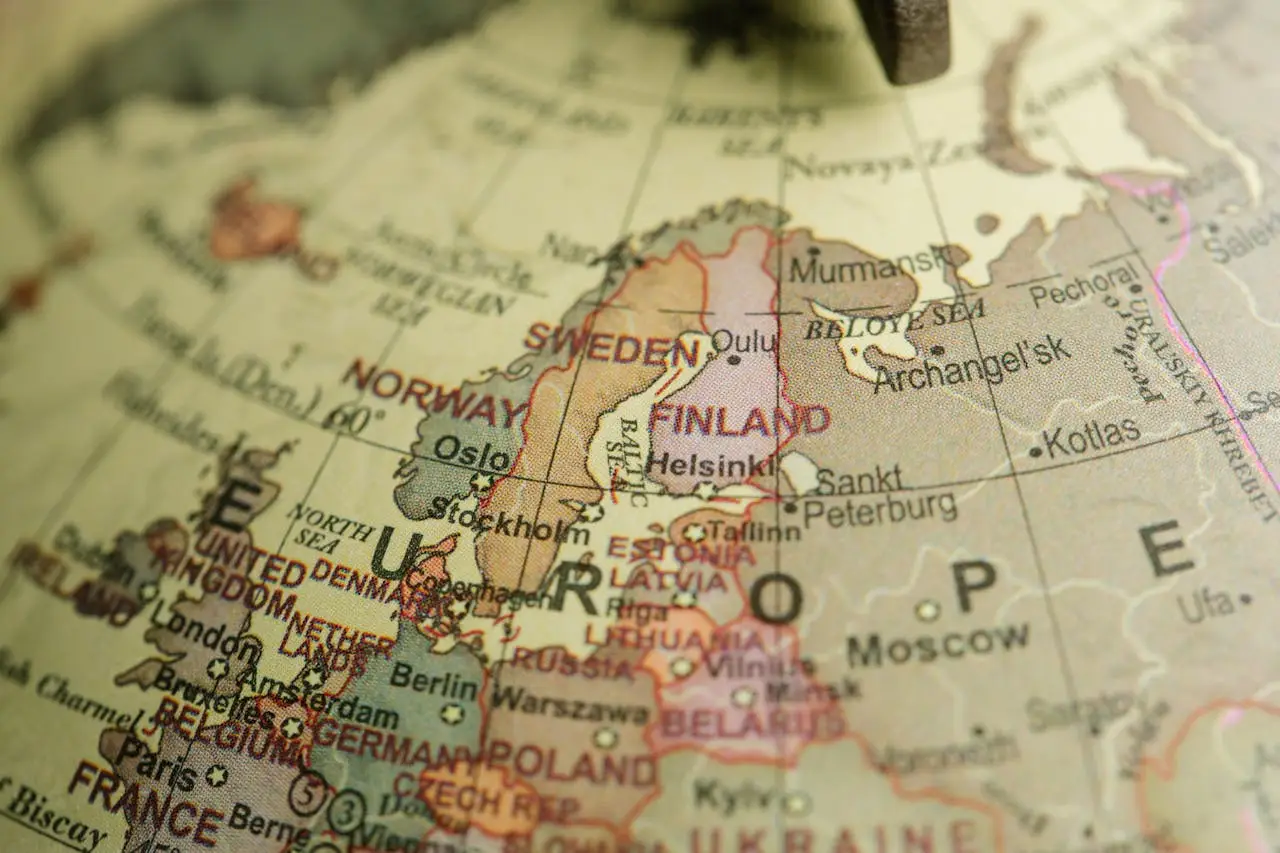
Norway’s government holds around 2.1 million kroner in net financial assets for every resident, far more than Denmark’s roughly 70,000 kroner per person, creating a fiscal cushion that turns Nordic envy into hard numbers.
The gap is not just rhetorical. When Statistisk sentralbyrå published its 2025 national accounts, Norway’s general government net financial position stood at 12,724 billion kroner. Divide that by the population and you get a figure that no amount of Danish hygge can match. Denmark’s public finances are solid by European standards, but the comparison exposes just how different the two countries’ economic foundations really are.
For internationals living in Scandinavia, this is not abstract. Norway offers faster wage growth and slightly lower unemployment. Wage growth hit 4.9 percent in 2025, according to Norges Bank, while Danish agreed wages grew around 3 percent. According to Norges Bank projections, Norwegian registered unemployment will stabilise near 3.5 to 4 percent through 2027, while recent Eurostat data place Denmark’s harmonised unemployment rate somewhat higher.
Normal speed, extraordinary reserves
Norway is not booming. Statistisk sentralbyrå describes the current phase as normal fart, or normal speed. According to Norges Bank, mainland GDP grew 1.8 percent in 2025 and is expected to slow to 1.4 percent in 2026 and 0.9 percent in 2027. But normal speed in Norway means something different when the state can afford to wait.

According to SSB, household consumption is forecast to grow around 2.5 percent annually through 2028, while public spending, driven partly by increased defence outlays, is set to rise 2 percent a year in 2027 and 2028. That combination keeps the labour market tight and living standards rising, even as housing construction stalls and petroleum investment declines.
Norges Bank has signalled a policy rate path towards 4.25 to 4.5 percent by late 2026, with inflation expected to fall from around 3 percent now to 2 percent by 2029. High interest costs squeeze borrowers in the short term, but the trajectory is clear and credible. Denmark, tied to the euro via its peg, follows the European Central Bank’s rate due to the krone’s fixed exchange rate, but without the same fiscal reserves to cushion shocks.
The expat calculus
Norway’s Ny i Norge portal offers multilingual integration guidance in English and Norwegian, covering residence permits, work rights, healthcare and schooling. Denmark has equivalent services, but Norway’s branding and explicit English focus make it easier for skilled workers researching from abroad. According to SSB population statistics, around 15 to 16 percent of Norway’s population has an immigrant background, with substantial communities from Poland, Lithuania, Sweden and Syria, though no official statistics isolate high-skilled professionals.

The appeal is real, but so are the costs. Some independent commentators argue that building costs have roughly tripled since 2010, far outpacing general consumer prices over the same period, though official SSB construction cost indices should be consulted for precise figures. That structural imbalance locks young buyers and newcomers out of home ownership, even when wages are strong. Housing construction has stayed weak, and rental markets in Oslo and other cities remain tight, according to SSB analyses.
Fiscal discipline, demographic pressure
Norway’s fiscal rule limits the government to spending roughly the expected 3 percent real return on the Government Pension Fund Global each year, preserving the principal for future generations. The 2026 budget, presented by the Finance Ministry, reaffirms that commitment. Denmark, without a comparable sovereign fund, finances welfare through traditional taxation and accumulated financial assets that are far lower by comparison, according to Statistics Denmark.
But Norway faces the same demographic wave as Denmark. Rising pension and health costs will test the model, and productivity growth has slowed. Norwegian policy analyses warn of a produktivitetsgap that could erode competitiveness if reforms stall. According to the OECD Economic Outlook, high oil and gas export revenues will continue to support Norway’s fiscal position, but geopolitical tensions and protectionism add uncertainty to any trade-dependent economy.
What it means on the ground
For expats in Denmark weighing a move north, the calculation hinges on specifics. Check Utlendingsdirektoratet for work permit rules, Skatteetaten for tax obligations and SSB’s labour market tables for wage benchmarks by sector. Use Norwegian banks’ mortgage calculators, which now reflect current high interest rates, to assess housing affordability before committing.

Norway’s strong fiscal position is not a myth. It rests on decades of disciplined saving and favourable geology. But fiscal strength at the national level does not automatically translate into accessibility for individuals, and the housing market alone illustrates that tension clearly. Whether acting on Norway’s appeal makes sense depends on your timeline, your sector and how much you are willing to pay for a roof over your head in Scandinavia.