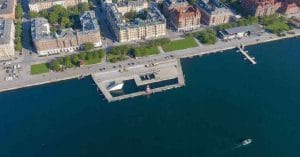
Denmark’s largest pump lock officially opened in Kolding last Saturday, drawing thousands of visitors to see four massive Archimedes screws designed to protect the city from storm surges and flooding. The facility is operating despite concrete cracks that forced the use of emergency gates.
I’ve watched Kolding wrestle with flooding for years. The city center sits where Kolding Å meets the fjord, making it vulnerable whenever heavy rain and high tide hit at once. Now, Kolding has completed what officials proudly call the country’s biggest pump lock. It’s meant to be the technological shield that finally keeps the water at bay.
The inauguration drew a few thousand people despite the heat. Mayor Jakob Ville and nature minister Christian Rabjerg Madsen gave speeches. Families watched the enormous screws spin water toward the fjord. Meteorologist Jesper Theilgaard explained climate change to anyone willing to listen in the sun.
Giant Screws and Big Promises
The four Archimedes screws can pump 20,000 liters per second from the river into the fjord. Each screw weighs 17 tons and measures 10 meters long. The system can handle water levels up to 280 centimeters above normal, which the municipality says covers realistic storm surge scenarios.
As reported by JydskeVestkysten, the pump lock is the centerpiece of Kolding’s climate adaptation strategy. It works with raised banks along the river and a flood wall at the harbor. Together, they’re supposed to protect downtown from future flooding.

The pumps solve a specific problem: when it rains hard and the fjord is high, the river gets trapped. It can’t drain naturally. Water backs up through the city center, flooding shops and homes. The screws bypass nature by forcing the water out even when the fjord pushes back.
Concrete Cracks Before the Champagne
But the facility isn’t quite finished. JydskeVestkysten has reported “unforeseen problems” with cracks in the concrete. Emergency gates are now in place to keep water out while engineers investigate and repair.
The municipality insists the pumps are fully functional. Avisen.nu quotes officials saying the system can protect Kolding even while repairs continue. That’s technically possible, but it raises questions. How serious are the cracks? What caused them? Who pays for the fixes?

These answers aren’t public yet. The inauguration focused on success, not setbacks. I understand the impulse to celebrate after years of planning and construction. Still, launching a major infrastructure project with known structural issues feels rushed. Danish engineering is usually more cautious.
Climate Adaptation or Political Theater
Kolding’s pump lock fits into a broader pattern across Denmark. Coastal and river cities are building dikes, pumps, and barriers to handle rising seas and heavier rainfall. Esbjerg, Copenhagen, and Odense all have similar projects underway.
This is necessary work. Climate projections show Denmark will face more frequent flooding. But it’s also expensive, and the political temptation is to oversell each project as “the solution.” The pump lock protects Koldinghus and the surrounding downtown. It doesn’t solve upstream flooding or guarantee safety under worst case sea level rise after 2050.

The folkefest atmosphere, with music and activities for children, serves a purpose beyond celebration. It builds public trust and deflects concern. Thousands of people saw the giant screws working. That’s powerful messaging. The concrete cracks? Those require follow up questions most visitors won’t ask.
What We Still Don’t Know
The sources available don’t detail the repair costs or timeline. They don’t explain how the cracks developed during construction or whether the contractor is liable. No one has published a full risk assessment of operating the facility in its current state.
I’d also like to see clearer integration with other climate projects. The pump lock is one piece of a larger puzzle. How does it connect to upstream rainwater management and green infrastructure? What happens if multiple systems fail at once?

For expats in Denmark, this project illustrates how Danish municipalities approach climate adaptation: ambitious, technically sophisticated, and generally transparent, but sometimes more focused on the ribbon cutting than the fine print. That’s not unique to Denmark, but it’s worth noting when you’re deciding where to live and work long term.
A Solution That Still Needs Solving
Kolding has built something genuinely impressive. Moving 20,000 liters per second is no small feat. The technology works. The intention is sound. But inaugurating a facility that still needs structural repairs is a gamble. I hope it pays off.

Denmark’s climate infrastructure will only grow more important. Projects like this will shape which cities thrive and which struggle in coming decades. Kolding deserves credit for acting early. It also deserves scrutiny to ensure the work is done right, not just done quickly for a summer ceremony.
Sources and References
Ritzau: Overvældende interesse for indvielsen af Koldings store pumpesluse
The Danish Dream: Kolding Fjord Experience Denmarks Living History Amidst Stunning Natural Beauty
The Danish Dream: Koldinghus Museum
The Danish Dream: Kolding Cultural Heart of Denmark