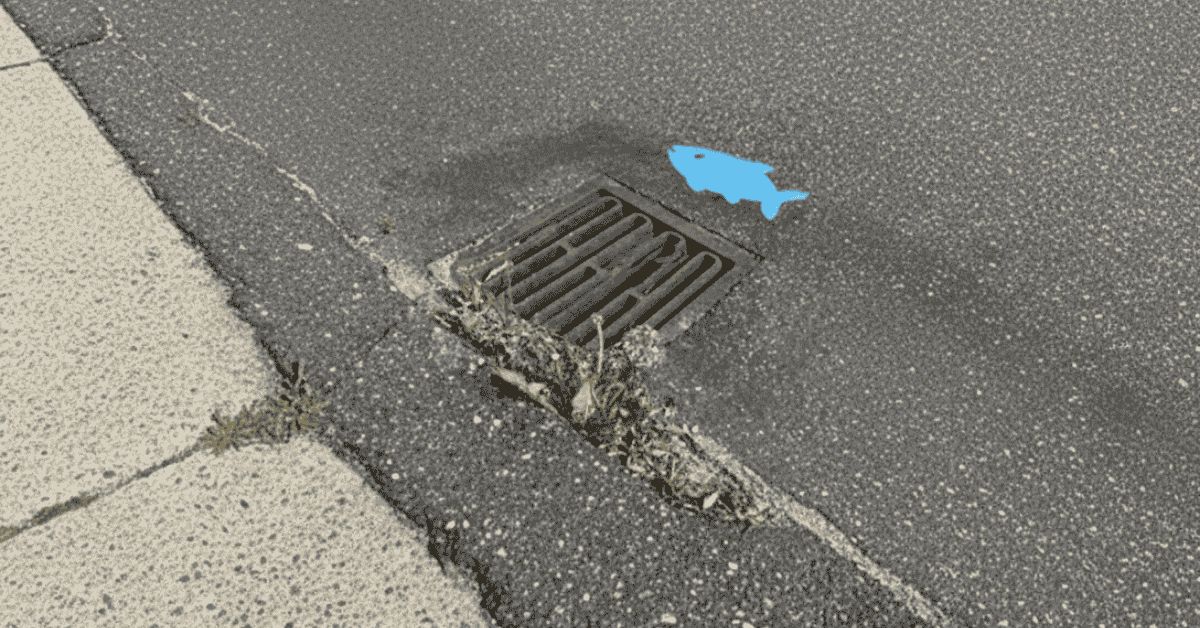
A farm spill has killed all aquatic life in a Fyn stream for the third time in 16 months. Local anglers and national fishing groups say weak enforcement has turned Danish waterways into repeat pollution victims.
Bredemoserenden, a small stream near Langå on eastern Fyn, is dead again. A citizen reported the pollution on Tuesday, and Nyborg Kommune’s environmental officers arrived Wednesday to find what anglers describe as a total wipeout. Everything that swims, crawls, or burrows in the streambed has been suffocated by ensilage runoff from a nearby cattle farm.
This is the third time in just over a year. The same property was linked to pollution incidents in January 2025 and again in March 2026. Each time, the slow work of rebuilding a functioning stream ecosystem gets reset to zero.
When Enforcement Feels Like a Joke
Jakob Humaidan chairs Svendborg Sportsfiskerforening, which holds fishing rights in Stokkebæk downstream. His group catches broodstock there every year to support restocking efforts across Fyn. He told the national angling federation that repeating pollution events make ecological recovery impossible. Every time fish and insects begin to return, another spill flattens the reset button.
Torben Hansen, environmental consultant at Danmarks Sportsfiskerforbund, said Nyborg Kommune responded quickly this time. But speed after the fact does not undo dead trout or rebuild invertebrate communities. Hansen wants a public plan from the municipality showing how it will work with the landowner to prevent future spills.
He also said meaningful consequences are overdue. When polluters face only raised fingers, pollution continues. That pattern plays out across Denmark, where anglers and municipal staff repeatedly restore streams only to see them wiped out again by the same farms.
What Actually Happens to the Water
Ensilage saft is the liquid that drains from stored fermented fodder. It is as damaging as liquid manure when it reaches a stream. The organic load consumes oxygen as it decomposes. Ammonia concentrations spike to toxic levels. Fish die first, then the insects and crustaceans that form the base of the food web.
Small agricultural streams like Bredemoserenden have almost no dilution capacity. A few cubic meters of ensilage saft can blacken several kilometers of water. Recovery depends on recolonization from upstream refuges, assuming those still exist. In heavily farmed landscapes, they often do not.
Danish law requires farms to store ensilage saft in sealed tanks, just like manure. Spreading is forbidden on frozen or saturated ground and banned entirely before February 1. These rules exist precisely to prevent what just happened in Bredemoserenden. Yet here we are, again.
The Bigger Pattern Nobody Wants to Talk About
I have lived in Denmark long enough to recognize the script. Spill happens, photos of dead fish circulate, municipality investigates, angling clubs fume, agriculture lobby says most farmers follow the rules. Then silence until the next one.
Bredemoserenden is not an outlier. It is a symptom of a system where the economic pressure to maximize livestock production consistently overpowers environmental safeguards. Denmark talks proudly about meeting EU Water Framework Directive targets. But those targets become unreachable when the same streams get hammered every year by entirely preventable spills.
The national environmental agency sets guidelines. Municipalities enforce them with limited staff and budgets. Farms operate under economic models that often defer maintenance on storage infrastructure. When something breaks, a stream pays the price. Fines, when they come, range from tens of thousands to a few hundred thousand kroner. For large operations, that is a manageable cost of doing business.
What Happens Next
Nyborg Kommune is still sampling water and tracing the pollution source. Sportsfiskerforbundet will push for a dialogue about prevention and demand details on any enforcement action. Humaidan and his fellow anglers will likely spend the next several years trying to nurse Bredemoserenden back to life, knowing another spill could erase their work at any moment.
The ecological damage is measurable. The frustration among people who care about these streams is palpable. What remains unclear is whether Denmark will ever impose penalties severe enough to make pollution more expensive than compliance.
Sources and References
Sportsfiskerforbundet: Alt liv slået ihjel: Voldsom forurening af Bredemoserenden på Fyn
The Danish Dream: Denmark bans PFAS pesticides to protect groundwater