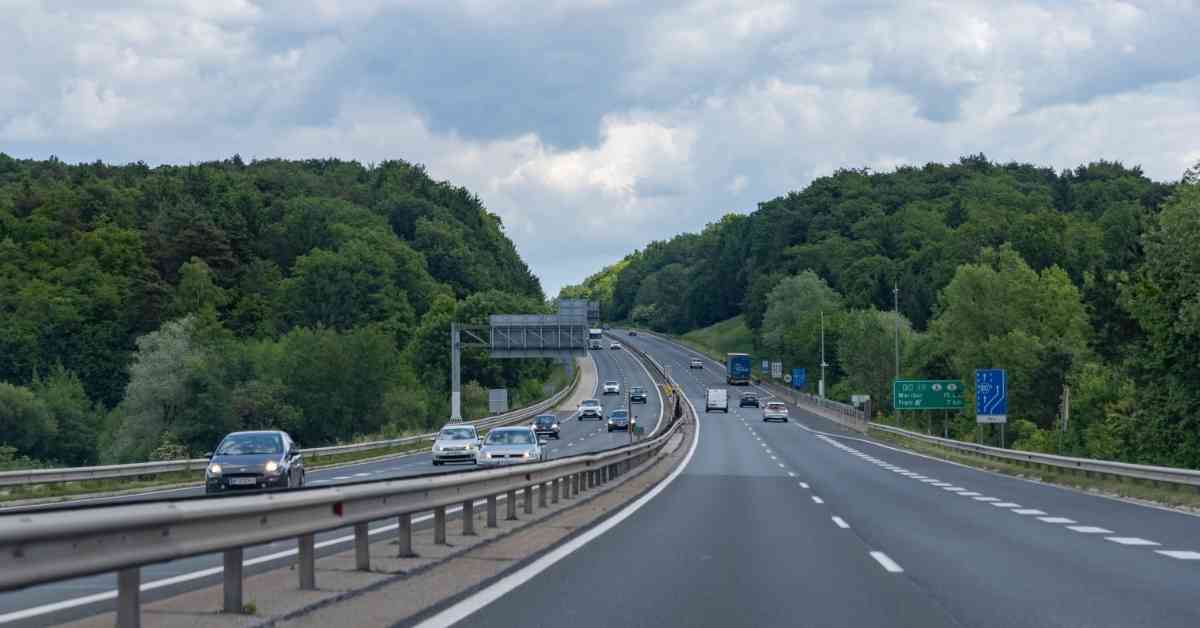
Two people died instantly Thursday evening when three cars collided head-on on the Hillerød Motorway extension between Allerød and Hillerød. Two others were seriously injured but are expected to survive. The stretch of road has seen multiple fatal crashes in the past year, raising questions about whether this section of Danish motorway has become a death trap.
The crash happened just after 8 p.m. According to Nordsjællands Politi, two people traveling southbound at high speed crossed into the opposite lane for unknown reasons and slammed head-on into an oncoming vehicle. A third car, driving behind the first victim’s car, was unable to stop in time and crashed into the wreckage.
The two who died were killed on impact. The two injured are out of immediate danger. The motorway remained closed in both directions for more than five hours while police worked the scene.
A Pattern Emerging
This is not an isolated incident. The Hillerød Motorway extension has seen a troubling series of serious crashes over the past twelve months. In late January, two people were hospitalized after a collision just north of the Kollerød exit. One of them was in critical condition.
Last July, three people died in another head-on collision on the same stretch. A couple and a male driver lost their lives. That case is still working its way through the courts.
I have covered traffic incidents in Denmark long enough to know that patterns like this demand attention. When the same road claims multiple lives within months, something is wrong. Whether it is design flaws, inadequate signage, poor lighting, or driver behavior, the authorities need to figure it out before more families receive that knock on the door.
The Usual Silence
Nordsjællands Politi says they are investigating the circumstances of Thursday’s crash. That is standard procedure. What is also standard is the lack of transparency about what happens next. Danish authorities are notoriously tight-lipped about traffic investigations, even when the public has a clear interest in understanding why these crashes keep happening.
I am not calling for the release of sensitive details or the names of victims. But the public deserves to know whether speed, road conditions, visibility, or design issues contributed to this crash. We also deserve to know what steps, if any, the Danish Road Directorate plans to take to prevent the next one.
Not Just a Local Problem
Fatal crashes are not unique to this stretch of motorway. Denmark has seen a series of deadly incidents in recent weeks. A teenage driver killed a grandfather outside a baby store in a separate incident. Two people died when buses collided on an icy road. These are not anomalies. They are part of a broader pattern of traffic violence that Denmark has failed to adequately address.
The country prides itself on bicycle infrastructure and pedestrian safety in urban areas. But on the motorways, where speeds are high and margins for error are slim, the approach seems reactive rather than proactive. Crashes happen, investigations follow, and then everyone moves on until the next one.
What Needs to Happen
The Hillerød Motorway extension needs a full safety audit. Engineers should examine sightlines, lane markings, barriers, and lighting. Police should analyze crash data to identify common factors. If driver behavior is the issue, enforcement needs to increase. If the road itself is the problem, it needs to be fixed.
Denmark has one of the lowest traffic fatality rates in Europe, but that is no reason to be complacent. Every preventable death is a failure. The families of the two people who died Thursday night deserve answers. So do the rest of us who drive these roads every day.
Sources and References
The Danish Dream: Teen driver kills grandfather outside baby store
The Danish Dream: Tragic crash on icy Danish highway kills officer
The Danish Dream: Two dead after buses collide on icy road
TV2: To dræbt i alvorlig ulykke ved motorvej