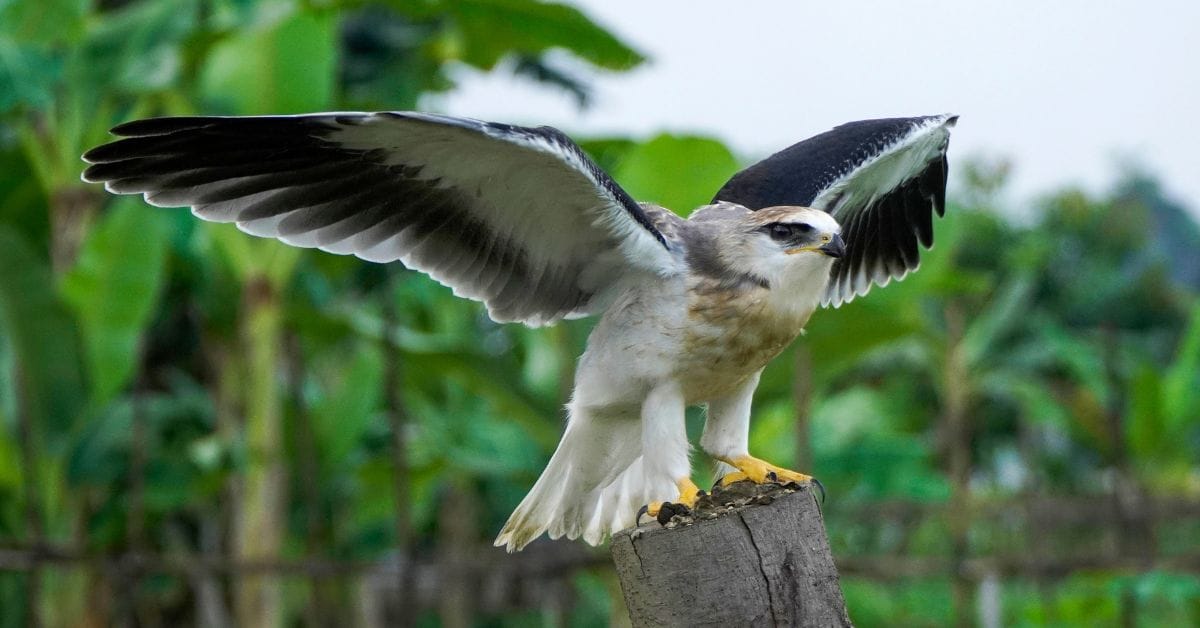
For the first time ever, a pair of black-winged kites, a rare raptor species native to southern Europe and North Africa, appears to be nesting in Denmark. Their unexpected presence in West Jutland is drawing large crowds and cautious optimism from local ornithologists.
Black-Winged Kites Spotted Near Aulum
In what could mark a milestone for Danish birdlife, a pair of black-winged kites (Elanus caeruleus) has been observed courting and establishing a territory near the town of Aulum in West Jutland. This species, which usually nests in warmer climates such as southern France, Spain, and northern Africa, has never before attempted to nest in Denmark.
The kites have taken up residence in a varied open landscape near Aulum, southeast of Holstebro, that combines uncultivated fallow fields, farmland, hedgerows, and a small stream. Their activity has caused both excitement and concern among ornithologists and conservation groups, as the birds are clearly preparing to breed, even though it is unusually late in the season.
Signs Of Breeding Behavior
The birds have been seen mating repeatedly, at least ten confirmed times in recent days, and have begun collecting nesting materials. These behaviors strongly indicate a serious intention to attempt breeding in the Danish countryside.
Although their presence is promising, the timing challenges their success. Insectivorous raptors like the black-winged kite usually breed during the spring and early summer to ensure ample food supply for their young. Attempting to raise chicks in September could expose them to harsh weather and dwindling food resources.
Despite these concerns, the local weather conditions have temporarily favored the birds. Warm late summer temperatures and mild conditions have allowed the kites to hunt efficiently and remain active. However, a forecasted shift in the weather, bringing rain, lower temperatures, and gusty autumn winds, could complicate their breeding effort.
Region Draws Heavy Birdwatcher Attention
The novelty of the birds has attracted a surge of visitors to the area. Over the past weekend alone, an estimated 400 birdwatchers traveled to see the kites firsthand. The birds are most visible from Langbovej, a country road running just south of Aulum near the highway between Herning and Holstebro.
This influx has raised concerns among local conservationists and landowners. Access to the birds’ potential nesting grounds must be carefully managed to avoid disturbing the pair during this critical period. In response, DOF BirdLife’s West Jutland chapter, working in coordination with local property owners, has installed signage urging respectful behavior and limiting access to sensitive parts of the terrain. Some photographers have reportedly gotten too close in pursuit of better shots, prompting further reinforcement of protection efforts.
From Rare Sightings to Northward Expansion
Black-winged kites have seen a notable population rebound in Europe over the last six decades. As recently as 1960, the bird was considered extremely rare on the continent, with fewer than 50 breeding pairs reported.
However, since then, the species has expanded northward from its strongholds in Africa, occupying new territories as climate change and land-use practices have rendered more areas habitable. In the tropics, the birds thrive in open savanna, semi-desert, and human-altered agricultural landscapes, similar to the patchwork of fields and hedges found near Aulum.
If the pair in Denmark successfully breeds and raises young, it will represent a significant milestone, expanding the known range of the black-winged kite into Scandinavia for the first time. The incubation period for the species typically lasts about 30 days, followed by another month in which the fledglings remain in the nest before taking flight. That timeline puts any potential fledging in Denmark as late as November.
Impact on Danish Biodiversity
The arrival of a new raptor species underscores broader changes in Danish biodiversity. Warmer temperatures have allowed other southern species, such as the great white egret, to establish permanent populations in Denmark in recent years.
While a single pair of black-winged kites does not mean the species has firmly settled, their presence is being closely monitored by ornithologists and bird enthusiasts alike. Their continued survival and breeding success could determine whether Denmark becomes a future breeding ground for this elegant raptor.