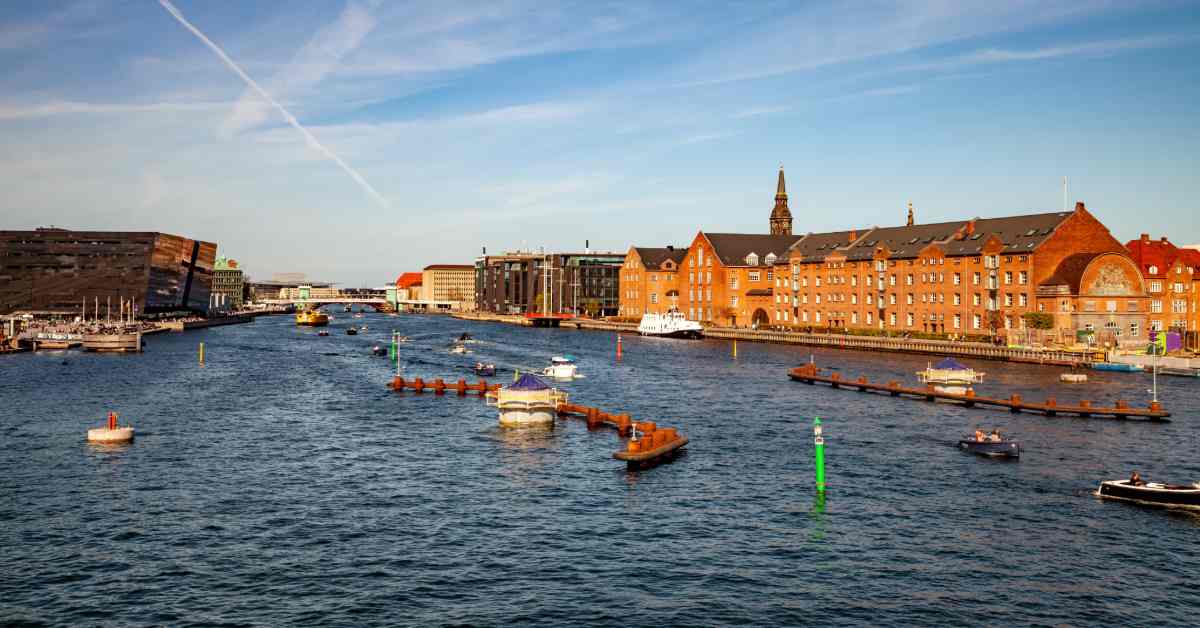
Langelinie is Copenhagen’s 2-kilometer harbor promenade where the Little Mermaid, the Gefion Fountain, Kastellet, and the cruise pier meet the sea. After years of living in Denmark, I think it remains the best free walk in the capital.
What Is Langelinie and Why It Defines Copenhagen’s Waterfront
Langelinie is a pier, promenade, and park running along the eastern edge of central Copenhagen. The name translates to “long line,” and the stretch lives up to it. It connects the Kastellet fortress to the cruise terminal at Nordre Toldbod and beyond.
I have walked this route in every season since I moved to Copenhagen. It changes character with the wind and the light. On a clear July morning it feels Mediterranean. In February it feels closer to Reykjavik.
The Origins of Langelinie
The promenade sits on land that was once part of Copenhagen’s outer defenses. In the 1700s, it was a narrow path along the city ramparts, popular with strolling Copenhageners. The area opened up after the military demolished obsolete fortifications in the late 19th century.
The modern Langelinie Park was laid out around 1894. Royal patronage and bourgeois fashion turned it into the city’s most prestigious walk. As noted by Wikipedia, the area was a popular promenading site as early as the 18th century.
The Little Mermaid: The Statue That Made Langelinie Famous
No discussion of Langelinie starts anywhere else. The Little Mermaid, or Den Lille Havfrue, has been perched on her boulder since 23 August 1913. She was commissioned by Carl Jacobsen, the brewer behind Carlsberg, after he saw a ballet based on the Hans Christian Andersen tale.
Sculptor Edvard Eriksen modeled her face on the ballerina Ellen Price. He used his own wife, Eline, for the body. The statue stands just 1.25 meters tall and weighs 175 kilograms, which surprises almost every first-time visitor.
A Magnet for Vandals and Tourists Alike
The statue has been decapitated twice, once in 1964 and again in 1998. Her right arm was sawed off in 1984. She has been blown off her rock with explosives, painted, and draped in burkas during protest stunts.
Despite all that, the mermaid remains stubbornly intact, since the family of Hans Christian Andersen‘s sculptor still controls the molds. For deeper context on the statue’s strange history, see our full piece on The Little Mermaid. My honest expat take: she is smaller than you expect, more crowded than you want, and still worth ten minutes of your morning.
Gefion Fountain: The Mythic Centerpiece of Langelinie
Walk south from the mermaid and you reach the Gefion Fountain. It was unveiled in 1908 and remains the largest monument in Copenhagen. Sculptor Anders Bundgaard worked on it for nearly a decade.
The bronze group shows the Norse goddess Gefion driving four oxen, her transformed sons, plowing the island of Zealand out of Sweden. The Carlsberg Foundation paid for it as a 50th anniversary gift to the city. You can read more in our dedicated article on the Gefion Fountain.
Why the Fountain Beats the Mermaid for Photographers
I will say what tour guides will not. The Gefion is the more impressive monument. It has scale, motion, mist from the water jets, and a clear background of the English Church and Kastellet.
It is also far less crowded. For anyone hunting good light, our guide to photography spots in Copenhagen lists Langelinie among the top sunrise locations.
Kastellet: The Star Fortress Hiding Behind the Promenade
Langelinie wraps around Kastellet, one of the best-preserved star fortresses in Northern Europe. It was completed in 1664 under King Frederik III and is still an active military site. The Danish Defence administration runs offices inside the ramparts.
You enter through the King’s Gate or the Norway Gate. Inside you find barracks painted Pompeian red, a windmill from 1847, and gravel paths that loop around the moat. Joggers, dog walkers, and the occasional changing of the guard share the same routes.
Why Kastellet Pairs Perfectly With Langelinie
Most visitors rush past Kastellet to reach the mermaid. That is a mistake. The fortress is quieter, greener, and architecturally far richer than the waterfront strip.
I recommend doing them as a loop. Our full guide to Kastellet walks you through the bastions one by one. Allow ninety minutes if you want to actually see it.
Langelinie Pier and the Cruise Ship Reality
The outer stretch of Langelinie is a working cruise terminal. Copenhagen handles around 900,000 cruise passengers a year, according to Cruise Copenhagen. Many of the smaller ships still dock right at Langelinie Pier, while the largest now use Oceankaj further north.
On a busy summer day, two or three vessels can be tied up at once. The pavement fills with passengers in matching lanyards, shuttle buses idle, and the souvenir stalls switch into overdrive.
Langelinie Pavilion and the Shopping Stretch
The Langelinie Pavilion is the white modernist building near the marina. It was designed by Eva and Nils Koppel and opened in 1958. Today it hosts restaurants, weddings, and conferences.
Further along, the pier hosts a small outlet strip with Scandinavian brands and a few cafes. Prices are tourist-pier prices, so if you are budget conscious, our piece on shopping in Copenhagen points you toward better deals in the city center.
How to Get to Langelinie
Langelinie sits about 2 kilometers northeast of Copenhagen Central Station. It is one of the easiest landmarks in the city to reach on foot. Most visitors arrive from Nyhavn, a roughly 20-minute walk along the harbor.
If you prefer public transport, bus lines 26 and 27 stop near Kastellet. The closest metro station is Marmorkirken on the M3 Cityringen line. For the full system, check our Copenhagen public transport guide.
By Bike, Which Is What Most Locals Do
Cycling is the Danish default. Dedicated lanes run the entire route from the city center to Langelinie, and bike parking is plentiful near the mermaid. Donkey Republic and other apps have replaced the old Bycyklen system in most central areas.
Our deep dive on cycling in Copenhagen covers rentals, etiquette, and rules. Honestly, biking Langelinie at sunset is one of the simple joys of living here.
When to Visit Langelinie
The promenade is open year round and free at all hours. The sweet spot is May through September, when daytime temperatures sit between 15 and 22 degrees Celsius. Light lingers until well after 10 pm in June.
I prefer early autumn. The cruise traffic thins after October, the leaves in Kastellet turn copper, and you can actually photograph the mermaid without a hundred selfie sticks in frame. Winter has its own appeal if you do not mind the wind off the Øresund.
Best Times of Day for Each Landmark
Arrive at the Little Mermaid before 9 am or after 7 pm in summer. Tour buses crowd the path between 10 am and 4 pm. The Gefion Fountain looks best in late afternoon when the sun hits the bronze.
Kastellet is at its quietest in the early morning, when joggers outnumber tourists ten to one. For more sequencing ideas, see our one day in Copenhagen itinerary.
What to See Near Langelinie
Langelinie connects naturally to several of Copenhagen’s best landmarks. You can easily build a half-day route that mixes royal history, art, and harbor views. The neighborhood of Østerbro sits directly inland, with cafes that are quieter than the harbor strip.
Frederiksstaden, the royal district around Amalienborg Palace, is a short walk south. The Designmuseum Danmark and the Marble Church are five minutes away. For the bigger picture, our 25 things to do in Copenhagen list slots Langelinie alongside its natural partners.
Top Five Landmarks Within Walking Distance
- Amalienborg Palace: Home of the Danish royal family, with the changing of the guard at noon.
- Marble Church (Frederiks Kirke): Copenhagen’s largest dome, finished in 1894.
- St. Alban’s Church: The Anglican church next to the Gefion Fountain.
- Designmuseum Danmark: Danish furniture and industrial design under one roof.
- Nyhavn: The painted harbor, twenty minutes south on foot.
Food and Drink Around Langelinie
The pier itself has touristy options with harbor views. For something more local, walk five minutes inland into Østerbro or down to the streets behind the Marble Church. Coffee, smørrebrød, and natural wine bars are easy to find.
If you want a proper Danish breakfast before the walk, our roundup of the best bakeries in Copenhagen includes a few spots within fifteen minutes of Langelinie. A kanelsnegl in hand makes any harbor walk better.
Practical Tips From an Expat Who Walks Langelinie Often
The wind off the Øresund is sharper than the temperature suggests. Even in July, a light jacket is wise after 6 pm. Sunglasses help year round, because the sea throws back a lot of light.
Toilets are scarce on the promenade itself. Use the facilities at Kastellet’s main entrance or in the Langelinie Pavilion. The mermaid has no benches nearby, so plan accordingly.
Things I Wish I Had Known on My First Visit
- The mermaid faces away from the path. Walk onto the rocks at low tide for the iconic profile shot.
- Pickpockets work the crowds. Copenhagen is safe overall, but the mermaid is the one place I have seen attempts. See our piece on whether Copenhagen is safe.
- Cruise mornings change everything. Check cruise schedules at Copenhagen Malmö Port if you want a quiet visit.
- Kastellet closes at sunset. The fortress gates lock after dusk, so loop through it earlier.
- Bring cash for parking. The lot near Langelinie Pier uses an app system that frustrates foreign cards.
Frequently Asked Questions About Langelinie
What is Langelinie in Copenhagen?
Langelinie is a 2-kilometer promenade, park, and pier along Copenhagen’s harbor. It is home to the Little Mermaid statue, the Gefion Fountain, the Langelinie Pavilion, and the cruise terminal beside the Kastellet fortress.
How long does it take to walk Langelinie?
A relaxed walk from the Gefion Fountain to the cruise pier takes about 25 minutes one way. Add another hour if you want to explore Kastellet and stop at the Little Mermaid for photos. Most visitors spend two to three hours total.
Is Langelinie free to visit?
Yes, Langelinie is entirely free and open 24 hours a day. The Little Mermaid, Gefion Fountain, and outer pathways of Kastellet have no entry fee. Only guided tours and special events at the Langelinie Pavilion are paid.
Where is the Little Mermaid statue at Langelinie?
The Little Mermaid sits on a boulder just off the Langelinie promenade. It is roughly 300 meters north of the entrance to Kastellet. Look for the crowd. You will not miss it.
Can you swim at Langelinie?
Swimming directly from Langelinie is not recommended because of cruise and ferry traffic. The closest official harbor bath is at Kvæsthusbroen, near the Royal Danish Playhouse. For coastal swimming, head to Amager Strandpark.
What is the best time of year to visit Langelinie?
Late May through early September offers the warmest weather and longest days. September and early October are quieter and just as beautiful. Winter visits are atmospheric but very windy along the exposed pier.
Is Langelinie worth visiting?
Yes, even with the cruise crowds. Few European capitals offer such a concentrated walk through royal monuments, military heritage, and working harbor life. For first-time visitors, it remains a non-negotiable stop. See our take on whether Copenhagen is worth visiting for the broader picture.
Are there guided tours of Langelinie?
Yes, most Copenhagen walking and bike tours include Langelinie as a fixed stop. Hop-on hop-off buses and harbor canal tours both pass it. Our overview of guided tours in Copenhagen lists the better operators.
How do I get from Copenhagen Airport to Langelinie?
Take the metro from the airport to Marmorkirken station on the M3 line. From there it is a 12-minute walk to the Gefion Fountain. Total travel time is around 35 minutes. Full details in our guide on getting from Copenhagen Airport to the city center.
Final Thoughts on Langelinie
Langelinie is not a hidden gem, and pretending otherwise insults your intelligence. It is the most photographed strip of harbor in Denmark, and the tour buses prove it. But the crowds thin out by 7 pm, and the place transforms.
That is when I like it best. The cruise ships pull away, the wind shifts, and you have a working royal harbor mostly to yourself. For anyone moving to Denmark, this walk becomes part of the mental map of Copenhagen, the route you take when out-of-town friends arrive and you want to show them what the city actually looks like from the water.