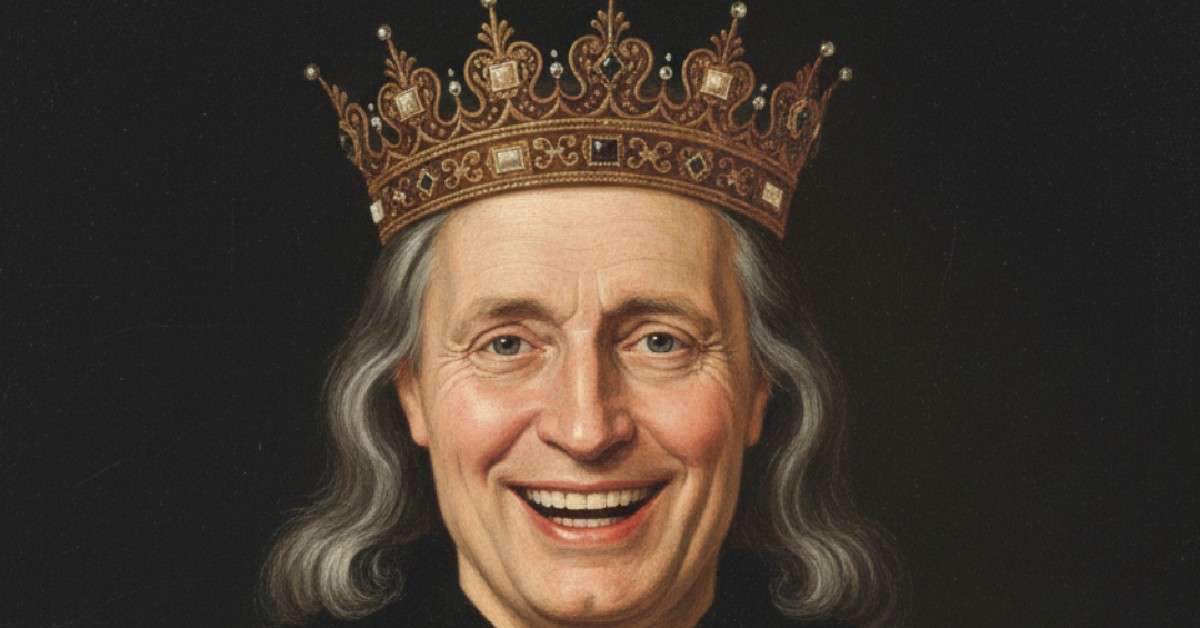
Born in February 1426 to the family of Count Dietrich of Oldenburg and Hedwig of Holstein, Christian I emerged during a time of substantial dynastic ambitions. This was within the German and Scandinavian territories. At the onset of his life, Christian bore little indication of the monumental future that awaited him. However, his lineage, embroiled in the noble pursuits of power, placed him at the point of significant hereditary claims.
Early Life and Birthright of Christian I
Christian hailed from the House of Oldenburg, a noble family with German roots. They would go on to become one of the most influential royal families in Europe. What’s more, this family ascendency began with Christian himself, who transformed their fortunes from mere counts to regal heights. With the marriage of his parents in 1423 and the birth of Christian soon after, their standing began its ascent.
Christian’s rise to kingship was far from linear, as it required traversing a landscape dotted with political intrigue and regional conflicts. The opportunity for kingship in Denmark, Norway, and eventually Sweden arose due to complex political maneuvers. These positions matured following the extinction of the House of Estridsen in Denmark, paving the road for Christian’s unforeseen ascension.
His marriage in 1449 to Dorothea of Brandenburg played a pivotal role in solidifying his claim to the Scandinavian thrones. By allying with a prominent Brandenburgian family, Christian secured vital political support that enabled his ascent. This union with Dorothea—an influential political arrangement—significantly added legitimacy to his aspirations abroad.

Career Highlights of Christian I
Christian I’s reign as king of Denmark from 1448 to 1481 marked a transformative era in Scandinavian history. His career featured significant achievements, including the expansion of his family’s influence, strategic territorial acquisitions, and the stabilization of his kingdoms. Christian’s reign dealt heavily with consolidating power, navigating alliances, and addressing regional conflicts. This was while overseeing cultural advancements that enriched his territories.
The Kalmar Union and Reign in Scandinavia
A defining highlight of Christian’s career was his role in the Kalmar Union. The union was an agreement that sought to unite the kingdoms of Denmark, Norway, and Sweden under a single monarch. Although the union was established prior to Christian’s reign in 1397, it was Christian who worked diligently to maintain and strengthen its unity.
In 1448, Christian was elected king of Denmark following the extinction of the direct male line of the House of Estridsen. His election as king of Norway followed shortly in 1450, demonstrating the deepening integration between the two kingdoms under his rule. Christian’s coronation as King of Sweden in 1457 temporarily solidified the Kalmar Union. Although Swedish inner conflict and noble unrest frequently threatened this alliance.
Christian’s stewardship over these domains was marked by efforts to centralize authority, improve administrative efficiency, and impose order. Despite intermittent Swedish resistance, whose independence aspirations eventually fractured the union, Christian I’s leadership helped sustain the concept of a united Scandinavian monarchy over decades.
Economic and Territorial Expansion
In the course of his reign, Christian I also sought to expand his territorial influence and consolidate economic prosperity for his kingdoms. His ambitions were underscored by two significant acquisitions. These were the Duchy of Schleswig and the County of Holstein. After prolonged negotiations, Christian secured these regions in 1460, bringing them bindingly under the Danish crown and enhancing his economic reach. The acquisition boosted cross-border trade opportunities and integrated his reign within the mightier German states of the Holy Roman Empire.
During his reign, Christian I implemented policies that increased economic growth and development. He focused on improving infrastructure, such as road systems and harbors. Thus, facilitating trade and commerce in the region. Christian’s reign also saw Denmark participating more actively in regional trade networks, securing long-term economic stability for his kingdom.
Cultural and Institutional Contributions
Among his lasting legacies is the establishment of the University of Copenhagen in 1479, which played a critical role in fostering learning and scholarship in the region. As a devout Catholic, Christian I patronized the construction and renovation of several religious institutions within his domains.
Furthermore, his efforts to support the Church further secured his legitimacy as a divinely sanctioned monarch. And it helped in maintaining essential ties with the Pope and other religious bodies. By investing in monastic communities and church construction, Christian promoted cultural and intellectual growth throughout his kingdoms.
Through his reigns in Denmark, Norway, and Sweden, Christian I masterfully navigated the political and economic landscapes of his time. Hence, establishing a lasting legacy that profoundly impacted Scandinavia for generations. His efforts to maintain the Kalmar Union, expand territorial holdings, and foster cultural and educational development underscore the high points of his career.
Conclusion
Christian I’s ascension to power and subsequent reign over Denmark, Norway, and for a time, Sweden, marked an era characterized by dynastic consolidation and regional stability. Through strategic marriages and alliances, territorial expansion, and cultural patronage, Christian I laid the groundwork for the enduring influence of the Oldenburg dynasty. Lastly, his leadership helped to sustain the concept of a united Scandinavian monarchy and promoted economic and cultural vibrancy within his realms.
FAQs about Christian I
1. Who was Christian I?
Christian I was a 15th-century monarch who served as the king of Denmark, Norway, and, for a time, Sweden. Also, he played a crucial role in maintaining the Kalmar Union and significantly impacted Scandinavian politics, economy, and culture.
2. What is the Kalmar Union?
The Kalmar Union was a series of personal unions that united the kingdoms of Denmark, Norway, and Sweden under a single monarch, established in 1397. Additionally, Christian I worked to sustain this union during his reign.
3. What were Christian I’s major achievements?
His major achievements included the acquisition of the duchies of Schleswig and Holstein, founding the University of Copenhagen, and promoting economic and cultural growth within his territories.
4. Why is he an important figure in Danish history?
Christian I’s expansion of the Oldenburg dynasty and his leadership during a transformative period in Scandinavian history highlight his importance. Moreover, his reign set the foundation for long-term political and cultural developments in the region.
5. What was his impact on education?
Christian I founded the University of Copenhagen in 1479. Besides, it became and remains a leading institution for higher education and scholarship in Denmark and Scandinavia.
6. Was Christian I successful in maintaining the Kalmar Union?
While Christian I made efforts to maintain the union, it faced ongoing challenges. This is particularly because of Sweden’s desire for independence, which ultimately led to intermittent conflict and eventual dissolution.
7. What legacy did Christian I leave behind?
His legacy includes the expansion and continuity of the Oldenburg dynasty, increased territorial holdings, policies fostering economic stability, and cultural advancements through religious and educational patronage.