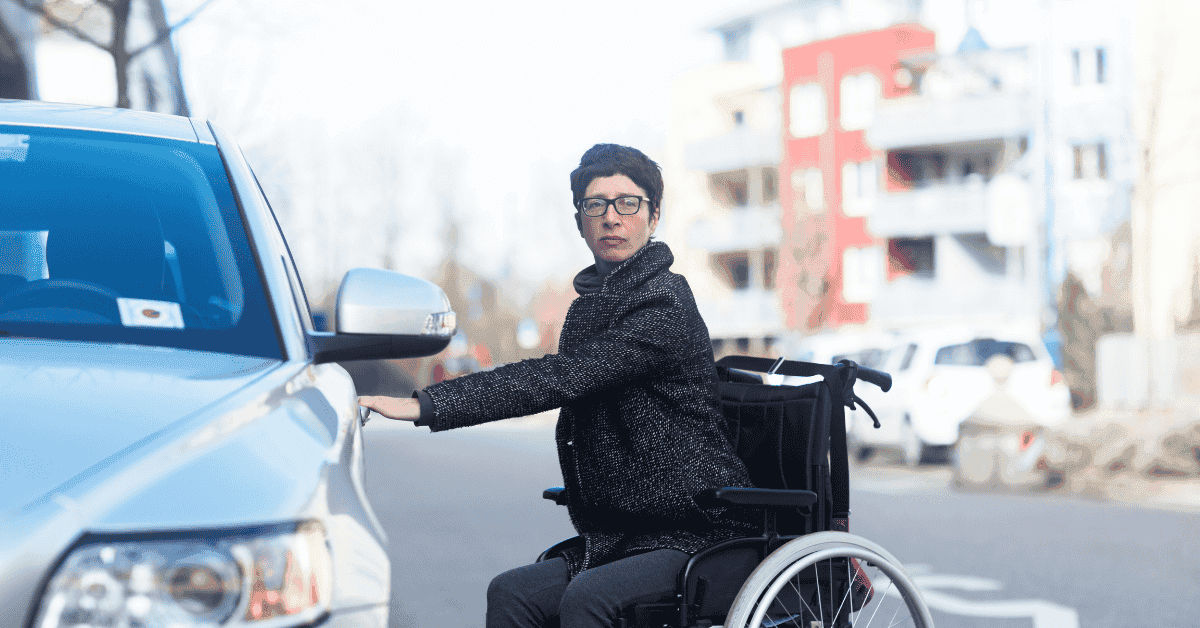
A Danish family’s rescue from a German autobahn breakdown this week has exposed a little-discussed gap: even with full insurance and EU health rights, disabled travelers can still be stranded abroad with no clear way to get their wheelchairs home.
The Navne Rothenborg family was driving back to Denmark through Germany when their car died on the motorway. They had proper insurance, a European Health Insurance Card, and a powered wheelchair. What they did not have was a pre-arranged plan for repatriation with 200 kilograms of disability equipment. After hours of confusion involving police, insurers, and frantic social media appeals, a small taxi firm in North Jutland drove through the night to collect them. The episode, reported by TV2 this week, has put a spotlight on a practical blind spot in Denmark’s otherwise coordinated support for internationals and disabled residents.
The data everyone else missed
Germany recorded 427 injury crashes on its autobahns in 2025 involving vehicles adapted for or carrying disabled passengers, according to the latest German Federal Statistical Office transport tables. That figure has risen by roughly 18 percent in five years, yet it appears in no Danish or English language reporting on holiday travel risks. Crashes involving minibuses and small buses, the category most used for wheelchair transport, climbed to 2,786 in 2025 from about 2,360 in 2020.

For families traveling with powered wheelchairs, each trip can mean hauling 200 to 250 kilograms of gear once ramps and tiedown equipment are factored in. Standard car hire and airline assistance tools assume far less. That mismatch leaves many travelers improvising when something goes wrong on a foreign motorway, far from home and often unable to speak the local language.
What Denmark offers inside its borders
Denmark has spent years building one stop support for internationals settling here. International Citizen Service centres now operate in Copenhagen, Esbjerg, Aalborg, Odense, Sønderborg, and Aarhus, offering free English language guidance on CPR registration, MitID, tax cards, and residence permits. ICS East in Copenhagen explicitly lists CPR registration and MitID issuance among its core services, and notes it can only guide on tax cards, not issue them.
Municipal integration counselors and newcomer services have expanded since 2022, often via EU funded projects. They cover housing, schooling, spouse career support, and connections to local networks. The EU Welcome Work guide for Denmark spells out emergency number 112 and medical helpline 1813 for the Capital Region. What it does not provide is any guidance on emergency numbers or protocols abroad, even though it targets newcomers who will later travel outside Denmark.

The gap opens at the border
Under EU law, Danish residents traveling in the union have a right to medically necessary care using the European Health Insurance Card. But transport home with wheelchairs and other large aids is not guaranteed and often depends on private insurance fine print, as documented in multiple sources from 2024. For internationals living in Denmark, the problem cuts both ways. They may hold Danish issued health cards and wheelchairs, yet rely on foreign roads, police, and insurers when visiting their home country or touring Europe.
The most recent available data on disabled residents in Denmark, from 2023, showed about 112,000 people living with severe mobility limitations requiring technical aids. That figure has remained roughly stable since 2018. Eurostat data from the same year showed that foreign born residents across the EU are slightly more likely to report severe activity limitations than natives, at 24 percent versus 22 percent among native Danes, suggesting internationals in Denmark may be disproportionately affected by any gaps in cross border emergency transport.
When systems fail, private actors step in
Specialized wheelchair transport companies like Terndrup Taxa og Turistbusser in North Jutland build their business around serving travelers standard taxis cannot accommodate. These firms often operate on short notice, with managers describing themselves as sleeping with their trousers on, ready to respond. In the Navne Rothenborg case, no insurer or municipal system had a ready made protocol. A private firm filled the void, driving overnight across Germany to collect the family and their equipment.

What has changed and what has not
Over the past 18 months, Denmark and the EU have tightened immigration rules, including stricter requirements for permanent residence and family reunification reported in 2026. In January this year, the European Commission highlighted Denmark’s integration policy developments, focusing on residence and labor market integration but not cross border emergency mobility. Meanwhile, ICS and municipal services inside Denmark have become more sophisticated, yet no ICS style mechanism exists for Danes or internationals facing complex cross border emergencies involving medical equipment abroad.
As travel rebounds strongly post pandemic, more families with disabled members are driving long distances across several EU countries, increasing the likelihood of breakdowns far from home. Airlines are required to offer assistance to passengers with reduced mobility, including carriage of wheelchairs. No equivalent enforceable framework exists for road based repatriation after a breakdown on the autobahn.
Practical steps before you drive
Residents planning to travel abroad with powered wheelchairs or extensive aids should verify that their insurance explicitly covers repatriation with medical equipment, not only evacuation of people. Carry a portable dossier in English, Danish, and the language of your destination, listing wheelchair weight, dimensions, battery type, any medical devices, and contact details for your Danish GP and municipality. Municipal integration counselors and ICS centers can help internationals identify specialized transport providers in their region before departure.

When an emergency occurs abroad, call 112 first, then local police. Once immediate danger is addressed, contact insurers, the nearest Danish embassy or consulate, and if you are an international in Denmark, your home country’s embassy to coordinate options. Inside Denmark, ICS and local citizen service remain the main entry points for issues like replacement of damaged health cards or securing interim support if a breakdown abroad affects work or study dates.