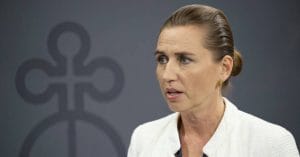
Denmark runs as a unitary parliamentary constitutional monarchy, where King Frederik X reigns but never rules. Real power sits with the Folketing, the country’s 179-seat parliament, and a Prime Minister who must keep its trust.
What Type of Government Does Denmark Have? The Short Answer
Denmark is a constitutional monarchy combined with a parliamentary democracy. The monarch is head of state with ceremonial duties only. Executive power is exercised by the Prime Minister and Cabinet, accountable to the Folketing.
This hybrid model has been in place since the Constitution of June 5, 1849. Danes still celebrate that date as Grundlovsdag, an unofficial holiday where politicians give speeches in town squares. After almost a decade living here, I can confirm: it feels less like a parade and more like a calm civic picnic.
Key Facts at a Glance
- Form of government: Unitary parliamentary constitutional monarchy
- Head of state: King Frederik X (since January 14, 2024)
- Head of government: Prime Minister Mette Frederiksen (Social Democrats)
- Legislature: Folketing, unicameral, 179 seats
- Constitution: Grundloven, signed 1849, last amended 1953
- Electoral system: Proportional representation, 2% threshold
- Realm: Denmark, Greenland, and the Faroe Islands (Rigsfællesskabet)
How the Danish Government Works in Practice
To understand what type of government Denmark has, look at how three branches share power. The Constitution splits authority between the monarch, the Folketing, and the courts. In practice, the elected parliament dominates.
The Constitutional Monarchy: Ceremonial, Not Political
King Frederik X ascended the throne on January 14, 2024. His mother, Queen Margrethe II, abdicated after 52 years on the throne. It was the first Danish abdication in nearly 900 years.
The King opens parliament each October, signs laws, and receives foreign ambassadors. He does not vote, veto, or shape policy. As the official Royal House website states, “The Monarch’s tasks are mainly representative.”
For many expats, the monarchy feels like a soft brand, not a power. You will see Frederik’s portrait at the post office and his face on the new 50-kroner coins. The political weight, however, lies elsewhere entirely.
The Folketing: Where the Real Power Sits
The Folketing is Denmark’s single chamber parliament, located at Christiansborg Palace in central Copenhagen. It has 179 members: 175 elected in Denmark, 2 in Greenland, and 2 in the Faroe Islands. Members serve four-year terms, unless the Prime Minister calls an early election.
Voter turnout is famously high. According to Statistics Denmark, the 2022 general election drew 84.2% of eligible voters to the polls. That is the kind of civic muscle most democracies envy.
The Executive: Prime Minister and Cabinet
The Prime Minister, or Statsminister, leads the government from Statsministeriet on Slotsholmen. Mette Frederiksen has held the post since June 2019. After the November 2022 election, she formed a rare cross-bloc coalition.
That coalition, called the SVM government, joined the Social Democrats with Venstre and the new Moderates party. Such alliances across the traditional left-right divide are unusual in Danish history. Most Danish governments since 1909 have been either coalitions or single-party minority cabinets.
The Judiciary: Independent and Quiet
Denmark’s courts run on three levels: 24 district courts, two high courts, and Højesteret, the Supreme Court. Judges are appointed by the monarch on the recommendation of the Minister of Justice. According to the World Justice Project’s Rule of Law Index 2024, Denmark ranks first in the world.
The courts can review whether laws comply with the Constitution. They rarely overturn statutes, but they can. The Danish judicial system is famously slow but trusted, which is a typically Nordic trade-off.
The 1849 Constitution and What Changed in 1953
Denmark’s political DNA was rewritten in two key moments. The first was Grundloven of 1849, signed by King Christian VIII’s successor, Frederik VII. It ended absolute monarchy after 188 years and introduced basic civil rights.
The second turning point was the 1953 revision. It abolished the Landsting, the upper house, leaving the Folketing as a single chamber. It also allowed female succession to the throne, a change that eventually delivered Margrethe II.
Section 3 of the Constitution sets out the separation of powers. Section 20 allows Denmark to transfer authority to international bodies, which is how EU membership was made legal. According to the official text, the Constitution has not been amended since 1953, which is unusual in Europe.
How Danes Vote: Proportional Representation Explained
Denmark uses a proportional representation system with a 2% national threshold. That means any party clearing 2% of votes gets seats in parliament. The result is a crowded, varied Folketing.
After the 2022 election, twelve parties won seats. They ranged from the far-left Red-Green Alliance to the right-wing Denmark Democrats, founded by ex-minister Inger Støjberg. For expats used to two-party politics, the menu can feel overwhelming at first.
Who Gets to Vote?
Only Danish citizens can vote in general elections. As a foreign resident, I cannot vote for the Folketing, even after years of paying Danish taxes. EU and long-term foreign residents can, however, vote in local and regional elections.
Local elections happen every four years. The next one is in November 2025 and will fill seats across 98 municipalities and 5 regions. If you have lived here longer than four years from a non-EU country, your vote counts here.
Coalition Politics: Why No One Rules Alone
Denmark has not produced a single-party majority government in over a century. Proportional representation makes that almost mathematically impossible. As a result, every Statsminister must negotiate.
This is where the famous Danish word forlig matters. It means a broad political agreement, often binding for years. Major reforms on pensions, defense, and climate are usually built on forlig that crosses party lines.
The Current SVM Government
The Frederiksen II government holds 89 of 179 seats with its three coalition partners. That is a slim majority, the first since 1993. The deal was hammered out over 42 days of post-election negotiations.
As Mette Frederiksen said when presenting the coalition deal, “We are forming a broad government for a country in a new era.” Critics on the left, including her former ally the Socialist People’s Party, accused her of selling out. The result is a government that is hard to pin down ideologically.
The Welfare State Backbone
Ask any expat what defines Danish governance, and they will mention the welfare model. Denmark provides universal healthcare, free university education with student stipends (SU), and generous unemployment benefits. It is funded by some of the highest taxes in the OECD.
The top marginal income tax sits around 55.9%. VAT is a flat 25%, with no reduced rate for food or books. According to the OECD Revenue Statistics 2023, Denmark’s tax-to-GDP ratio is 46.0%, second only to France.
Trust makes this model work. As reported by the OECD’s “Trust in Government” 2023 survey, around 67% of Danes say they trust their national government. Compare that to the OECD average of 41%, and you start to see why Danish socialism works where it might fail elsewhere.
Denmark in the EU, NATO, and the Realm
Denmark joined the European Economic Community in 1973 and NATO at its founding in 1949. It is also part of the Nordic Council. The country keeps the krone instead of the euro, holding on to an opt-out won in 1992.
In 2022, Danes voted to drop their EU defense opt-out by 67% to 33%. That decision, made weeks after Russia’s invasion of Ukraine, reshaped Denmark’s defense strategy overnight. It also showed how fast Danish consensus can shift when the security picture changes.
The Realm: Denmark, Greenland, and the Faroe Islands
Denmark proper, Greenland, and the Faroes form Rigsfællesskabet, the Commonwealth of the Realm. Both Greenland and the Faroes have home rule with their own parliaments and prime ministers. Copenhagen still controls foreign policy, defense, and the currency.
This relationship has been under pressure. The Greenland independence debate sharpened after President Trump’s renewed interest in buying Greenland in 2025. Greenlandic politicians want full sovereignty, but the math on subsidies and minerals is tricky.
What I Have Learned Living Under This System
Danish politics is quieter than what most expats are used to. Election campaigns last three weeks, debates are restrained, and personal attacks are rare. The Folketing chamber is small, with members sitting almost shoulder-to-shoulder, which changes the tone of every speech.
The trade-off is a system that can feel impenetrable from the outside. There are 12 parties, three political blocs, and constant horse-trading. According to a 2024 study by the University of Copenhagen, Danish politicians speak less clearly once they enter government, which I can confirm from listening to too many DR2 talk shows.
I have come to respect the patience baked into the model. Reform here moves slowly because every party gets a hearing. When it finally moves, the change tends to stick.
How Denmark’s Government Compares to Other Models
Denmark vs. the United Kingdom
Both are constitutional monarchies with parliaments. The UK uses first-past-the-post and has an upper house. Denmark uses proportional representation and abolished its upper house in 1953.
Denmark vs. the United States
The US is a presidential republic with a written constitution and strict separation of powers. Denmark fuses the executive and legislature, which is the heart of parliamentary government. There is no Danish equivalent of a presidential veto or a Supreme Court that routinely strikes down laws.
Denmark vs. Sweden and Norway
All three Nordic states are constitutional monarchies with strong welfare systems. Norway is not in the EU. Sweden’s parliament, the Riksdag, has 349 seats compared to Denmark’s leaner 179.
Recent Government Actions That Show the System in Motion
The Danish government’s machinery shows up in everyday news. In 2024, the cabinet pushed through a pension reform that raised the retirement age to 70 by 2040. The parliamentary vote on the pension age exposed tension within the SVM coalition itself.
Other recent moves include a mobile phone ban in public schools, a major employment reform plan, and a cut to the electricity tax. According to Altinget, the legislative pipeline for 2025 also includes defense spending hikes and a new climate law. Each follows the same playbook: cross-party negotiation, broad forlig, slow rollout.
Trusted Sources for Going Deeper
- The Folketing official website
- Statsministeriet (Prime Minister’s Office)
- The Royal House of Denmark
- Denmark.dk: Government and Politics
- Britannica: Denmark Government and Society
- Transparency International Corruption Perceptions Index
Frequently Asked Questions
What type of government does Denmark have, in one sentence?
Denmark has a unitary parliamentary constitutional monarchy. The monarch is symbolic, the Folketing makes laws, and the Prime Minister runs the government.
Who is the head of state in Denmark?
King Frederik X is the head of state. He took the throne on January 14, 2024, after Queen Margrethe II abdicated. His role is ceremonial, not political.
Who is the head of government in Denmark?
Mette Frederiksen of the Social Democrats has been Prime Minister since June 2019. After the 2022 election, she formed the SVM coalition with Venstre and the Moderates. She leads daily affairs and chairs the Cabinet.
Is Denmark a democracy or a monarchy?
It is both. Denmark is a constitutional monarchy in form and a parliamentary democracy in function. The monarch reigns but does not rule.
How many parties are in the Danish parliament?
Twelve parties hold seats in the current Folketing. The 2% national threshold keeps the smallest fringe parties out. Coalition or minority governments are the norm because no single party wins a majority.
Can foreigners vote in Denmark?
Only Danish citizens vote in general elections. Foreign residents can vote in local and regional elections after meeting residency rules. EU citizens can vote in local elections immediately upon registration.
What is the Folketing and where does it meet?
The Folketing is Denmark’s single chamber parliament with 179 seats. It meets at Christiansborg Palace in Copenhagen. Sessions are open to the public and live-streamed.
Is Denmark a socialist country?
No, Denmark is a market economy with a large welfare state. As reported by The Economist’s Democracy Index 2023, it ranks fifth globally as a “full democracy.” High taxes fund universal services, but private business thrives.
How often are elections held in Denmark?
General elections happen at least every four years. The Prime Minister can call an early election at any time. Local and regional elections run on a separate four-year cycle.
Does the Danish monarch have any real power?
In practice, no. The monarch signs laws and formally appoints the Prime Minister chosen by parliament. Refusing to sign is theoretically possible but politically unthinkable.