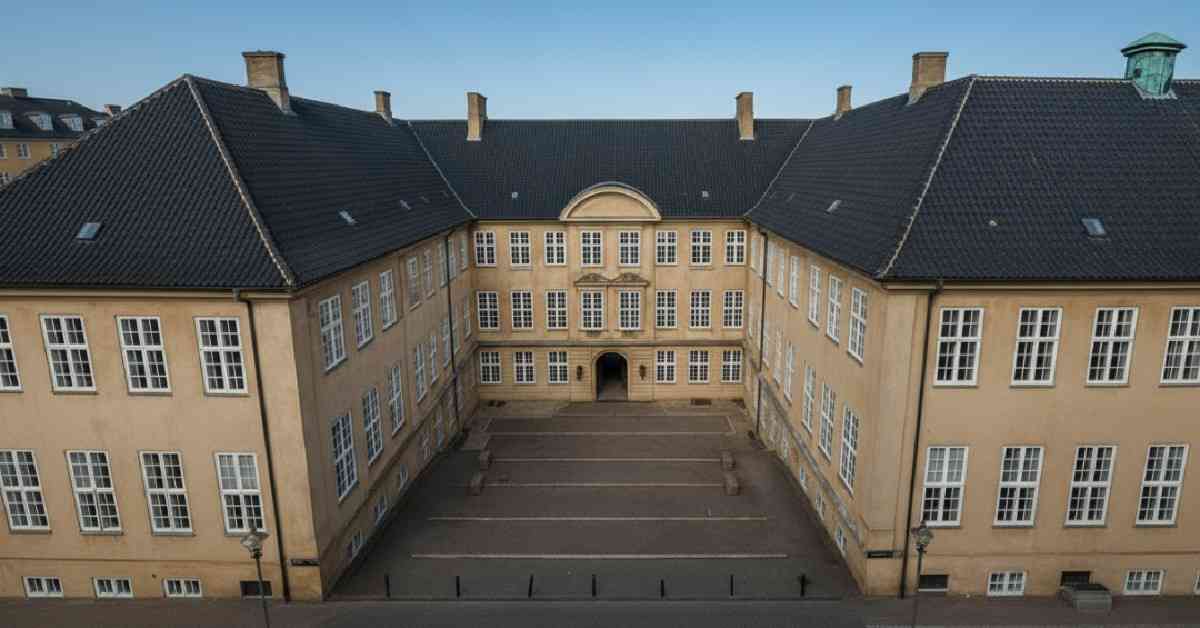
The National Museum of Denmark is Copenhagen’s most ambitious history lesson, packing 14,000 years of Danish life, Viking gold, and global ethnography into a former Rococo palace just minutes from Strøget.
When friends visit me in Copenhagen, I send them to one place first. Not Tivoli. Not Nyhavn. The National Museum of Denmark, locally known as Nationalmuseet, on Ny Vestergade 10. It is the single best way to understand this country before you start arguing about it over a beer.
I have lived in Denmark long enough to have visited the museum in every season, with every kind of guest. The exhibitions keep changing, the building stays magnificent, and the admission policy is one of the most generous in the city. If you are new here, this is your shortcut to Danish identity.
Why the National Museum of Denmark Matters to Expats
Denmark hides its history well. The streets look polished, the politics look pragmatic, and the cycling culture distracts from the deeper story. The National Museum of Denmark is where that deeper story sits, organised on three floors and roughly 42,000 displayed objects.
For expats, the museum does something subtle. It shows you that Danish modesty rests on a long, complicated, often brutal past. You start seeing the country differently the moment you leave the door.
A Quick Snapshot Before You Visit
- Founded: 1807, under the Royal Commission for the Preservation of Antiquities.
- Building: The Prince’s Mansion, a Rococo palace from 1744 by architect Nicolai Eigtved.
- Address: Ny Vestergade 10, central Copenhagen, near Strøget and Christiansborg.
- Highlights: The Sun Chariot, the Egtved Girl, the Golden Horns of Gallehus, and the new Viking gallery.
- Admission: 150 DKK adults, 135 DKK online, free for under-18s.
- Hours: 10:00 to 17:00, daily April to October; closed Mondays November to March.
A Brief History of the National Museum of Denmark
The museum was founded in 1807 by a circle of scholars led by Rasmus Nyerup, a Copenhagen librarian alarmed by how fast Denmark’s antiquities were vanishing. Nyerup and the Antiquities Commission began gathering objects from churches, attics, and farms across the country.
From day one, admission was free. That was radical in 1807, when most royal collections in Europe stayed behind palace doors. Per the museum’s own institutional history, public access has been a founding principle, not a marketing afterthought.
How the Collection Grew
The early collection was mostly Viking and prehistoric finds. It expanded fast through royal donations, ethnographic expeditions, and the dissolution of monasteries. By the late 19th century, the museum was already one of the most comprehensive in northern Europe.
The colonial chapter is honest and uncomfortable. Materials from Tranquebar in India, from the Danish West Indies, and from Greenland sit in the ethnographic galleries today. The museum increasingly addresses their origin stories rather than burying them.
The Building: A Rococo Palace in Disguise
The National Museum of Denmark occupies the Prince’s Mansion, originally built between 1743 and 1744 for the future King Frederik V. The architect, Nicolai Eigtved, introduced French Rococo to Denmark and shaped much of Frederiksstaden, the elegant quarter around the royal Amalienborg.
As reported by the Danish Architecture Centre, this is one of the best-preserved Rococo palaces in Denmark. Walk past the rough exterior and the courtyard opens into something quietly stunning. If you love Danish architecture, give yourself an extra half hour just for the staircase.
What to See Inside the National Museum of Denmark
The permanent exhibitions are spread across three floors and tell one story: nine thousand years of life on this small, wet, windy peninsula. You can do it in two hours or four, depending on your stamina and your taste for runestones.
I usually recommend starting with prehistory, then drifting upward chronologically. The pacing works. By the time you reach the 20th century, you actually understand why Danes vote the way they do.
The Prehistoric Treasures You Cannot Miss
- The Sun Chariot (Solvognen): A Bronze Age horse pulling a gilded sun disc, around 3,400 years old.
- The Egtved Girl: A teenage girl buried in an oak coffin in 1370 BCE, wearing the famous corded skirt.
- The Golden Horns of Gallehus: Replicas of two fifth-century horns covered in runic inscriptions.
- The Trundholm Sun Disc: One of the oldest depictions of solar mythology in Europe.
The Golden Horns story alone is worth the trip. The originals were stolen in 1802 and melted down by a goldsmith named Niels Heidenreich. The replicas are stunning, and the loss still stings two centuries later.
The Viking Galleries
The Viking section was refurbished in recent years and triggered serious debate in archaeological circles. A review in the journal Antiquity praised the design while questioning the choice of a celebrity designer over a curator-led approach. Expect swords, jewellery, ship rivets, and a runestone fragment from Jelling.
If the Vikings catch you, follow the trail. The Roskilde Viking Ship Museum is thirty minutes away by train. To understand whether the Vikings were really Danish, this museum gives you a far more honest answer than the tourist t-shirts.
Middle Ages, Renaissance, and Modern Denmark
The medieval rooms are full of altarpieces, painted Christs, and the slow story of Christianisation. The Renaissance section includes royal silver, scientific instruments, and the kind of luxury that funded Christian IV’s wars.
The modern Danish galleries cover 1660 to 2000, ending with welfare-state objects: a Lego brick, a fridge, a campaign poster. Recent Viking burial discoveries sometimes appear here in temporary displays before going on permanent show.
The Ethnographic Collection and Children’s Museum
The ethnographic floor takes you to the Arctic, Africa, Oceania, and the Americas. It is one of the most extensive collections of its kind in northern Europe. The Inuit section is especially strong, reflecting Denmark’s long entanglement with Greenland.
Downstairs, the Children’s Museum is one of the best in the city. Kids can climb into a Viking ship, dress in school uniforms from 1900, and walk through a Pakistani bazaar. Bring a child or borrow one for the afternoon.
Current and Upcoming Exhibitions in 2026
The museum runs a constant rotation of temporary shows. According to the official exhibitions page, two big titles dominate the calendar right now.
The Viking Sorceress runs through August 2027 and uses new scientific findings to reconstruct the life of a high-status ritual specialist. Land Unknown, opening in 2026 and running until 2029, follows five Danish expeditions from Carsten Niebuhr in the 18th century to astronaut Andreas Mogensen.
Practical Tips for Visiting the National Museum of Denmark
Here is what I tell every expat planning their first visit. Block at least three hours, more if you have kids. Skip the tempting idea of cramming this into a quick lunch break.
Buy your ticket online in advance for the small discount and the queue savings. Bring a refillable water bottle, since Danish tap water is excellent and free everywhere in the building.
Opening Hours and Admission Prices
| Category | Price (DKK) |
|---|---|
| Adults (on-site) | 150 |
| Adults (online) | 135 |
| Groups of 10+ | 135 per person |
| Under 18 | Free |
| Companion Card holder + 1 | Free for companion |
As stated by the museum’s information page, hours run daily 10:00 to 17:00 from April to October. From November to March, the museum closes on Mondays. It is also closed on 24, 25, and 31 December.
How to Get There
The museum sits a five-minute walk from Copenhagen Central Station and four minutes from Gammel Strand metro on the M3 Cityringen line. If you are using Copenhagen public transport, almost any bus through the city centre drops you nearby.
Cycling is the Danish default, and there are racks outside the entrance. For tips, see our guide to cycling in Copenhagen. Driving is possible but parking around Christiansborg is limited and expensive.
Accessibility and Family Facilities
The museum loans wheelchairs and walkers free of charge at the front desk. Lifts reach every public floor, and accessible toilets are clearly marked. The Companion Card scheme allows one helper to enter for free with a card holder.
Café Daisy on the ground floor is open without an entry ticket. Strollers are welcome, and there are baby-changing rooms throughout. Payment is by Mastercard, VISA, or MobilePay, no cash needed.
The National Museum’s Place in Danish Cultural Life
Danish museum attendance is booming. As reported by Nordisk Post, museum visits rose 10.2 percent from 2024 to 2025, reaching 17.5 million, the highest in four decades. Visitor growth was sharpest among Danes whose highest education is primary school, up 20 percent year on year.
The National Museum is the engine of that growth. It is also the institutional partner Danish schools rely on most heavily for history classes. If you have kids in folkeskole, expect a class trip here sooner or later.
Funding Pressures and the 2024 Museums Reform
It is not all good news. According to The Copenhagen Post, the museum announced administrative restructuring and job cuts in January 2026. Despite record visitor numbers and doubled revenue, costs outpaced income.
The Danish government’s 2024 museums reform added 75 million DKK in permanent annual funding for the country’s 95 state-recognised museums. That helps, but inflation, conservation costs, and salary obligations keep biting. As an expat, this is a quietly important story about how Denmark funds its cultural commons.
My Honest Take After Many Visits
The National Museum of Denmark is not flashy. It does not chase Instagram moments. The lighting is sober, the labels are dense, and the building’s quirks mean you sometimes get lost between the Bronze Age and the 1800s.
That, to me, is its strength. It treats visitors like adults capable of paying attention. After ten years in Denmark, I still find new objects every time I return. If you only visit one museum in Copenhagen, make it this one, then add a few others when you have time.
Pair Your Visit With These Copenhagen Stops
The location puts you next to some of the city’s best landmarks. Christiansborg Palace is across the canal, the Thorvaldsens Museum is two minutes away, and the harbour walk starts behind you. Add a coffee stop and you have a full day.
For deeper planning, see our one day in Copenhagen guide and our list of 25 things to do in Copenhagen. If you want to swerve the obvious, our Copenhagen hidden gems piece pairs nicely with a museum morning.
FAQs About the National Museum of Denmark
How much does it cost to enter the National Museum of Denmark?
Adult admission is 150 DKK on site and 135 DKK if you book online through the official website. Visitors under 18 enter for free. Groups of 10 or more pay 135 DKK per person, and Companion Card holders bring one companion free.
Is the National Museum of Denmark worth visiting?
Yes, especially for expats. It covers 14,000 years of Danish and global history under one roof, in a Rococo palace minutes from Strøget. Plan three to four hours, longer if you bring children or love prehistory.
What are the must-see exhibits at the National Museum of Denmark?
The Sun Chariot, the Egtved Girl, the Golden Horns of Gallehus, and the Viking galleries are the headline acts. The Children’s Museum and the ethnographic Arctic collection are also exceptional. Current special shows include The Viking Sorceress and Land Unknown.
How do I get to the National Museum of Denmark?
The museum is at Ny Vestergade 10, central Copenhagen. It is a five-minute walk from Copenhagen Central Station and a four-minute walk from Gammel Strand metro station on line M3. Buses and bicycles also work easily.
Is the National Museum of Denmark free?
Entry is free for everyone under 18 years old. Adults pay 150 DKK, or 135 DKK if booked online in advance. Café Daisy on the ground floor can be visited without a ticket.
What language are the exhibits in?
Almost all signage and labels appear in both Danish and English. The audio guide, special exhibitions, and many of the family activities are also bilingual. International visitors rarely struggle.
When is the best time to visit the National Museum of Denmark?
Weekday mornings just after opening are the quietest. Rainy weekends are the busiest, since the museum is also a top rainy-day option. Avoid Mondays from November to March when the museum is closed.
Is the National Museum of Denmark accessible for visitors with disabilities?
Yes. The museum offers full step-free access, lifts to every floor, accessible toilets, and free wheelchair and walker loans. The Companion Card scheme provides free entry for one helper accompanying a card holder.