The Trapholt Museum sits above Kolding Fjord with 7,000 works and around 600 chairs, one of Denmark’s most significant design collections. From 1 January 2026 it closes for a 14-month rebuild, reopening in March 2027.
The Trapholt Museum: Denmark’s Most Underrated Design Powerhouse
I have dragged plenty of visiting friends across Jutland over the years. Most expect Aarhus and Aalborg. Few expect Kolding.
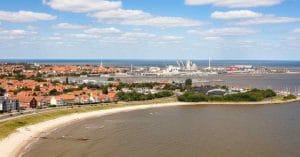
The Trapholt Museum is the reason they should. Perched above Kolding Fjord, it holds modern art, craft, design, and Denmark’s deepest collection of chairs. The setting alone, low buildings on a slope, light pouring in from the water, makes it feel less like a museum and more like a Danish living room scaled up to public size.
What surprises most expats is that this place punches well above its postcode. In 2023 the European Museum Academy named it Art Museum of the Year. In 2025, CIMAM shortlisted it for the Outstanding Museum Practice Award. Not bad for a museum two hours from Copenhagen.
Inside The Trapholt Museum Collection
According to the museum’s own figures, the collection holds around 7,000 works covering art from 1900 onwards. Painting, ceramics, textiles, sculpture, and furniture sit side by side. Roughly 200 key works are available to browse on the museum’s online platform.
The collection’s identity is hybrid by design. Trapholt was founded in 1988 as Trapholt Kunstmuseum, then dropped “Kunstmuseum” as craft and design moved to the centre of its mission. That shift, small on paper, explains everything about the place.
The Chair Collection: 600 Reasons to Care About Danish Design
The chair collection is the headline act. Around 600 chairs make up one of the most significant chair archives in Denmark, with pieces by Arne Jacobsen, Hans J. Wegner, Børge Mogensen and others. If you have ever sat in a Series 7 in a Copenhagen café and wondered who decided that shape was correct, this is where you find out.
Chairs sound dull until you see 600 of them on display. They tell the story of how Danes built their domestic world after the war. Modest materials, honest joinery, ergonomic obsession, exported globally.
Arne Jacobsen’s Kubeflex Summer House on the Grounds
Most people know Jacobsen for the Egg, the Swan, and the AJ Lamp. Almost no one knows about his Kubeflex modular summer house. Trapholt has one on the grounds, reconstructed and open to the public.
It is a small, square, prefab unit built from interchangeable cubes. As reported by Scandinavian Design, the prototype was Jacobsen’s attempt at flexible mass housing for ordinary Danes. Guided tours run daily, free with your ticket, weekdays at 13:00 and 15:00, weekends and holidays at 11:00, 13:00, and 15:00.
The Sculpture Park That Never Closes
The sculpture park around the museum is free, open year-round, and walkable from Kolding Fjord. Contemporary Danish artists are scattered across the lawns, with the fjord as backdrop. No ticket, no opening hours, no fuss.
This matters more than usual right now. During the renovation, the sculpture park stays open even when the museum building does not. Locals walk dogs through it. I have done meetings on the benches there.
Exhibitions at The Trapholt Museum
Trapholt rotates exhibitions constantly, but a few stand out as recurring expressions of what the institution actually believes in.
FEEL ME: The Largest International Exhibition to Date
FEEL ME opened on 26 September 2024 as the biggest international show the museum has ever staged. According to Trapholt, it features Daniel Wurtzel, Liz West, Cecilie Waagner Falkenstrøm, and others. The theme is emotion, sensation, and immersion.
I went in expecting gimmickry. I left thinking the curators had genuinely understood how exhausting digital life has become. The works ask you to feel something with your body, not your phone.
Your Exhibition and Participatory Curating
Since 2001, Trapholt has run a method it calls “Your Exhibition,” where visitors curate their own shows from the collection using digital tools. As noted by Practitioner Research in the Art Museum, this experiment has been cited internationally as a model for democratic curation. Director Karen Grøn has built much of her reputation on this work.
During the 2020 lockdown she launched LightHope, a participatory crochet project. Thousands of Danes crocheted small “light” motifs from home, later assembled into a single installation at the museum. It was the kind of project Denmark does well, quietly civic, slightly mad, ultimately moving.
The Trapholt Museum Closure and Expansion in 2026
Here is the news no current guidebook tells you. The museum closes to the public on 30 December 2025, with renovation starting 1 January 2026. The expected reopening is 1 March 2027.
The expansion is being delivered by a trio of serious Nordic architecture firms. 3XN, Reiulf Ramstad Arkitekter, and Lundgaard & Tranberg are involved at different stages. According to 3XN, the extension will create a new entrance and connect the inside galleries with the sculpture park and the fjord.
If you are an expat planning a 2026 trip with visiting parents, do not assume Trapholt is on the menu. Check the official site, ring +45 76 30 05 30, or settle for the sculpture park and the café. I have already covered this for our readers in our piece on the beloved Danish museum closing for 14 months.
How to Visit The Trapholt Museum
Once the museum reopens in 2027, here is the practical version of what you need to know. Some details may shift, so always cross-check with trapholt.dk before going.
Location and Getting There
The address is Æblehaven 23, 6000 Kolding, on the eastern edge of the city, in the Strandhuse area. Kolding sits on the main Jutland rail line, around 2 hours from Copenhagen and 1 hour from Aarhus. From Kolding station a local bus or a short taxi gets you to the museum.
If you are driving, parking is free. Cyclists can ride out along the fjord from the city centre in about 20 minutes.
Opening Hours and Tickets (Pre-Closure)
Before the renovation, the standard schedule was Tuesday to Sunday, 10:00 to 17:00, with Wednesday extended until 21:00. Closed Mondays. Expect the same rhythm after the 2027 reopening, though always confirm.
Adult tickets typically include all exhibitions, the Kubeflex tour, and access to the sculpture park. Under-18s go free. Annual membership is available and worth it if you live anywhere in the Triangle Region.
Café Trapholt and Outdoor Art
Café Trapholt overlooks the fjord and uses local ingredients. The smørrebrød and the cake are honest, not Copenhagen-priced.
After lunch, walk the sculpture park slowly. Many visitors rush the indoor galleries and skip the outdoor works. They are missing half the museum.
What to See Near The Trapholt Museum
Kolding earns a full day, not a stopover. Koldinghus, the medieval royal castle in the city centre, is the obvious pairing. Its modern restoration is itself a piece of Danish design history.
For more art, The Vejle Art Museum is 30 minutes north. Design pilgrims heading further afield can continue to Aarhus for the ARoS Aarhus Art Museum or detour west to Museum Jorn in Silkeborg.
Awards and International Recognition
The European Museum Academy gave Trapholt its Art Museum Award in 2023, citing participation, craft, and design as the museum’s defining strengths. In 2025, CIMAM nominated it for the Outstanding Museum Practice Award. Both bodies highlighted its collaborative approach.
Per the CIMAM nomination, Trapholt also holds the Danish Critics Award and ongoing support from the Danish Arts Foundation. For a regional museum outside Copenhagen, that is a stack of credentials most national institutions would envy.
Why The Trapholt Museum Matters for Expats in Denmark
If you live here, Trapholt is one of the most useful museums you can know. It explains why every chair in your IKEA-furnished apartment is descended from Wegner. It explains why Danish “hygge” is partly an industrial design decision. It explains, in objects, why this country exports more aesthetic confidence than its population would suggest.
I think foreign visitors over-index on Louisiana. Louisiana is brilliant, but Trapholt sits closer to the working logic of Danish daily life. Compare it to Designmuseum Danmark in Copenhagen and you get two halves of the same conversation, one capital-facing, one regional and quieter.
Frequently Asked Questions About The Trapholt Museum
Is The Trapholt Museum open in 2026?
No. The museum building closes on 30 December 2025 for renovation. It is expected to reopen on 1 March 2027. The outdoor sculpture park remains free and open throughout the closure.
Where is The Trapholt Museum located?
The Trapholt Museum is at Æblehaven 23, 6000 Kolding, in southern Jutland, Denmark. It sits on a hillside overlooking Kolding Fjord, about a 10-minute drive or 20-minute cycle from Kolding city centre.
How do I get to The Trapholt Museum from Copenhagen?
Take a direct train from Copenhagen Central to Kolding, around 2 hours. From Kolding station, take a local bus or a 10-minute taxi to the museum. Driving via the E20 takes around 2.5 hours.
What is The Trapholt Museum known for?
The Trapholt Museum is best known for its chair collection of around 600 pieces, including iconic Danish furniture design. It also holds modern art, ceramics, textiles, and the on-site Kubeflex summer house designed by Arne Jacobsen.
How many works does The Trapholt Museum hold?
According to the museum, the collection contains approximately 7,000 works of art, craft, and design from 1900 onwards. Around 200 selected works can be browsed online via the official Trapholt website.
Is The Trapholt Museum free to enter?
The sculpture park is always free with no ticket required. The museum building itself charges admission for adults, with free entry for visitors under 18. Membership and annual passes are available.
Who designed the Trapholt expansion?
The expansion involves Nordic architecture firms 3XN, Reiulf Ramstad Arkitekter, and Lundgaard & Tranberg. As reported by 3XN, the new design creates a new arrival entrance and connects the museum more directly with the sculpture park and Kolding Fjord.
Is The Trapholt Museum family-friendly?
Yes. The museum runs interactive exhibitions, school programmes, and family workshops. The sculpture park is excellent for kids and dogs. Under-18s enter the museum building for free.
Can I see Arne Jacobsen’s summer house at Trapholt?
Yes. The Kubeflex summer house is on the grounds and included with museum admission. Guided tours run weekdays at 13:00 and 15:00, and weekends and holidays at 11:00, 13:00, and 15:00.
What is the closest castle to The Trapholt Museum?
Koldinghus, the medieval royal castle in central Kolding, is about 10 minutes away by car. Its restoration is a landmark of modern Danish architectural conservation, and it pairs perfectly with a Trapholt visit.