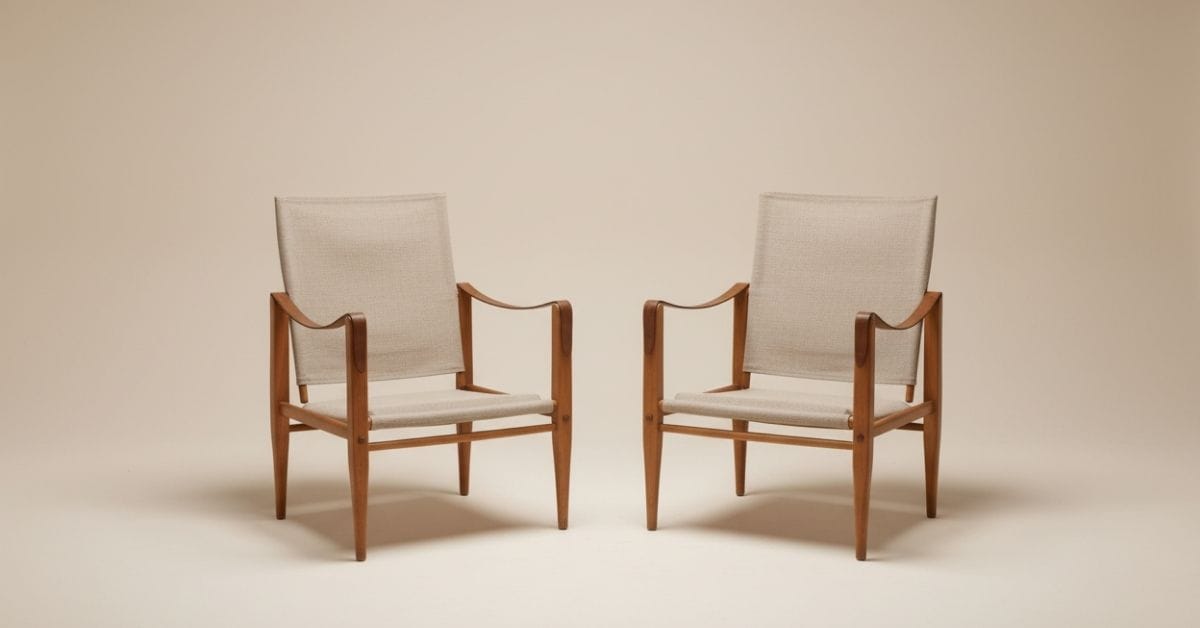
The Classic Safari Chair by Kaare Klint stands as a seminal creation in the pantheon of Danish Design.
Key Points:
- An Icon of Danish Design History: First introduced in 1933, the Safari Chair exemplifies Danish design’s simplicity, craftsmanship, and functional elegance, inspired by colonial campaign furniture.
- The Vision Behind the Design: Kaare Klint aimed to create a modern, portable chair that combined beauty and practicality, emphasizing human ergonomics and ease of assembly.
- High-Quality Materials and Timeless Craftsmanship: Made from durable woods like ash or oak and finished with leather or canvas, the chair showcases meticulous craftsmanship and material quality.
- Cultural and Historical Significance: The Safari Chair helped popularize Danish design worldwide and remains a symbol of functional, aesthetic furniture, still in production today.
- Why the Safari Chair Still Matters: It exemplifies enduring quality and style, blending tradition with modern portability, suitable for various contemporary and classic interiors.
An Icon of Danish Design History
Revered for its simplicity, functional elegance, and homage to traditional craftsmanship, this furniture piece encapsulates the pioneering ethos of 20th-century modern design in Denmark. First introduced in 1933, the Safari Chair was inspired by British campaign furniture popularized during colonial times, furniture that had to be lightweight, portable, and easy to assemble without tools. Klint’s interpretation transformed these utilitarian qualities into a finely crafted, modern piece that has since attained iconic status.
The Safari Chair is more than just a functional object; it embodies a design philosophy centered around the harmony of form and function. Its ingenious design allows users to assemble and disassemble the chair with nothing more than their own hands, a feature that was revolutionary at the time and still impresses today. The piece merges comfort, mobility, and understated luxury, all pillars of Danish Design.
The Vision Behind the Design
Kaare Klint, often heralded as the father of modern Danish Design, was intimately concerned with human scale, proportion, and ergonomics. Educated first as an architect and later as a designer, he brought scientific precision and deep cultural reverence to the world of furniture. In creating the Safari Chair, Klint sought not merely to make a seat but to reimagine what a chair could be in a modern, mobile society. The ambition was to maintain the dignity and comfort of traditional furnishings while embracing new lifestyles defined by movement and adaptability.
Klint believed that design should be both beautiful and practical, grounded in the needs of real people. The Classic Safari Chair reflects this vision: with no nails, screws, or permanent fittings, it is entirely collapsible and can be flat-packed, decades ahead of its time and arguably a precursor to modern DIY furniture.
High-Quality Materials and Timeless Craftsmanship
One of the enduring qualities of the Classic Safari Chair is its meticulous choice of materials. The frame is typically crafted from solid ash or oiled oak, both durable yet lightweight woods native to Northern Europe. The seat and backrest are made of saddle leather or canvas, materials that age beautifully and mold to the user’s body over time. Leather arm straps not only add structural integrity but also contribute to the chair’s aesthetically pleasing profile. The fittings, often in brass or sturdy metal, enhance its visual appeal while offering long-term resistance to wear.
Light enough to be moved with one hand and strong enough to support everyday use, the Safari Chair epitomizes the functionality and craftsmanship for which Danish furniture has become renowned. The precision in the joinery and the quality of the finish reveal a level of care that speaks volumes about the traditions of workmanship in Denmark.
Cultural and Historical Significance
The Safari Chair is not just a masterpiece in design terms, it has also played a critical role in exporting the principles of Danish Design to a global audience. As one of Klint’s earliest works that received international recognition, it served as a template and inspiration for subsequent generations of designers including Hans J. Wegner, Arne Jacobsen, and Børge Mogensen. The chair remains in production today, a hallmark of its timeless appeal and functionality.
Its place in design history is also underlined by numbers: over 10,000 pieces have been sold since its inception, and it has been exhibited in more than 200 museums and galleries worldwide including the Designmuseum Danmark in Copenhagen. In 2013, the design world celebrated its 80th anniversary, and it continues to be spotlighted in retrospectives and design publications regularly.
Why the Safari Chair Still Matters
In an age of mass production and short-lived trends, the Classic Safari Chair by Kaare Klint stands as a beacon of enduring quality, thoughtful design, and cultural significance. It is both historical and modern, portable yet solid, minimal yet deeply expressive. Whether placed in a contemporary home, a mid-century modern setting, or a rustic lodge, its presence transforms a space, not only visually but emotionally. It invites not just sitting, but appreciation. This is the essence of Danish Design at its best: form in service to function, elevated by unwavering attention to detail.
For collectors, design aficionados, and lovers of timeless furniture, the Safari Chair is more than an object, it is a statement. A testament to the man who designed it, and the vision from Denmark that changed the world of furniture forever.
Why Buy the Classic Safari Chair by Kaare Klint
A Timeless Investment in Quality and Heritage
Purchasing the Classic Safari Chair by Kaare Klint is more than acquiring a piece of furniture, it’s investing in a piece of Danish cultural history. With its enduring materials, expert craftsmanship, and minimalist aesthetic, the Safari Chair is positioned as both an heirloom and a functional part of everyday life. The chair’s enduring popularity over the past 90 years proves its ability to transcend trends and remains one of the most recognizable expressions of authentic Danish design.
Made with sustainably sourced wood and high-quality leathers or canvas, the chair brings a level of durability and visual sophistication that mass-produced furniture simply cannot replicate. Its modular, tool-free assembly also makes it ideal for modern living, where flexibility in interior design and lifestyle remains a high priority. Unlike many statement furniture pieces, the Safari Chair is both looked upon and lived in, it provides true ergonomic comfort while telling a story of legacy, material intelligence, and aesthetic clarity.
Perfect for the Danish Way of Living
In Denmark, home interiors are deeply integrated with the philosophy of “hygge”, the pursuit of cozy, meaningful living. This is where the Safari Chair fits seamlessly into the DNA of Danish home culture. It serves as a comfortable spot by the fireplace, a welcoming lounge chair in a reading nook, or a sculptural accent in a minimalist living room.
Danish interior design values both function and feeling. Homes are designed to last, evolve, and provide quiet joy to their inhabitants. The Safari Chair complements this lifestyle by serving not just as a practical seat but also as a personal object that wears in over time, developing a patina and character unique to each home. Whether in a sleek Copenhagen apartment or a country cottage on the Jutland peninsula, its presence enriches the room without overwhelming it.
The chair’s light weight, averaging only 14 lbs (6.5 kg), also reflects the Danish emphasis on flexible living spaces. It can be moved and repositioned at will, making it ideal for modern urban dwellers or seasonal decorators. And with parts that can be replaced or reused, it stays relevant and operational for decades.
Main Reasons to Own the Safari Chair
- Heritage and Iconic Design: Designed by Kaare Klint, a central figure in Danish design, and recognized globally as a milestone in furniture history.
- Functional and Portable: Completely disassemblable without tools, it offers unparalleled convenience and mobility.
- Exceptional Materials: Crafted using premium woods, leather, and canvas, with finishes that improve over time.
- Tactile Comfort: Ergonomically conforming to the body while maintaining a relaxed and inviting presence.
- Suits Any Interior: Its timeless form makes it compatible with both contemporary spaces and classic design schemes.
- Sustainability: Built to last and crafted responsibly, aligning with environmentally conscious living.
Custom Options and Finishes
Many online retailers and official resellers offer customizable versions of the Safari Chair. Buyers can usually select the type of wood – oak, smoked oak, or ash, as well as the color and type of leather or canvas. While traditional models use natural saddle leather with brass fittings, newer interpretations offer black, cognac, or even navy blue leather for a more contemporary expression.
These customizable options ensure that while the chair remains rooted in tradition, it can still reflect the personal style of the modern homeowner. The adaptability in color and finish makes it easy to blend with a wide range of interiors, whether Scandinavian minimalist, bohemian industrial, or eclectic modern.
A Piece that Elevates the Everyday
Unlike fashion-conscious items that fade with time, the Safari Chair endures. It melds function, material honesty, and historical relevance into an experience that grows deeper with use. By integrating it into your living space, you’re not just adding a chair, you’re enhancing your home with one of the most enduring icons of Danish design and embracing a timeless aspect of the Danish way of life.
Conclusion: The Enduring Appeal of the Classic Safari Chair by Kaare Klint
The Classic Safari Chair by Kaare Klint remains a paramount illustration of the principles underpinning Danish design: simplicity, durability, and functionality. Created in 1933, the chair’s fundamental qualities have only grown in appreciation, securing its place as an icon in the design world. Its portability, ergonomic comfort, and timeless aesthetic render it a versatile piece that integrates seamlessly into varied home settings, embodying the spirit of Scandinavian coziness and conscious living.
By owning a Safari Chair, you invest not only in a piece of furniture but in a storied tradition that cherishes craft, design, and human ingenuity. It’s more than a chair, it’s a touchstone of style, history, and intangible beauty, ensuring it continues to be cherished by admirers and collectors worldwide.
Summary
- The Classic Safari Chair by Kaare Klint is a masterpiece of Danish design, introduced in 1933.
- Inspired by British campaign furniture, it’s lightweight, tool-free to assemble, and highly portable.
- Made from high-quality materials such as solid wood and saddle leather or canvas.
- Deeply integrated with the Danish lifestyle, embodying the principles of functional and aesthetic design.
- Available from authorized dealers online; both new and vintage models can be found.
- A timeless investment: the chair grows in personal character over time, adapting to contemporary styles while maintaining its original charm.
Frequently Asked Questions (FAQ)
1. Who designed the Classic Safari Chair?
Kaare Klint, often recognized as the father of modern Danish design, created the Classic Safari Chair in 1933.
2. What materials are used in making the Safari Chair?
The Safari Chair is traditionally crafted from solid ash or oiled oak wood, with a seat and backrest made from saddle leather or durable canvas. Leather armrests and metal fittings complete the composition.
3. Why is the Safari Chair considered an iconic piece of Danish design?
The chair reflects the core principles of Danish design, functional beauty, simplicity, and quality craftsmanship. Its innovative design and practical nature have earned it a lasting reputation worldwide.
4. Is the Safari Chair comfortable for everyday use?
Yes, the Safari Chair is known for its ergonomic design, offering lasting comfort and support. The choice of materials allows it to mold to the user’s body over time.
5. Can I customize the Safari Chair?
Yes, many retailers provide options for customization in terms of wood type, leather or canvas color, allowing buyers to tailor the chair to their interior preferences.
6. Is the Safari Chair suitable for outdoor use?
While primarily designed for indoor use, the use of leather or treated canvas makes the chair somewhat resistant to the elements when used in covered outdoor areas. However, extended exposure to weather conditions is not recommended to preserve its materials.
7. How do I know if my Safari Chair is authentic?
Authentic pieces should come from reputable manufacturers with appropriate labeling and documentation confirming their origin. Ensure dealer legitimacy by verifying their status on official brand websites.
8. How does the Safari Chair fit into various home styles?
Its minimal design and neutral color palette make the Safari Chair adaptable to a range of home aesthetics, from contemporary and industrial to classic and minimalist interiors.
Through its enduring qualities and timeless appeal, the Safari Chair by Kaare Klint continues to be an important piece for design enthusiasts and connoisseurs of fine furniture. Its blend of history, elegance, and adaptability ensures it will remain a cherished part of homes around the world.