National Museum director and anthropologist Rane Willerslev reflects on surviving the Russian mafia, life in the Siberian wilderness, and how the experience reshaped his view of civilization and human endurance.
Surviving the Collapse of Civilization
Rane Willerslev, an anthropologist and current director of Denmark’s National Museum, has spent years preparing for emergencies. His habits stem not from government advice, but from personal experience. During the late 1990s, he lived through social and political chaos in Siberia after the fall of the Soviet Union. That time left a lasting impression that continues to shape his thinking.
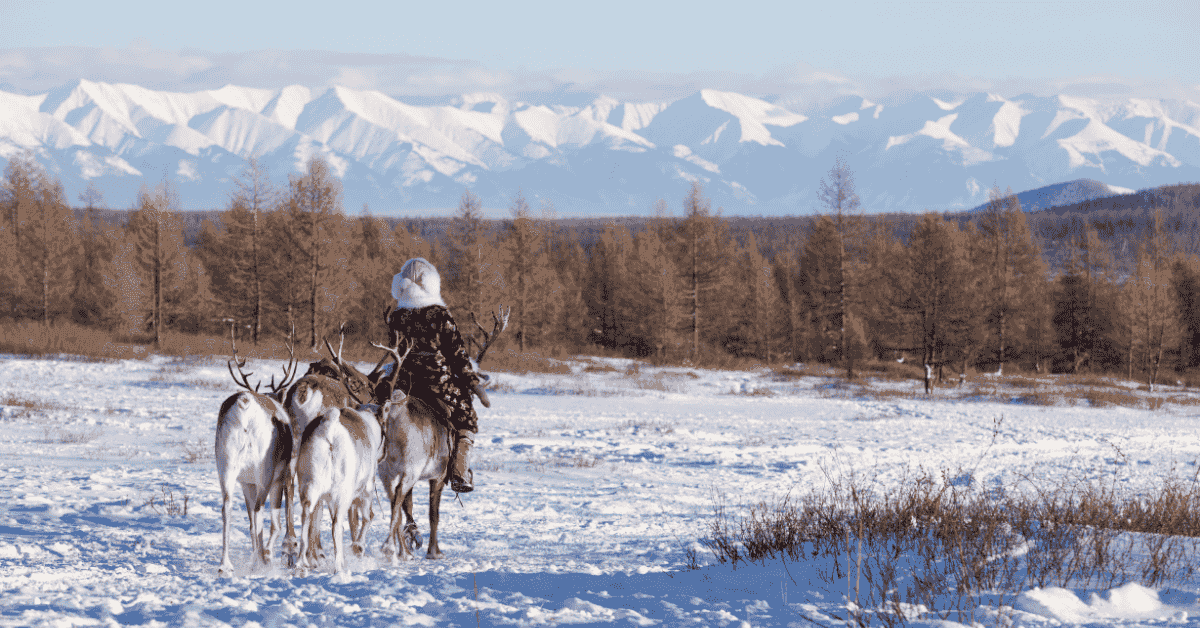
In 1999, Willerslev traveled deep into Siberia to study the Yukaghir, a small community of hunters living in one of the coldest regions on Earth. The collapse of the Russian state had left them isolated, struggling to survive without stable institutions. It was a place where normal societal rules had crumbled and only resilience mattered.

The Fatal Mistake That Angered the Mafia
While conducting his research, Willerslev noticed that the Yukaghir hunted sables, a prized animal in the fur trade. At that time, a single raw sable pelt could sell for around six hundred dollars at fur auctions abroad. Yet the hunters themselves received just a fraction of that—barely ten to fifteen dollars per skin.
Inspired by cooperative ideals common in Denmark, he proposed creating a local trading collective that would allow the community to earn a fairer profit. It was a moral idea that made perfect sense back home, but not in a region ruled by corruption and organized crime. In Siberia, the fur trade was controlled by mafia groups, and any disruption of their business could be dangerous.
Before long, local police—a front for criminal networks—were sent to detain him. He quickly realized that authorities and gangsters were closely connected, and his life might be at risk. For months, the situation forced him into hiding far from civilization, avoiding both the elements and the mafia.
Life Alone in the Wilderness
Willerslev spent nearly nine months in the Siberian tundra with a companion, cut off from the modern world. The cold was relentless, supplies were limited, and every day was a test of endurance. Over time, he learned to live with very little and to find meaning in survival itself.
He later said that what he discovered out there changed his values completely. Enduring constant pain and hunger taught him to appreciate simple things. Back in Denmark, surrounded by comfort, he found it difficult to feel the same gratitude he had in isolation. Surrounded by possessions, he realized that few of them held any deep emotional value.
Lessons That Last a Lifetime
Even though the experience nearly cost him his life, Willerslev insists that he would never want to erase it. It redefined how he sees the world, nature, and himself. What he learned in Siberia still influences his academic work and his approach as a leader at the National Museum.
Rane Willerslev’s twin brother, Eske Willerslev, is a pioneering evolutionary geneticist known for groundbreaking research on ancient DNA. Both brothers share a fascination with human origins and survival in extreme conditions. Their respective fields, anthropology and genetics, complement each other’s understanding of what it means to be human.
Beyond Earth: The Next Frontier
Today, Willerslev no longer leads an expeditionary life but still dreams of exploring. If he could choose any destination, he says space would be his first choice. If limited to Earth, he would turn to remote corners of Papua New Guinea, where indigenous communities remain largely untouched by modern life. Even after all his encounters with danger and extreme hardship, his thirst for discovery remains alive.
From surviving in the Siberian wilderness to facing down the mafia, Willerslev’s story is one of endurance, idealism, and transformation. His experience stands as a reminder of how fragile civilizations can be, and how strength often grows from encounters with the unknown.

Sources and References
The Danish Dream: Eske Willerslev, Danish Evolutionary Geneticist
The Danish Dream: New Viking Burial Discoveries Shed Light on Denmark’s Past
DR: Rane Willerslev om sin strid med den russiske mafia – der går ikke én dag, hvor jeg ikke tænker på det