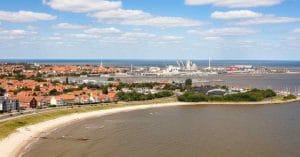
Fishing skipper Klaus Nielsen says the sea east of Langeland has turned brown and almost empty of fish, with black, slimy material clogging his nets, DR reported on September 12.
Nielsen owns the cutter SG 120 Fru. Nielsen and lands his catch at Spodsbjerg harbor on Langeland. According to DR, he describes nets that come up completely black and says he has never seen the same conditions there before.
DR reports that Nielsen landed 50 kilos of sole and 140 kilos of very small plaice on the day of the interview. He caught no cod at all. He told DR that the areas where he normally fishes have been dead since March 1.

Nielsen is one of very few commercial fishermen still working the inner Danish waters every day. He comes from a fishing family, and his 13-year-old grandson Niclas Nielsen joins him twice a week. Per DR, the grandson expects to fish in the North Sea rather than from Spodsbjerg.
Oxygen depletion spread over the summer
Denmark’s first official oxygen depletion report of the year was published last week by Aarhus University. According to a press release distributed by Ritzau, the affected area grew from about 1,200 square kilometers in late July 2026 to about 2,200 square kilometers in late August.
The same release states that the share covered by severe oxygen depletion rose from 16 percent to 48 percent over that month. It names the waters around Funen among the hardest hit areas. DR notes that the oxygen depletion set in early this year because of the heat.
Danmarks Fiskeriforening, the Danish Fishermen’s Association, considers oxygen depletion one of the main reasons fishing has almost disappeared from the inner waters, as reported by DR. Researchers point to nutrients from agriculture, chemicals in wastewater, overfishing, climate change and disruptive activity at sea.
Mads Christoffersen, chief biologist at the think tank Tænketanken Hav, told DR that murky, algae-filled water can be a sign of oxygen depletion. He added that it does not look healthy. Nielsen has had a bottom sample examined, and it consisted mostly of algae.

Kim Nielsen, who runs Kutterfisk, the only restaurant at the harbor, told DR that landings are small and that most fish on the menu come from elsewhere. Klaus Nielsen’s old wooden cutter was scrapped three years ago because it was too expensive and the fish too few.
DR reports that Danish fishing landed catches worth 3.5 billion kroner in 2025, close to the record year of 2016. Fishing in the Kattegat and the Baltic Sea accounted for just 263 million kroner of that total.