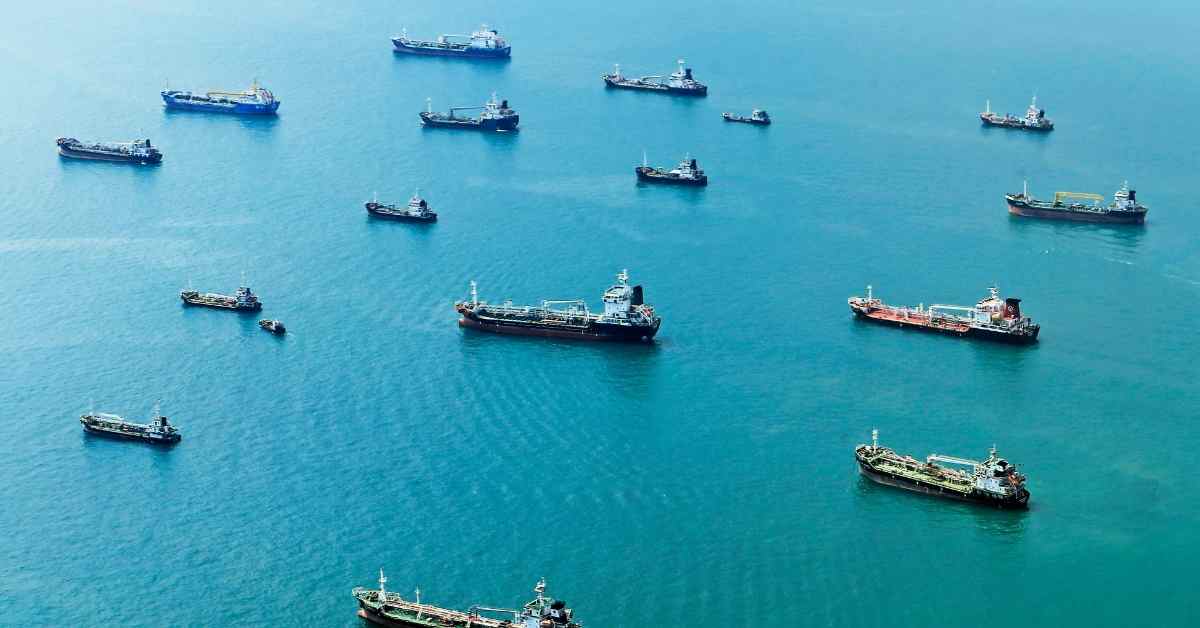
Oil prices have surged to their highest level in over four years following military strikes on Iran and the closure of the Hormuz Strait. The crisis threatens to cut Danish economic growth, push up inflation, and raise prices on everything from fuel to food.
Iran’s decision to block shipping through the Hormuz Strait has sent shockwaves through global energy markets. The narrow waterway normally carries about 20 percent of the world’s oil supply. Now that flow has stopped, and prices are climbing fast.
Brent crude oil now trades above 100 dollars per barrel. That represents a jump from 73 dollars before the U.S. and Israeli strikes on Iran began on February 28. This marks the highest oil price since Russia’s invasion of Ukraine in 2022.
Immediate Impact on Danish Consumers
The surge in oil prices is already hitting Danish households hard. Fuel costs have risen dramatically in recent days, and further increases appear likely if the strait remains closed.
Fuel Prices Climbing at the Pump
Gasoline prices have risen about 80 øre per liter since the conflict escalated. Diesel has jumped even more sharply, climbing 240 øre per liter. These increases reflect the immediate transmission of crude oil prices to retail fuel markets.
Diesel prices face particular pressure in Denmark and across Europe. The continent depends heavily on diesel imports, creating supply vulnerabilities when global trade routes close. Analysts warn that diesel could rise another 20 percent if the Hormuz blockade continues.
Heating and Energy Bills Rising
Households using oil heating will see their bills climb alongside fuel prices. Natural gas prices are also rising because gas shipments pass through the same blocked strait. As a result, energy costs are increasing across multiple fuel types simultaneously.
The economic effects extend beyond direct energy purchases. Transport costs for goods are rising as delivery trucks pay more for diesel. Those higher costs will eventually appear in supermarket prices. According to Danske Bank chief economist Las Olsen, consumer prices overall could rise by about half a percentage point if current oil price levels persist.
Economic Consequences for Denmark
The oil price shock threatens Denmark’s economic outlook just as growth appeared solid. The government had forecast 2.2 percent GDP growth for 2026, but that projection now faces downward pressure.
GDP Growth at Risk
Each 10 dollar increase in oil prices typically reduces Danish GDP by 0.2 to 0.3 percent. At current price levels, that translates to roughly 5 billion kroner in lost economic output. If oil prices remain elevated, Denmark’s growth rate could fall by as much as half a percentage point to around 1.7 percent.
Manufacturing and transport companies face the heaviest burden. These sectors use oil as a critical production input, making them especially vulnerable to price spikes. Meanwhile, higher energy costs in Denmark’s trading partners reduce demand for Danish exports, creating a secondary drag on growth.
Inflation Pressures Building
The oil shock is pushing inflation higher at an inconvenient time. Denmark’s government had expected consumer price inflation to fall to 1.0 percent by the end of 2026. Now analysts estimate inflation could rise by 0.6 to 0.75 percentage points above that baseline.
Oil prices affect inflation through multiple channels. Direct effects appear at the fuel pump and in heating bills. Indirect effects spread through supply chains as transport and production costs rise. Food prices often increase because agriculture and food distribution depend on diesel fuel.
Interest Rates and Housing Market
Financial markets have reacted to the Middle East crisis with rising interest rates. Uncertainty about inflation and economic growth has prompted expectations that the European Central Bank may raise rates twice before year end.
Mortgage Rates Moving Higher
Danish homeowners with variable rate mortgages face particular exposure. Borrowers with F3 and F5 loans will receive new interest rates on July 1. Those rates get set in May, meaning recent rate increases could make borrowing more expensive than expected just weeks ago.
However, some analysts urge calm. Las Olsen from Danske Bank suggests the situation could reverse quickly. Much depends on whether the Hormuz Strait reopens and how long the conflict lasts.
Strategic Oil Reserves Under Consideration
Major Western industrial nations in the G7 group are considering releasing strategic oil reserves. These underground storage facilities hold emergency supplies for exactly this type of crisis. The same countries released reserves in 2022 following Russia’s Ukraine invasion.
Such releases could help stabilize prices by adding supply to global markets. At the same time, the United States has indicated it will attempt to reopen the Hormuz Strait. If successful, that would allow normal oil shipments to resume and prices to fall rapidly.
Political and Economic Calculations
The oil price surge creates political problems for leaders on both sides of the Atlantic. American consumers watch gasoline prices closely, and high fuel costs influence voting behavior. President Donald Trump faces pressure to bring prices down before they become a major political liability.
U.S. Interests Split
The United States benefits economically from higher oil prices in one sense. America is a major exporter of both oil and natural gas. Higher global prices boost revenues for American energy producers. However, American consumers suffer from expensive gasoline, creating domestic political costs.
Research shows Americans pay close attention to fuel prices when deciding how to vote. Therefore Trump likely wants to avoid prolonged high prices even if they benefit U.S. energy companies. This political calculation may influence how aggressively the U.S. works to reopen shipping lanes.
Conflict Duration Remains Uncertain
Most analysts expect the military campaign to involve air strikes lasting weeks rather than months. A longer conflict would significantly increase economic damage for all parties. Extended fighting would depress business investment, reduce employment growth, and trigger broader supply chain disruptions beyond energy alone.
Technology improvements in oil drilling may eventually ease supply pressures. Enhanced extraction techniques allow producers to access reserves more efficiently than in past decades. However, these supply responses take time to materialize. Denmark and Europe will absorb the full price shock over the next six to twelve months regardless of longer term supply adjustments.
Sources and References
The Danish Dream: Oil Prices Explode as Hormuz Shipping Halts
The Danish Dream: Denmark Fuel Prices Explode 18% in One Week
The Danish Dream: Denmark’s Economy Booms Despite Global Trade Fears
The Danish Dream: Best Energy Providers in Denmark for Foreigners
DR: Oliepriserne stiger kraftigt på grund af krigen i Mellemøsten: Sådan rammer det danskerne