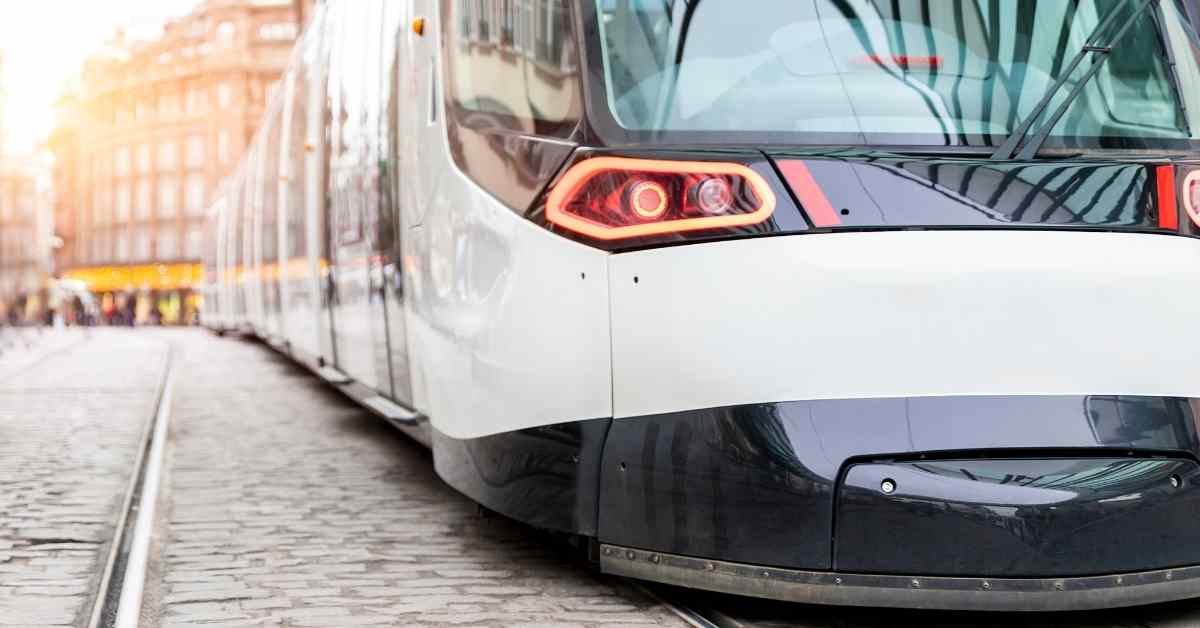
Hovedstadens Letbane opened along its full 28-kilometer length on Saturday, linking Ishøj in the south with Lundtofte north of Lyngby. The operator expects about 12,000 daily passengers in 2026, far below the roughly 43,000 projected in a 2013 planning study.
DR reports that the northern part of the line entered service on August 22, adding 17 stations to the 12 already in use. Passengers can now travel in an arc around Copenhagen, across a series of suburban municipalities.
The southern section between Ishøj and Rødovre Nord has been running since autumn 2025. According to Hovedstadens Letbane, that first stage has already carried around one million passengers. The full opening follows several years of large-scale construction work along Ring 3.

The decision to build the line rested on a 2013 study by Metroselskabet, which assumed operations would start in 2020. That study stated that about 43,000 passengers per weekday could be expected at opening. DR reports that Hovedstadens Letbane is now aiming for 12,000 daily passengers during 2026.
Hanne Tærsbøl Schmidt, director of Hovedstadens Letbane, told DR that the company has added realism to the older calculations. Per the director, the 2013 forecast assumed an immediate shift in travel behavior, while new habits in practice take time. She said current calculations point to about 45,000 daily passengers in 2031.
The line has cost just under 10 billion kroner. As stated by Schmidt, she believes the project would still have been approved with a lower opening forecast, because the infrastructure is built for 100 years. She added that reaching the higher passenger level within five years is not a problem, but that the target must be met.
Mogens Fosgerau, professor of transport economics at the University of Copenhagen, has previously called the project an exceptionally poor socio-economic investment. He told DR in 2018 that he would not accept the project even if the light rail were free. As noted by Fosgerau, fewer passengers in the early years means fewer people benefit, making the line somewhat worse than assumed.
Fosgerau said it is normal to factor in a period where travelers get used to a new mode of transport. According to the professor, that ramp-up should perhaps have been presented back then. He maintains that the gains for passengers are relatively small compared with the costs to the rest of society.
Coverage and opening-day details
Kollektivtrafik.dk reports that the full opening extends the network across eight municipalities and that the operator expects about 2.4 million passengers in 2026. The operator’s own March 2026 release forecasts around 38,000 daily passengers by 2030.
Brøndby Municipality states that trains run every five minutes during the day on weekdays and Saturdays, and every 10 minutes in the evenings and on Sundays, adding a new layer to Copenhagen public transport. Lyngby-Taarbæk Municipality says the opening is marked by a public celebration along the route, with free travel on the line all day.
The timing follows safety approval of the section from Rødovre Nord to Lundtofte. According to the operator’s communications, the Danish Transport Authority, Trafikstyrelsen, granted that approval, allowing passenger service on the full stretch.