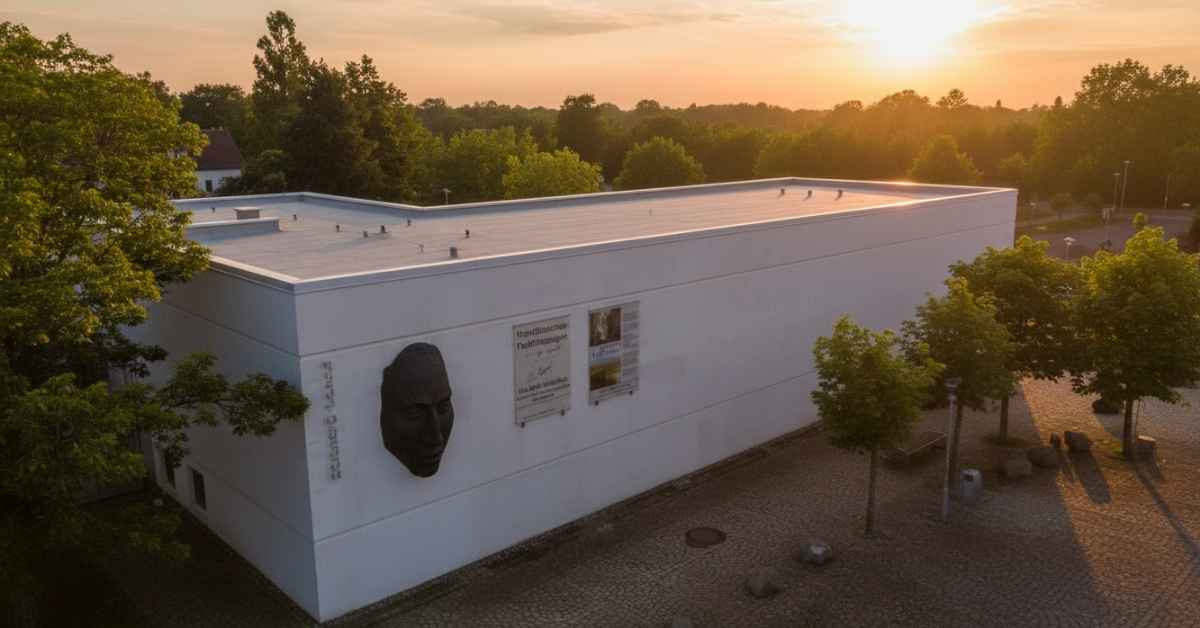
The Frederikshavn Art Museum is Northern Jutland’s quietly ambitious cultural anchor, holding over 2,000 works and one of the world’s largest bookplate collections.
Why the Frederikshavn Art Museum Matters in Northern Denmark
I have lived in Denmark long enough to know one thing. The country’s best art rarely sits in Copenhagen. The Frederikshavn Art Museum, tucked into a quiet residential street in Northern Jutland, is proof.
Established in 1978, the museum sits at Parallelvej 14, a few minutes’ walk from the harbor. It draws roughly 60,000 visitors a year. That is small by Louisiana standards, but significant for a town of 23,000 people.
The collection holds more than 2,000 works spanning Danish modernism and contemporary practice. It also houses the Frederikshavn Exlibrissamling, a world-class archive of bookplates. As stated by the museum itself, this dual identity, art museum plus bookplate archive, makes it genuinely unusual in Europe.
A Museum Built by a Donation
The museum exists because of one collector. In 1976, the Danish printer and bibliophile Knud H. Ditlevsen donated his vast art and exlibris collection to Frederikshavn Municipality. Two years later, the museum opened its doors.
That origin story still shapes the place. The exhibitions feel curated, not commercial. There is no gift shop selling Monet umbrellas, and that is exactly the point.
What You Will See Inside the Frederikshavn Art Museum
The permanent collection focuses on Danish art from the second half of the twentieth century. Expect strong representation of CoBrA, abstract expressionism, and figurative Nordic modernism. The lighting is good, the rooms intimate, and the curation thoughtful.
Heavy Hitters: Jorn, Kirkeby, Bovin
Three names dominate the walls. Asger Jorn, the CoBrA cofounder and Denmark’s most internationally celebrated postwar artist, anchors the modernist rooms. His raw, almost violent canvases pull you in immediately.
You will also find work by Per Kirkeby, the geologist turned painter whose layered landscapes feel like geological cross-sections. Then there is Karl Bovin, the Vendsyssel landscape painter whose work captures the strange luminous light of this peninsula better than almost anyone.
Northern Jutland’s Own Masters
The museum takes its regional mandate seriously. Rooms are dedicated to Elisabeth Schou and Eyvind Karup Nielsen, both deeply tied to the area. Their work rarely travels south of Aalborg, which makes seeing it here feel like a small discovery.
This regional focus is something I have come to value about Danish provincial museums. They protect what national institutions overlook. The Frederikshavn Art Museum sits in the same league as the Vendsyssel Art Museum in Hjørring on that front.
The Exlibris Collection: A Hidden Treasure
Here is what most guidebooks miss. The Frederikshavn Art Museum holds the Frederikshavn Exlibrissamling, one of the largest bookplate collections in the world. The archive includes hundreds of thousands of items from across Europe and beyond.
For anyone interested in graphic design, printmaking, or book history, this is a genuine pilgrimage. Researchers can request access in advance through the museum’s website. Even casual visitors get a curated taste in rotating displays.
Visiting the Frederikshavn Art Museum: Practical Information
The basics are straightforward. The museum is open Tuesday to Sunday, 10:00 to 16:00. It is closed Mondays and on most Danish public holidays.
Tickets, Prices, and Free Entry
General admission costs around 60 DKK for adults. Visitors under 18 enter free, a policy shared by most Danish state-supported museums. Students and seniors receive a modest discount.
Check the museum’s events page before you go. Several days a year, including Denmark’s annual Kulturnatten, admission is free. Special exhibition openings often include free wine and an artist talk.
Getting There by Train, Car, or Ferry
Frederikshavn is the end of the line on the Aalborg to Frederikshavn rail route. From Copenhagen, the journey takes about five hours by train. From Aalborg, it is just over an hour.
The museum sits a ten minute walk from Frederikshavn Station. By car, parking is free and easy. If you are arriving on the Stena Line ferry from Gothenburg or Oslo, the museum is fifteen minutes on foot from the terminal.
Accessibility and Family Visits
The building is fully wheelchair accessible, with ramps and an elevator between floors. Restrooms are accessible too. Strollers are welcome inside the galleries.
Families with kids should look at the museum’s children’s workshops, often held on Saturdays. I have taken visiting friends with kids, and the staff genuinely engage younger visitors. That is not always the case in Danish art institutions.
How the Frederikshavn Art Museum Compares to Other Danish Museums
Honest assessment from someone who has visited most of them. The Frederikshavn Art Museum is not Louisiana, ARoS, or Skagens Museum. It does not pretend to be.
What it offers is depth in a specific niche. Postwar Danish painting, regional Vendsyssel art, and that extraordinary exlibris archive. If those interest you, no museum in Denmark serves you better.
A Smart Day Trip From Aalborg or Skagen
Most expats visit Frederikshavn as part of a Northern Jutland circuit. Combine it with Skagen Odde, the Skagens Museum, and a stop at Hirtshals Lighthouse. Two days covers the highlights comfortably.
If you have a weekend, base yourself in Aalborg. Visit the Budolfi Church and the Aalborghus Castle on day one. Take the train north to Frederikshavn on day two.
Pairing the Museum With Frederikshavn’s Other Attractions
Frederikshavn surprises people. It is a working port town with a strong cultural backbone. The art museum is one piece of a larger cultural offer.
Bangsbo Museum and Botanical Garden
Five kilometers south of the city center sits Bangsbo, a manor estate turned museum. It covers everything from the Reformation Viking ship to wartime resistance history. The botanical garden and deer park surround it, making it a half-day visit on its own.
I usually pair Bangsbo with the art museum in a single day. Bangsbo in the morning, lunch in the city, then the art museum after coffee. The contrast between deep history and contemporary art keeps the day interesting.
Krudttårnet and the Coastline
Krudttårnet, the seventeenth century gunpowder tower, is the oldest building in Frederikshavn. Entry costs about 30 DKK. From there, walk north along the coastal path to Palmestranden, the city beach with imported palm trees that feel absurd given the latitude.
For something more contemplative, head to Børglum Abbey further west. It is one of the most atmospheric medieval sites in Northern Jutland.
What Makes the Frederikshavn Art Museum Worth the Trip for Expats
I will speak plainly. If you have just moved to Denmark and you are still figuring out the cultural lay of the land, this museum offers something Copenhagen cannot. It shows you the Denmark beyond the tourist circuit.
A Window Into Provincial Danish Culture
Living in Denmark as an expat, you absorb a particular version of the country. Copenhagen cafés, hygge marketing, design shops. The Frederikshavn Art Museum cuts through that.
The art here is shaped by harsh light, hard winters, and small communities. It is less polished and more honest. As reported by visitors on Tripadvisor, the museum consistently ranks among the highest rated cultural attractions in the city.
The Slower Tempo of Northern Jutland
Frederikshavn moves at a different speed than Copenhagen or Aarhus. The museum reflects that. You can spend two hours here without feeling rushed by crowds.
That tempo is part of the point. It is the kind of cultural experience that Copenhagen museums often cannot offer because their visitor numbers force a faster flow.
Tips From Someone Who Has Visited the Frederikshavn Art Museum
A few things I wish I had known the first time.
- Go on a weekday morning. You will often have entire rooms to yourself.
- Bring cash for the café. Card readers occasionally fail outside peak hours.
- Ask at reception about the exlibris archive. Most visitors never see it.
- Check the temporary exhibition schedule on the museum’s site. Rotating shows are often the highlight.
- Combine your visit with lunch at Møllehuset, a short walk away. Best smørrebrød in the city.
- Pick up a printed guide in English at the entrance. The wall texts are mostly in Danish.
When to Visit Through the Year
The museum is open year round, but the experience changes with the seasons. Summer brings more tourists from the Stena Line ferries. October through March offers quieter halls and the museum’s strongest exhibition slots.
I personally prefer visiting in February or March. The Northern Jutland light at that time of year is the same light Karl Bovin painted. Walking out of the museum into it feels like the exhibition extends outside.
The Frederikshavn Art Museum as a Cultural Statement
Provincial Danish museums survive on a mix of municipal funding, state support, and quiet stubbornness. The Frederikshavn Art Museum has all three. It does not chase blockbuster shows or Instagram moments.
What it does is preserve, exhibit, and educate. The workshops, the artist talks, the school programs. These are the unglamorous functions that make a museum genuinely matter to its community.
A Quiet Argument Against Cultural Centralization
Denmark talks a lot about decentralizing culture. Most of the money still flows to Copenhagen and Aarhus. Museums like Frederikshavn’s exist as a counter argument.
That matters for expats too. If you only consume Danish culture in the capital, you are missing more than half the picture. The conversation between Aalborg, Frederikshavn, and the smaller towns is where a lot of contemporary Danish art actually happens.
Frequently Asked Questions About the Frederikshavn Art Museum
What are the opening hours of the Frederikshavn Art Museum?
The museum is open Tuesday through Sunday from 10:00 to 16:00. It is closed on Mondays, December 24, December 25, December 31, and January 1. Hours can vary on other Danish public holidays, so check the official site before your visit.
How much does it cost to visit the Frederikshavn Art Museum?
Adult admission is around 60 DKK. Visitors under 18 enter free of charge. Students and seniors receive a discounted rate, and several free admission days are scheduled each year, including Denmark’s national Kulturnatten event.
Where is the Frederikshavn Art Museum located?
The museum sits at Parallelvej 14, 9900 Frederikshavn, in Northern Jutland. It is about a ten minute walk from Frederikshavn Station. The Stena Line ferry terminal is also within easy walking distance.
Is the Frederikshavn Art Museum suitable for children?
Yes. The museum runs regular children’s workshops, often on Saturdays during school holidays. Strollers are welcome, and entry is free for visitors under 18. Family friendly worksheets are sometimes available at reception.
Can I take photographs inside the Frederikshavn Art Museum?
Personal photography is generally allowed in the permanent collection without flash. Rules can change for temporary exhibitions due to copyright restrictions on loaned works. Ask at the front desk when you arrive to confirm current policy.
Does the Frederikshavn Art Museum offer guided tours in English?
Yes, English language guided tours can be booked in advance through the museum’s booking page. Group tours are typically scheduled with at least two weeks’ notice. Drop-in tours in Danish run more frequently on weekends.
What is the exlibris collection at the Frederikshavn Art Museum?
The Frederikshavn Exlibrissamling is one of the largest bookplate collections in the world. It contains hundreds of thousands of items from across Europe, Asia, and the Americas. Researchers and curious visitors can request a viewing in advance.
How long should I plan for a visit?
Most visitors spend between 90 minutes and two hours in the museum. Add another hour if you want to see the exlibris archive or attend a workshop. Pairing the visit with Bangsbo Museum makes for a comfortable full day in Frederikshavn.
Is the Frederikshavn Art Museum accessible for visitors with disabilities?
Yes. The building has step-free access, an elevator between floors, and accessible restrooms. Service dogs are welcome. Staff can assist visitors with reduced mobility on request.
Final Thoughts on Visiting the Frederikshavn Art Museum
If you live in Denmark and you have never been to Frederikshavn, you are missing something. The Frederikshavn Art Museum is not a flashy destination. It is a serious one.
It rewards visitors who care about Danish art beyond the postcard names. The CoBrA rooms alone justify the trip. The exlibris archive turns it into a genuinely unique European cultural site.
Pack a thermos, take the morning train from Aalborg, and give yourself a full day. Northern Jutland will repay the effort. The Frederikshavn Art Museum is the kind of place that makes you understand Denmark a little better than you did before.