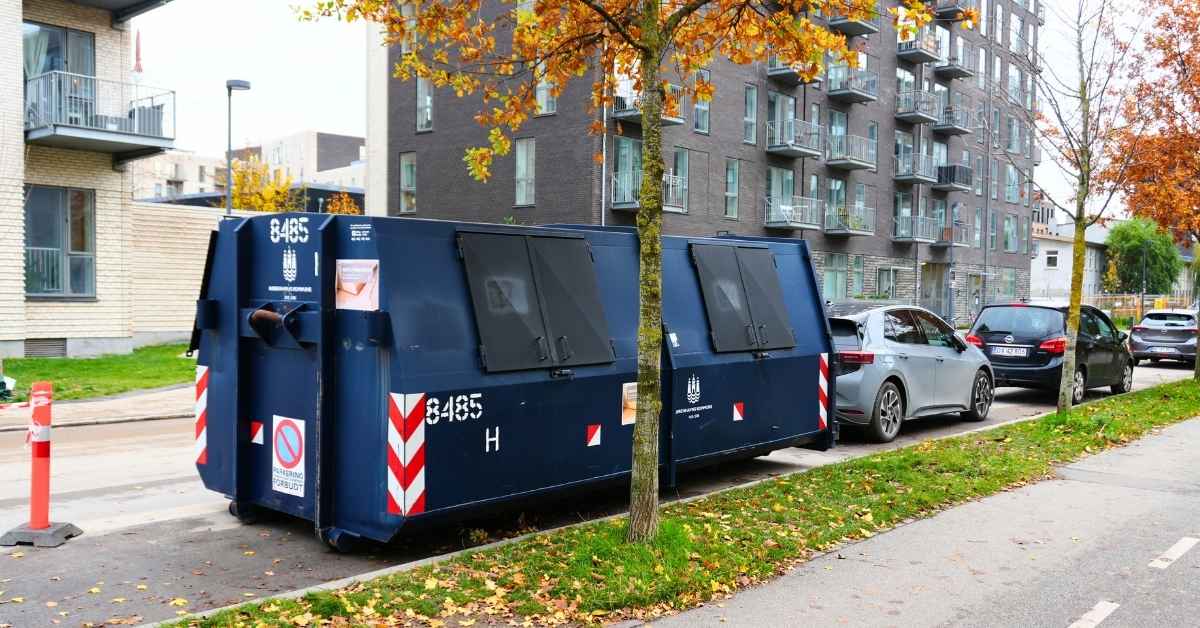
A municipal reuse shop in Herning has been hit three times in two weeks by people dumping unsorted waste outside its doors, part of a wider pattern that underscores an uncomfortable fact: Danes generate 746 kilograms of municipal waste per person each year, almost 75 percent more than the EU average of 427 kilograms.
The shop’s frustration is shared by recycling centres across Denmark, where staff report mountains of broken furniture, dirty textiles and mixed household rubbish left outside opening hours. What residents might see as generous donations often turn out to be waste that municipalities must sort and pay to incinerate. The climate benefits of reuse evaporate when items arrive unusable.

Denmark markets itself as a green pioneer, yet its per capita municipal waste has stubbornly hovered around 750 kilograms for a decade. Germany manages roughly 600 kilograms per person. The Netherlands comes in around 520 kilograms. All three countries have comparable incomes and strong consumption, suggesting that policy and pricing, not just culture, shape living patterns.
Fast Fashion Meets Genbrug
Environmental groups point to a newer driver of the problem. Recycling centres now see brand new clothing, often still tagged, from platforms like Shein and Temu. Staff describe the piles as unusable, so poor in quality that they go straight to waste. The Danish Society for Nature Conservation warns that these items end up as rubbish in Denmark, shifting disposal costs onto municipalities instead of the companies that sold them.
The waste hierarchy puts reuse second only to prevention, but only when items are genuinely suitable for a second life. Pushing broken or low quality goods into the reuse stream increases transport and handling emissions without real benefit.
A Cost Shifted Onto the System
Leaving a load outside a reuse shop saves time and potential fees. It shifts sorting and disposal onto municipal budgets and volunteer labour. Denmark’s 4.4 million tonnes of municipal waste in 2022 included about 2.0 million tonnes from households and 2.4 million from commerce and institutions. Bulky waste and mixed residual fractions dominate the stream, exactly the kinds of loads that appear outside shop doors.

For internationals, the rules can be opaque. Websites and signage are often Danish only. Opening hours vary. What counts as donation versus waste is not always clear. Yet immigrants and descendants make up about 15 percent of the population, a large group navigating the system with little tailored guidance and no official data tracking their compliance or confusion.

Some municipalities use CCTV and fines to combat fly tipping. Others worry that over enforcement discourages engagement with reuse altogether. Social groups caution against criminalising residents for misunderstandings, especially those with limited transport or language skills. The core problem, they argue, is over consumption and the import of disposable goods, not individual behaviour at recycling gates.
What Works and What Doesn’t
Residents can avoid fines and support real reuse by checking municipal guidelines before dropping off items. Most shops accept only clean, functional goods during opening hours. Broken or dirty items belong in regular waste containers at the recycling yard, not outside shop doors. Many municipalities offer bulky waste collection, often free or low cost, making it easier to dispose of large items legally.

For those uncertain, contacting the local waste company or citizen service centre can clarify the rules. Larger municipalities typically have English speaking staff. Reporting repeated dumping via municipal apps helps authorities target enforcement without casting suspicion on all users.
Denmark’s circular economy strategies reference extended producer responsibility for textiles and packaging, which could eventually reduce pressure on municipal systems by making producers pay more of the cost. How quickly that happens will determine whether reuse shops continue to face the burden alone. Meanwhile, the gap between Denmark’s green reputation and its waste statistics remains stubbornly wide, visible every time another pile appears outside a shop trying to do the right thing.