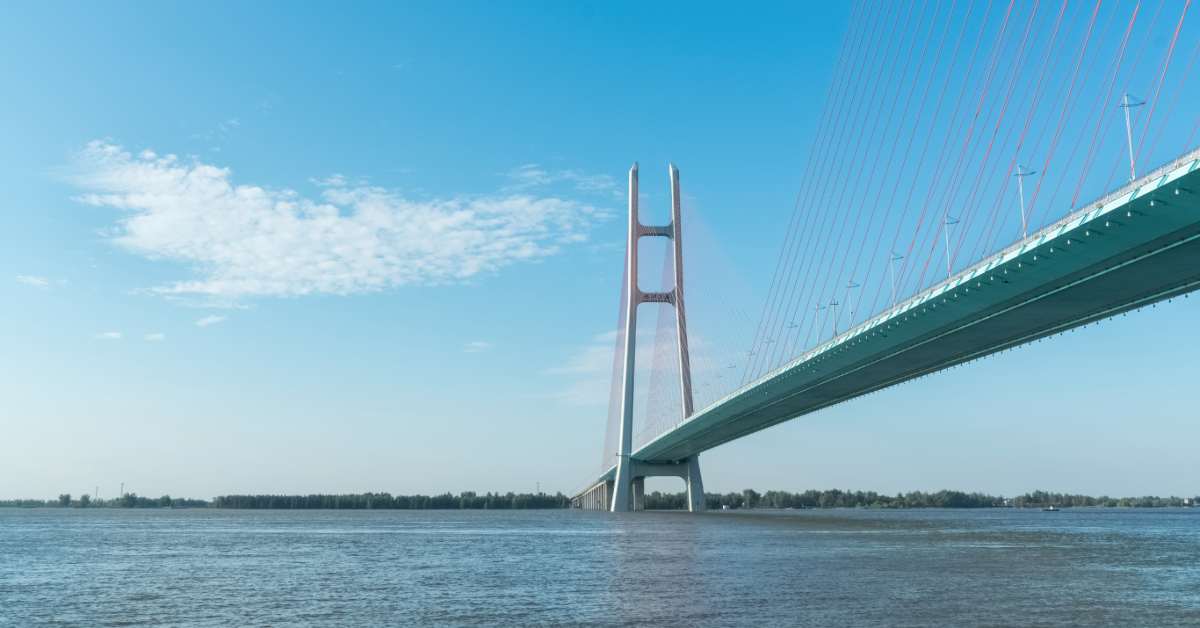
Denmark’s Food and Agriculture Minister Jacob Jensen has called for a feasibility study into a fixed connection between Lolland and Langeland, citing national security concerns and the need for alternative supply routes if the Great Belt Bridge becomes unavailable. The proposal comes amid existing plans for a relocated ferry terminal to shorten the current 45 minute crossing.
Minister Proposes Vision for Fixed Link
Jacob Jensen from the Liberal Party wants authorities to examine whether a bridge or tunnel across Langelandsbælt could be economically sustainable. He suggests this investigation should happen alongside an already funded study for a relocated ferry terminal at Tårs. The minister frames the proposal as part of broader emergency preparedness planning rather than a short term priority.
National Security Drives Proposal
Jensen emphasizes that Denmark needs backup routes for transporting food from Jutland to the capital region. He points to potential disruptions of the Great Belt Bridge as a key concern. The Ukraine war prompted the government to review supply chain vulnerabilities, which now influences infrastructure thinking.
The minister acknowledges that a fixed connection remains unrealistic in the near term. However, he argues for long term vision in infrastructure planning. Jensen clarifies that the proposal would focus on road traffic only, avoiding the higher costs associated with rail connections.
Timing and Electoral Context
The announcement comes during the campaign period before the March 2026 parliamentary election. Jensen represents Sjællands Storkreds, which includes the affected area. He denies that electoral timing motivated the proposal, instead linking it to ongoing government discussions about emergency preparedness since Russia invaded Ukraine in 2022.
The minister tells media that examining a fixed connection makes sense when authorities are already conducting studies for ferry improvements. This approach could provide comprehensive data on multiple solutions simultaneously. Jensen offers no specific timeline for when such a project might become reality.
Existing Ferry Improvements Already Planned
The current ferry route between Spodsbjerg on Langeland and Tårs on Lolland takes 45 minutes. Money has already been allocated to investigate a relocated ferry terminal that could cut this travel time in half. This project has progressed beyond the discussion phase, with construction considered likely.
Fast Ferry Alternative Gains Support
Liberal Party politician Erling Bonnesen has championed a fast ferry concept for several years. His proposal involves building a dam structure in Langelandsbælt to enable a 22 minute crossing. Bonnesen has promised this solution will materialize during his parliamentary term, with phased financing through future infrastructure bills.
The fast ferry concept ties into preparations for the Fehmarnbelt fixed link between Denmark and Germany. This major connection is expected to reshape transportation patterns across the region. Improved Lolland to Langeland connectivity would complement these larger infrastructure changes.
Economic Thresholds and Viability
For a relocated ferry terminal to prove economically justified, construction costs cannot exceed 1.26 billion DKK according to preliminary analyses. This threshold reflects the balance between investment and time savings benefits. A full fixed connection would presumably cost significantly more, requiring careful economic assessment.
Jensen’s proposal calls for environmental impact studies alongside financial analysis. The investigation would need to examine effects on marine ecosystems and coastal areas. These considerations could significantly influence whether any fixed connection proves feasible.
Regional Infrastructure Investments Continue
Denmark’s Infrastructure Plan 2035 includes 311 million DKK for upgrading Route 9 on Lolland. These improvements aim to reduce traffic bottlenecks and support better connectivity. The road investments complement ferry enhancements by strengthening access throughout the island.
Broader Transportation Network Effects
Better connections between Lolland and Langeland would create improved routes to Funen and onward to Jutland. This matters particularly as the Fehmarnbelt link transforms Lolland into a major European transit corridor. Multiple infrastructure projects across the region reflect recognition of these coming changes.
The fixed connection proposal extends beyond local benefits to national transportation resilience. Jensen emphasizes that alternative routes become crucial if main arteries face disruption. This security perspective marks a shift from purely economic justifications toward strategic infrastructure planning.
Debate Over Investment Priorities
Some regional voices question whether funds should be redirected to other connections. An architect has suggested moving planned road money from Lolland to strengthen links between Langeland, Tåsinge and South Funen instead. These competing visions highlight ongoing debates about optimal infrastructure allocation.
Both Lolland and Langeland municipalities face significant budget pressures. Limited local resources make large infrastructure investments dependent on national funding. This financial reality shapes how regional leaders respond to proposals like Jensen’s fixed connection study.
Local Leadership Responds Cautiously
Lolland Mayor Marie Louise Brehm Nielsen from the Your Voice party does not reject the fixed connection concept outright. However, she identifies more pressing challenges for her municipality. Nielsen emphasizes that reforming Denmark’s municipal equalization system ranks higher on her priority list than new transportation links.
Municipal Financial Struggles
Both affected municipalities struggle to balance their budgets under current conditions. This financial stress influences how local leaders view infrastructure proposals. Nielsen’s response reflects the immediate fiscal pressures facing peripheral Danish regions.
Despite these concerns, the mayor describes the proposal as interesting. She simply positions it below more urgent needs. This measured response suggests openness to the concept once more fundamental economic challenges receive attention. The municipality has shown progress, improving its local business performance ranking from 38th in 2025 to 29th in 2026.
Long Term Vision Versus Immediate Needs
The contrast between Jensen’s visionary approach and Nielsen’s practical focus illustrates different governmental perspectives. National ministers can afford long term infrastructure thinking while municipal leaders face immediate service delivery pressures. These differing timelines complicate regional infrastructure planning.
Jensen acknowledges that his proposal looks beyond short term possibilities. He frames it as necessary forward thinking rather than imminent construction plans. This approach attempts to balance ambition with realism about what current budgets and priorities can accommodate.
Infrastructure Politics and Regional Development
Fixed connections carry political significance beyond their practical transportation benefits. They symbolize national commitment to peripheral regions and economic equity. Jensen’s proposal taps into these broader themes while advancing specific logistical arguments.
Election Campaign Considerations
The timing of Jensen’s announcement during the parliamentary campaign raises questions about motivation. The minister represents a constituency that would directly benefit from improved Lolland to Langeland connections. However, he frames the proposal within post Ukraine infrastructure security reviews rather than electoral politics.
The Liberal Party has consistently championed transportation improvements in this region through multiple members. Bonnesen’s fast ferry advocacy and Jensen’s fixed link proposal show party commitment beyond individual campaigns. This sustained focus suggests genuine policy priorities rather than purely tactical positioning.
Connecting Denmark’s Periphery
Infrastructure investments in less populated regions reflect competing values in national policy. Economic efficiency might favor concentrating resources in urban centers, while equity arguments support peripheral connectivity. Denmark’s approach has historically balanced these considerations through projects that serve both goals.
The Fehmarnbelt connection demonstrates how major international infrastructure can transform previously peripheral areas into transit corridors. Anticipating and preparing for these shifts requires the kind of advance planning Jensen advocates. Whether a Lolland to Langeland fixed link proves economically viable remains uncertain, but examining the question fits this strategic approach.
Sources and References
The Danish Dream: Denmark Funds Long Awaited Hillerød Motorway Completion
The Danish Dream: Esbjerg Builds Giant Wall to Fight Sea Threat
The Danish Dream: Denmark Ramps Up Arctic Defense with New Fleet
The Danish Dream: Best Energy Providers in Denmark for Foreigners
TV2: Minister vil undersøge fast forbindelse mellem Lolland og Langeland
Folketidende: Minister vil have undersøgt fast forbindelse mellem Lolland og Langeland