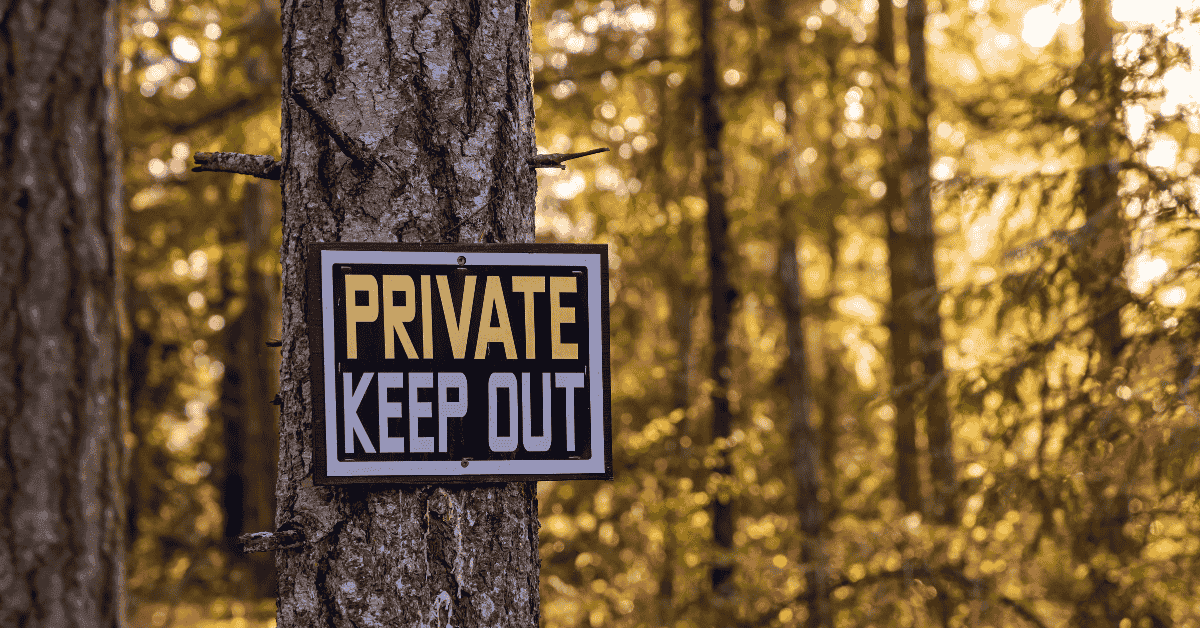
Thousands of illegal “no entry” signs are scattered across Denmark’s countryside, blocking public access to land that should be open under national law. New reports show that local councils are now issuing removal orders, but the problem is far from solved.
Illegal Signs Across the Danish Landscape
All over Denmark, people heading into nature are running into private warnings that say “Access Prohibited” or “Private Property.” Many of these signs are illegal. According to a study from the University of Copenhagen, thousands of such barriers stand on privately owned land even though Danish law ensures the public has broad rights to move freely through nature.
The Nature Protection Act gives citizens the right to walk and cycle on paths, roads, and several open areas, even when land is privately owned. Despite that, some landowners still try to keep people out with misleading signs or fences.
Recently, Odder Municipality ordered the owner of Aakær Manor to take down two illegal warning signs. The estate maintains that its signs comply with the law, but the case has sparked fresh debate.

Over 1,000 Cases Reported by Outdoor Council
To curb the spread of illegal barriers, the national Outdoor Council started the campaign “Stop the Sign Forest.” The effort focuses on identifying misleading signs and reporting them to local authorities. So far, more than 1,000 cases have been filed for official review, with about 300 signs already ordered removed.
Even so, hundreds remain—or rather thousands. The Outdoor Council estimates that each Danish municipality handles around 150 such instances on average. This shows the problem stretches across the country, from remote farmland to coastal paths near popular attractions such as the Wadden Sea National Park.
Who Controls Access in Nature
In Denmark, the right to nature depends on location. People are generally free to walk and cycle in private forests between 6 a.m. and sunset if paths are suitable for ordinary bicycles. They can also stay briefly along those paths, provided they remain at least 150 meters from private homes or buildings. Small forests under five hectares can be closed entirely by the owner.
When it comes to private beaches, the rules are even more open. Danes and visitors alike can walk and swim along nearly all beaches and dunes regardless of private ownership, day or night. Only a few exceptions apply, such as areas incorporated into gardens or business sites before 1916. A good rule of thumb is simple: if a beach is covered with sand or stones, it is open to the public.
Out in the open countryside, citizens may travel along unpaved paths or cycle through undeveloped and unfenced land during daylight hours. Owners may ask for restrictions only when human activity seriously disturbs privacy, production, or fragile ecosystems. However, such limits must be approved by the municipality, never decided solely by the landowner.

How Citizens Can Report Illegal Signs
Anyone who spots a questionable sign or barrier can contact the municipality for clarification. Alternatively, people can send a photo of the sign to the Outdoor Council, which will forward the case. The advantage is anonymity. Because the council takes responsibility for communicating with the property owner, individuals avoid potential conflict within the community.
These reports help ensure local governments stay alert to unlawful restrictions. The ultimate goal is simple: to make sure everyone can access nature where it is legally allowed.
Given Denmark’s long tradition of balancing private property with shared access, these ongoing efforts reaffirm how public enjoyment of nature remains a key part of Danish culture.

Sources and References
The Danish Dream: Wadden Sea National Park – A UNESCO Sanctuary of Incredible Tidal Life and Culture
The Danish Dream: Best Gartners in Denmark for Foreigners
TV2: Tusindvis af ulovlige skræmmeskilte står i den danske natur