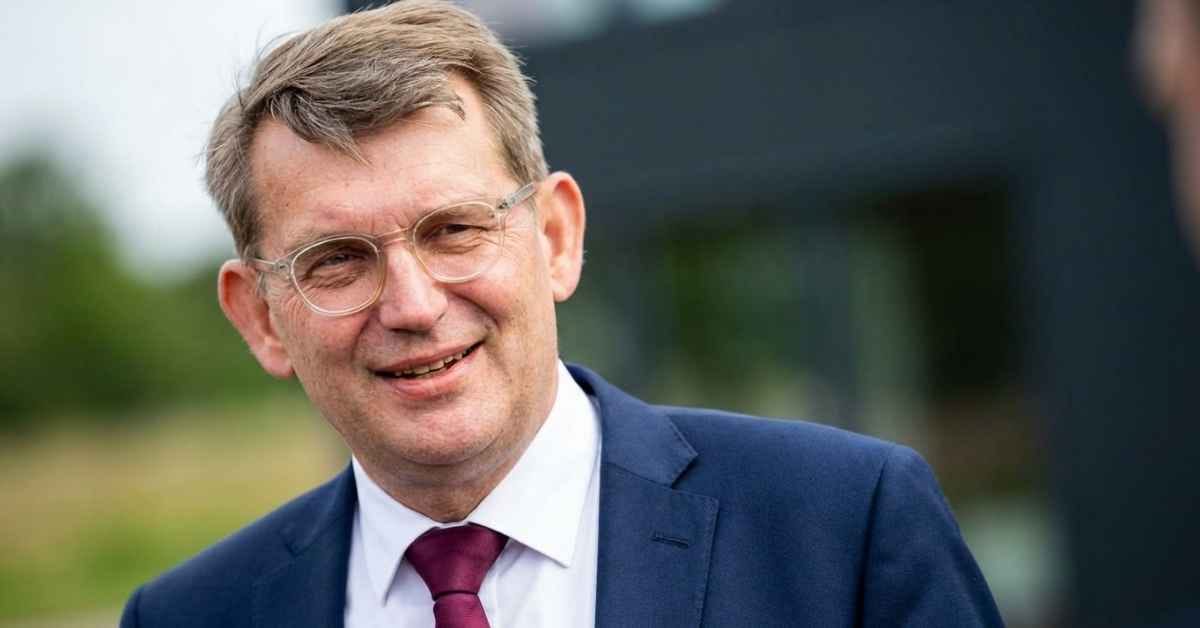
Troels Lund Poulsen is heading to the palace tonight to test whether he can form an alternative government, after right-wing parties blocked Mette Frederiksen from continuing as prime minister in a broader coalition.
The Danish government crisis has reached a critical point. Venstre leader Troels Lund Poulsen will meet with Queen Mary this evening as a royal investigator. His task is to explore whether he can assemble a parliamentary majority for a right-wing minority government. If he fails, Frederiksen may get another chance. If he succeeds, Denmark could see its first non-Social Democratic prime minister since 2019.
This is not the usual Danish political choreography. Normally, the sitting prime minister gets first crack at forming a new government after coalition talks break down. But several right-wing parties have made it clear they will not support Frederiksen as prime minister in any constellation. That has forced the process into uncharted territory.
Why the Right Blocked Frederiksen
The official line is about policy differences. The real story is about person and trust. Danish People’s Party leader Morten Messerschmidt has been the most explicit. He has repeatedly called for Frederiksen to resign, citing what he calls the peak of incompetence in both the mink scandal and the intelligence service fiasco. As reported by DR, Messerschmidt argues that Frederiksen, as the person ultimately responsible, has lost the trust necessary to continue.
The Conservatives and Liberal Alliance have been more diplomatic but no less clear. They want a blue prime minister. That leaves Frederiksen boxed in. Her experience argument, which carried weight during corona and the early Ukraine crisis, now cuts the other way. She has been in power so long that every controversy sticks to her personally.
The Mink and FE Cases Still Matter
Most Danes have moved on from the mink cull and the intelligence service mess. Politicians have not. The Mink Commission’s harsh criticism of the lack of legal authority and poor handling in the Prime Minister’s Office cemented an image of Frederiksen as willing to bend rules when convenient. The FE case, where intelligence chiefs were sent home and later cleared, reinforced doubts about her control of sensitive state functions.
Then there are the deleted text messages. For opposition parties, this is not ancient history. It is proof of a transparency problem that runs through her entire administration. In coalition talks, these old wounds become leverage. Parties that want reform of the public access law or stricter rules on ministerial accountability can demand them as the price for supporting Frederiksen.
What Troels Lund Poulsen Faces
Poulsen is a veteran of Christiansborg. He has been tax minister, education minister, and defense minister. He knows how the system works. But that does not mean he can deliver a government. Venstre is polling far below its historical levels. The party has bled voters to Liberal Alliance, the Moderates, and the Denmark Democrats. That weakens Poulsen’s claim to the prime minister’s office from a voter legitimacy perspective.
His strength is institutional. Venstre still has the networks, the experience, and the organizational heft to anchor a right-wing government. Other blue parties may criticize Venstre in public, but they know they need the party’s administrative capacity. The question is whether Poulsen can translate that into a workable coalition without making so many concessions that the government collapses within months.
The Math Is Brutal
To become prime minister, Poulsen needs support from the Danish People’s Party, the Conservatives, Liberal Alliance, and likely the Moderates. Each has red lines that conflict with the others. The Danish People’s Party wants hardline immigration policy. The Moderates want pragmatic centrism. Liberal Alliance wants tax cuts and deregulation. The Conservatives want all of the above but with their own leader in the spotlight.
Experts are skeptical. Most political analysts believe Poulsen will have to make major policy concessions to support parties just to get sworn in. That makes a stable government unlikely. If the talks collapse, the queen may send him back empty-handed. Then it is either back to Frederiksen or a snap election.
What This Means for Denmark
I have covered Danish politics long enough to recognize when the system is stressed. This is one of those moments. The normal rules still apply: the queen consults party leaders, someone gets a chance to form a government, and eventually Denmark gets a prime minister. But the informal norms that usually smooth the process are breaking down.
Frederiksen has been prime minister for nearly seven years. That is a long time in a parliamentary democracy. Long enough to accumulate enemies, scandals, and exhaustion. Long enough that even allies start to wonder if a change would be refreshing. But it is also long enough to build real experience and international credibility. Replacing her with Poulsen, a capable but lower-profile figure, is not obviously an upgrade for Denmark’s voice in Europe.
The International Dimension
Denmark is not operating in a vacuum. The war in Ukraine continues. NATO spending commitments are rising. The EU is pushing for common migration solutions that clash with Denmark’s opt-outs and restrictive policies. Frederiksen recently made an unusually direct statement criticizing the United States, saying it made absolutely no sense for the US to talk in certain ways about an unspecified international issue. That kind of bluntness plays well domestically but can complicate transatlantic relations.
A new prime minister would inherit these files. Poulsen would have to prove he can hold his own in Brussels and Washington. Frederiksen’s critics argue her baggage weakens Denmark abroad. Her supporters say swapping horses mid-stream in a volatile international environment is reckless. Both arguments have merit.
No Clear Answers Yet
Tonight’s palace meeting is a procedural step, not a conclusion. Poulsen will begin testing whether a right-wing coalition is viable. That could take days or weeks. In the meantime, Frederiksen remains prime minister in a caretaker capacity. The uncertainty