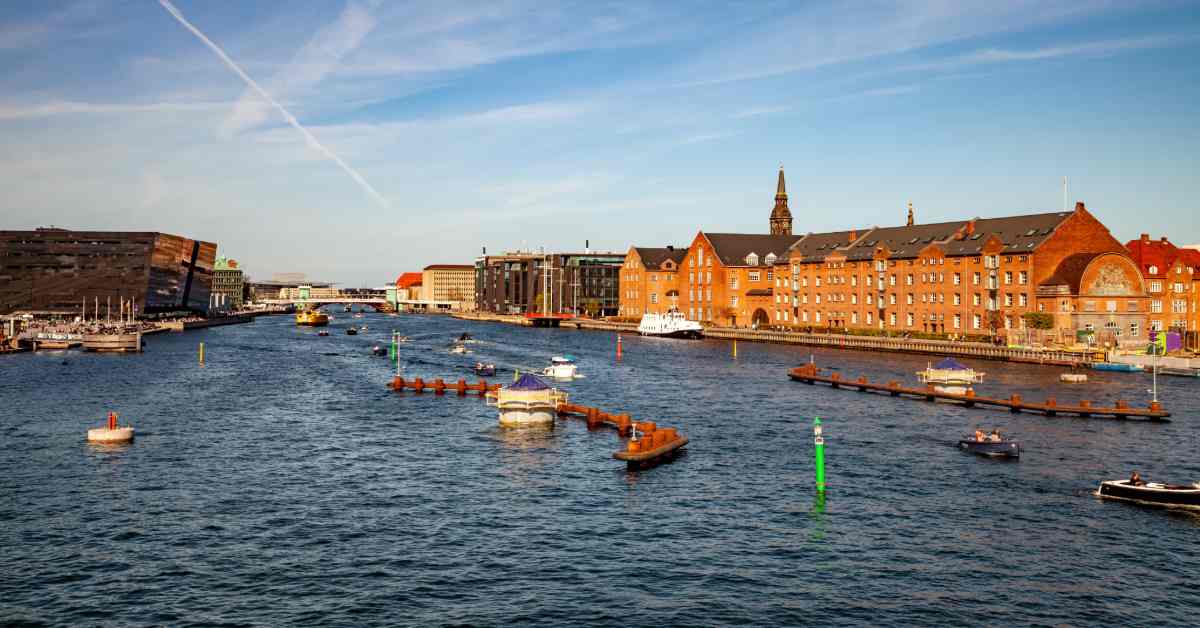
Danish artists’ collective Corner is opening its 94th annual exhibition this week in a vast 1,300 square meter basement hall at Langelinieskuret, the 19th-century customs warehouse on Copenhagen’s waterfront, charging just 50 kroner for entry while most internationals still don’t know the building exists.
On 8 August 2026, Corner moves its flagship show into Dahlerup’s basement at Langelinie Allé for the first time in the association’s history. The exhibition runs through 30 August. It marks a clear break from the three consecutive years Corner spent at Gammelgaard in suburban Herlev between 2023 and 2025.
The venue shift matters because Langelinieskuret is becoming a cultural cluster internationals rarely hear about. Furniture brand Møbel Copenhagen and Albert Contemporary gallery both opened large spaces inside the building in 2024 and 2025. The Copenhagen Jazz Festival newly designated Langelinieskuret an official festival venue this summer. Yet English-language guides still push Louisiana and SMK while skipping the waterfront entirely.

A warehouse built for cargo, not culture
Langelinieskuret was erected in 1894 as part of Copenhagen’s Free Port, designed to handle customs checks and cargo rather than public exhibitions. For decades, Corner used more established venues like Charlottenborg and Sophienholm, which tourists and expats already knew how to find.
The waterfront location puts Corner roughly 100 meters from The Little Mermaid and the cruise terminals. It is accessible by bike or promenade from central Copenhagen. Yet the building sits outside standard public transport routes, and Corner publishes almost nothing about the show in English beyond dates and an address.
Fifty kroner versus a Copenhagen brunch
Corner charges 50 kroner at the door. That works out to roughly 6.70 euros at mid 2026 exchange rates, less than a single café brunch in the city. Friends of Corner get free entry for the entire three-week run.
The exhibition opens Tuesday through Sunday from noon to 5 p.m., with extended hours until 7 p.m. every Thursday. That after-work window is new. In the most recent figures available, from 2025, Gammelgaard closed at 5 p.m. every day, which left little room for people with full-time jobs.
Corner’s program adds a concert by Tue West on 22 August. Tickets cost 150 kroner including exhibition entry, sold through Billetto. A children’s workshop runs on 19 August. Actor Ghita Nørby reads on 15 August, and there is an artist talk on 26 August.
Twenty-nine members, one basement, zero English promotion
This year’s show features 29 Corner members and 14 guest artists spread across Dahlerup’s basement hall. Corner describes the space as roughly 100 meters long and 13 meters wide, totaling about 1,300 square meters. That is significantly larger than Gammelgaard, which hosted the annual show three years running but offered far less floor area.
The theme is Fri Havn, a nod to the Free Port history of the site. Corner held its first exhibition in 1932 at Vester Voldgade in central Copenhagen. Ninety-four years later, the association is testing whether a port-side warehouse can draw the same crowds as centrally located institutions.
No attendance data broken down by nationality exists yet for Langelinieskuret or Corner. Copenhagen Jazz Festival attracts international audiences, but venue-specific figures are not published. Corner’s own site offers no visitor statistics by origin.
How to actually get there
Internationals who want to visit can turn up during opening hours and pay 50 kroner at the entrance. No online booking is required for standard admission. Langelinieskuret’s official site provides a map and address in English at Langelinie Allé, 2100 Copenhagen Ø.
Thursday visits between noon and 7 p.m. suit working schedules. The location allows combining the exhibition with a waterfront walk or a stop at Langelinie Park. Detailed accessibility information is not spelled out on Corner’s pages, so visitors with mobility needs should contact the venue directly in advance.
The broader issue remains visibility. As new cultural venues open in redeveloped port districts, internationals discover them by chance unless they follow local Danish-language channels. Corner’s low entry price and extended evening hours make it one of the more affordable ways to see Danish contemporary art. But without English-targeted promotion, attendance risks staying limited to local networks who already know the association’s history.