A new photography exhibition in Copenhagen puts faces to Denmark’s invisible workers, the people who clean offices, deliver food, and staff kitchens while making up part of the country’s 977,180 immigrants and descendants who, as of 1 January 2025, represent 16.0% of the population, according to the Ministry of Immigration and Integration.
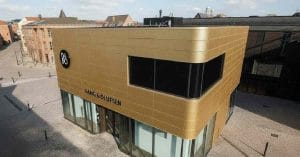
The portraits hang in a small gallery space off Vesterbrogade. Each photograph shows a person who works in Denmark but rarely appears in Danish media or public debate. The exhibition, titled “Portrætter af de usynlige,” translates to Portraits of the Invisible.
These are not the skilled internationals who dominate expat narratives. They are cleaners, kitchen assistants, delivery riders, and care workers. Many come from non-Western countries, consistent with official data showing a majority of immigrants and descendants have non-Western origins.
The demographic reality behind the invisibility
According to the Ministry of Immigration and Integration, Denmark’s immigrant and descendant population has grown from 3.0% in 1980 to 16.3% as of 1 January 2025. The share has risen more than fivefold over roughly 45 years. Official integration statistics suggest this represents a long-term structural change in Denmark’s population rather than a short-term fluctuation. 626,705 people now living in Denmark have origins in non-Western countries. Another 304,363 come specifically from MENAPT countries.

These figures mean that roughly one in six people in Denmark has an immigrant background, as a share of the total population. Yet public visibility does not match demographic reality. The workers featured in the exhibition represent a slice of that population that policy debates often reduce to statistics.
Why these workers stay invisible
Part of the invisibility is structural. Cleaning happens before or after office hours. Food delivery is a transaction on a doorstep. Kitchen work takes place behind closed doors. The jobs themselves are designed to be unobtrusive.
Part of it is social. Research indicates that wage differences persist between immigrants and native Danes, though they have narrowed over time, with the wage gap documented across multiple Statistics Denmark and OECD labor market analyses. Many of these workers earn less and have fewer protections than employees in visible professions. Language barriers and precarious contracts further limit their presence in public conversation.

The exhibition does not offer solutions. It offers recognition. Each portrait includes a brief text about the person’s work and background. The details are ordinary. One woman cleans three office buildings each night. Another man has worked in restaurant kitchens for 12 years. A third delivers groceries by bike in all weather.
The expat angle that matters here
For internationals who moved to Denmark through university programs or corporate jobs, this exhibition is a reminder that the immigrant experience in Denmark is not monolithic. The person who cleans your office likely has a very different relationship with Danish institutions than you do. Their integration challenges are not about networking events or career progression. They are about shift patterns, transport costs, and whether their employer respects labor rules.

According to Statistics Denmark, the country tracks its immigrant population with considerable precision. StatBank population tables such as FOLK2 break down ancestry, citizenship, country of origin, and time. The data infrastructure exists to understand who lives here. What the numbers cannot capture is how visible or invisible those people feel in daily life.
What the portraits of invisible workers reveal
The photographs themselves are straightforward. No dramatic lighting or emotional manipulation. Just faces, names, and a few sentences. The simplicity is the point. These are not exotic subjects or objects of pity. They are colleagues, neighbors, and taxpayers who work in roles the exhibition argues Danish society depends on but rarely acknowledges publicly.

According to the organizers at time of writing, the exhibition runs through late July and entry is free. Whether it changes anything beyond the gallery walls remains to be seen. But for a few weeks at least, the invisible have names and faces on a wall in Copenhagen.