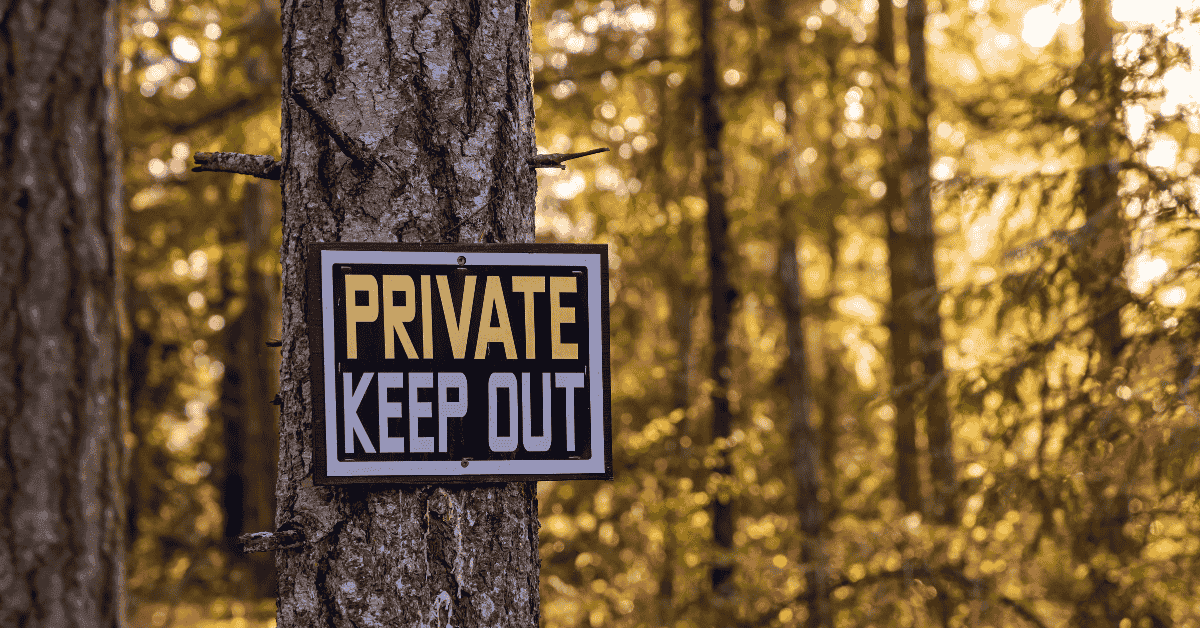
One private prohibition sign on a West Jutland footpath exposes a much bigger problem: thousands of legally protected coastal trails sit buried in Danish-only registers that many foreign cottage-owners and tourists cannot read, allowing landowners to quietly test the rules with homemade prohibitions.
In Vester Husby, a private prohibition sign appeared on a footpath crossing private farmland near the North Sea dunes. The sign sparked immediate uproar among locals and summer visitors who have walked the route for generations. What looks like a simple neighbour dispute is a textbook example of how Denmark’s “free access to nature” works in practice: not through signs or fences, but through buried legal documents that most internationals never see.
According to Holstebro Municipality’s GIS and property data, several trampestier in Vester Husby are secured by registered easements across private fields. In such cases, landowners generally cannot legally close the path without municipal approval. According to Statistics Denmark, foreign nationals’ share of summer-house ownership in Holstebro Municipality has increased markedly since 2018. Many foreign owners are likely to rely on signs and markings rather than consulting Danish-language registers such as tinglysning.dk.

The invisible network of coastal paths
Holstebro’s digital path map lists dozens of registered recreational trails in the Vester Husby coastal zone. Many cross cultivated farmland where, under the Nature Protection Act, the public has no automatic right to walk unless a specific easement has been recorded. The trampesti in question is one of those paths. According to local representatives, it has existed for decades and is now included in municipal path maps.
Bjørn Albinius, chairman of the local property-owners association, told TV MIDTVEST that a registered right-of-way exists and that the path has been used for a century. Landowner Tage Andersen, who placed the sign, explained to the broadcaster that ATV riders prompted his decision to mark his property. He said he wanted to signal his rights.
Motorised traffic is regulated under the Road Traffic Act and Roads Act, not by the general nature-access rules that apply to walkers. Municipalities can order private signs removed if they resemble authority signage and unlawfully restrict public passage, especially where a public right of way exists.
Why coastal path access matters for internationals
According to Miljøstyrelsen, Denmark has over 10,000 kilometres of marked walking trails, plus many more informal and unmarked paths in rural and coastal areas. Many rely on unwritten customs and local agreements rather than formal signage. The agency has indicated that complaints about access conflicts have been increasing, reflecting more friction where informal paths meet changing land use and ownership patterns.
For expats and tourists, the stakes are practical. A single unauthorized sign can redirect or deter walkers from using legally protected routes, because the rules sit deep inside property registers and municipal plans, not on the path itself. The Environmental Protection Agency has indicated that tourists and non-local residents account for a significant part of access-related enquiries, often submitted via tourism offices rather than directly to municipalities.

What happens next
Holstebro Kommune has formally acknowledged multiple citizen complaints about the Vester Husby sign and initiated an administrative review. If the sign is deemed to violate municipal policy, officials can order it removed. Under a 2018 circular from the Ministry of Transport and Housing, municipalities must act against signs that could give the impression of being erected by a public authority and unlawfully restrict public passage.
Holstebro’s path policy states that changes affecting access or signage on registered recreational routes require municipal involvement. Albinius captured the frustration of many when he told the broadcaster that if the sign is wrong and illegal, they will exercise self-help and keep walking. Visitor Marianne Sørensen, a long-time pensioner guest, said she opposes all private signs in the area.
The broader pattern
Denmark’s “right to roam” is narrower and more codified than many internationals assume. Unlike in Norway or Scotland, there is no general right to walk across cultivated fields. Much coastal access depends on a patchwork of local easements. The Vester Husby sign sits at the intersection of three broader trends: increasing foreign ownership of summer houses, rising use of off-road vehicles, and municipal efforts to formalise old informal paths into mapped, branded recreational networks.
Similar disputes in places such as Blokhus and Skagen have, according to municipal statements at the time, led to clearer local guidance on how landowners may signal restrictions. This pressure is real and growing, as municipal technical departments across coastal Jutland report rising numbers of enquiries about blocked paths, new fences and private signs.

How to protect your coastal path access
Affected path users, Danish or international, can ask Holstebro Kommune to clarify the legal status of a specific trampesti and request removal of unauthorized signs. Foreign cottage-owners can also check the tinglyst servitutter attached to their own property to understand which paths they must keep open. Holstebro’s technical department is the primary authority for path access issues. A resident or visitor who doubts a private sign’s legality can submit a written enquiry, often via the municipality’s website, asking whether the path is public, private with easement, or entirely private.
Tourists who encounter a suspicious sign can address it indirectly via local tourist offices or the municipality’s general contact number, which is one common way for non-Danish speakers to report issues. If conflict escalates, police can be involved, but they will usually defer to municipal determinations of path status. Once Holstebro issues a decision in writing, it will clarify municipal practice and can be cited by other landowners and cottage-owners in Vester Husby in future disputes.
For anyone navigating Denmark’s coastal holiday zones, the Vester Husby sign is a reminder that free access to nature depends on ongoing, contested work in registers, municipal plans and negotiations. It is not just about picturesque dunes and well-behaved walkers. It is about who can read the paperwork, and who gets to put up the signs.