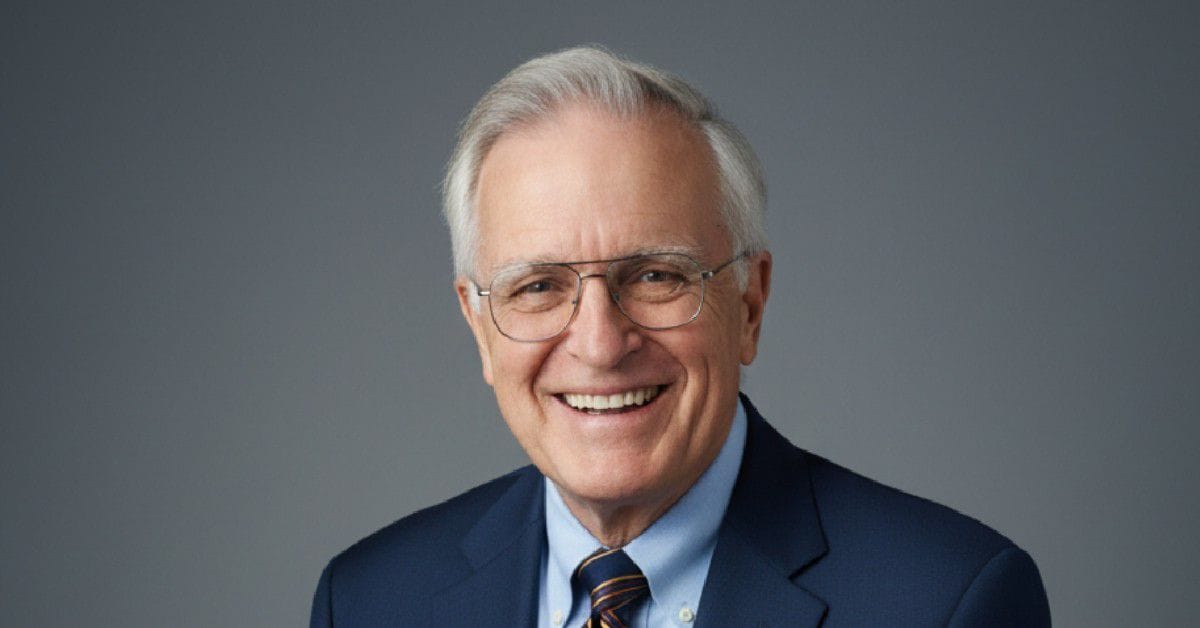
Aage Bohr is celebrated for his remarkable contributions to the understanding of atomic structures and nuclear phenomena. He was born on June 19, 1922, in Copenhagen, Denmark, as the fourth son of Margrethe Norlund Bohr and Niels Bohr. Niels Bohr was a towering figure in quantum theory. And he received the 1922 Nobel Prize in Physics for his groundbreaking work on the structure of atoms.
Early Life and Formative Years of Aage Bohr
Growing up in an intellectually vibrant environment profoundly influenced Aage’s outlook and aspirations. His father’s close interactions with figures like Albert Einstein and Werner Heisenberg contributed to his intellectual growth. From an early age, Aage was exposed to the stimulating discussions and ideas that defined the most advanced stage of physics at the time.
Aage’s educational journey began at the Sortedam Gymnasium. It is a notable institution in Copenhagen, where he nurtured his growing interest in sciences. Demonstrating an aptitude for mathematics and physics, Aage pursued further studies at the University of Copenhagen.
During the Second World War, Denmark was under occupation. But the scientific community, including the Bohr family, remained committed to their work. Aage took his first steps in professional scientific research in this challenging context, beginning a lifelong journey of discovery and innovation. Despite the political upheaval and constraints of wartime Denmark, Aage managed to complete his studies. He earned his Master’s degree in 1946, thus cementing his path forward in the realm of theoretical physics.
Niels Bohr’s institute was a magnet for scientific minds worldwide, creating a unique space where debates on fundamental physics were frequent. This exposure not only honed Aage’s analytical skills but also instilled in him a profound respect for collaborative work, synthesis of ideas, and open dialogue.
The early period of Aage Bohr’s life was instrumental in shaping him into the scientist he became. It was characterized by a commitment to understanding the natural world and a desire to build upon the legacy left by figures like his father. Throughout his life, Aage continued to embody the spirit of inquiry and collaboration that defined his youth. He eventually grew into one of the most influential physicists of his generation.
Highlights of Aage Bohr’s Career
Aage Bohr’s career in the field of physics is marked by significant achievements and contributions that have had a lasting impact on our understanding of nuclear structures and reactions. Following in the footsteps of his father, Niels Bohr, Aage not only advanced the scientific legacy of the Bohr family. He also forged his own path, pioneering groundbreaking research in theoretical nuclear physics.

After completing his studies at the University of Copenhagen, Aage Bohr expanded his academic horizon by studying and working at prominent institutions abroad. In 1948, he joined Columbia University in New York as a research associate, where he was able to engage deeply with the scientific community in the United States. Moreover, his time at Columbia allowed him to work alongside eminent physicists, further honing his expertise and expanding his theoretical framework.
The 1950s
During the 1950s, Aage Bohr embarked on what would become one of his most noteworthy collaborations with Ben Roy Mottelson and Leo James Rainwater. This collaboration was pivotal to his career. And it eventually led to one of the most significant contributions in nuclear physics: the collective model of the atomic nucleus.
Bohr, Mottelson, and Rainwater discovered that the distribution of protons and neutrons in nuclei allowed for various levels of nuclear deformation. What’s more, they demonstrated that nucleus shape changes could explain various nuclear properties. Therefore, earning them the 1975 Nobel Prize in Physics.
Bohr’s 1952 and 1953 publications, co-authored with Mottelson, laid the foundations of this breakthrough. This was by providing extensive support for the non-spherical shapes of certain atomic nuclei. Furthermore, this work challenged existing assumptions and provided significant insights into the behavior of matter at a fundamental level. As a result, these findings became crucial in shaping the direction of nuclear physics research in the latter half of the 20th century.
Aage Bohr’s commitment to advancing scientific understanding did not stop at his own research. He was dedicated to nurturing the next generation of physicists, a trait perhaps inherited from his father. In 1956, Bohr became a professor at the University of Copenhagen, where he engaged with students and colleagues alike. Thereby, fostering an environment of collaborative inquiry and innovation. In addition, his significant contributions to both research and teaching solidified his status as a thought leader and beloved mentor.
Legacy
Throughout his career, Bohr’s work earned him numerous accolades and honorary titles, including membership in the American Academy of Arts and Sciences. Beyond awards, his legacy was characterized by his relentless curiosity and commitment to expanding the boundaries of human knowledge. Moreover, even in his later years, Bohr continued to be actively involved in research. Hence, shaping the narrative of nuclear physics for generations to come.
Conclusion
Aage Bohr’s journey in the world of physics is a testament to the power of intellectual inquiry and the enduring legacy of scientific exploration. From his formative years to his groundbreaking work on nuclear structure, Bohr’s contributions have profoundly shaped modern physics.
Emphasizing collaboration and innovation, Aage Bohr not only furthered the understanding of atomic and subatomic phenomena. Besides, he inspired future generations through both his research and teaching. As a Nobel laureate, his work stands as a cornerstone in the study of nuclear models, demonstrating the complex beauty of the atomic world.
FAQs about Aage Bohr
1. What is Aage Bohr most famous for?
Aage Bohr is most renowned for his work on the collective model of the atomic nucleus. Also, he developed it in collaboration with Ben Roy Mottelson and Leo James Rainwater.
2. What impact did Aage Bohr’s research have on physics?
Bohr’s research challenged the prevailing notion of spherical nuclei and laid the groundwork for understanding nuclear deformation. Thus significantly advancing the study of nuclear physics.
3. Where did Aage Bohr conduct most of his research?
While Aage Bohr carried out pivotal parts of his research in Denmark, he also expanded his experience in the United States.
4. When was Aage Bohr born?
Aage Bohr was born on June 19, 1922, in Copenhagen, Denmark.
5. What role did education play in Aage Bohr’s life?
Education played a crucial role in Aage Bohr’s life, with early exposure to scientific discussions shaping his curiosity and career. Additionally, he eventually became an esteemed professor at the University of Copenhagen.
6. What notable honors did Aage Bohr achieve besides the Nobel Prize?
Aage Bohr received several honors, including membership in prestigious organizations like the American Academy of Arts and Sciences. Thereby, recognizing his significant contributions to science.