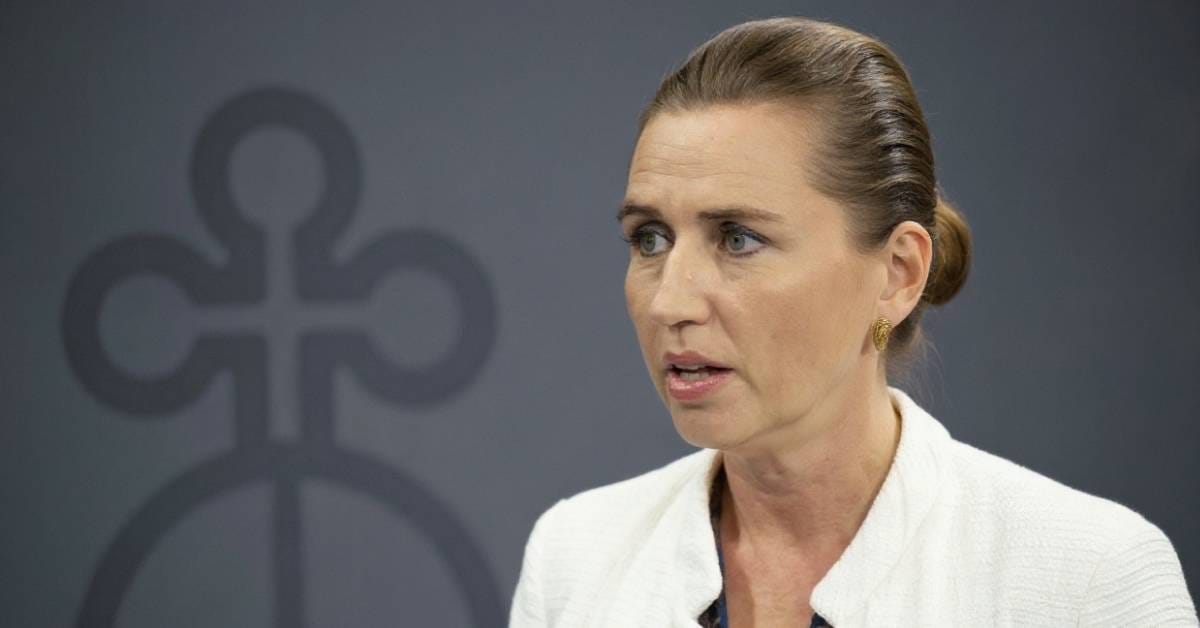
Prime Minister Mette Frederiksen faced party leaders in the Folketing on Tuesday, after criticism from several parties over her use of the term “befolkningsudskiftning”, or population replacement.
The question time session began at 13:00 on Tuesday, November 24, in the Folketing chamber. According to TV 2’s live coverage from its Christiansborg desk, party leaders question the prime minister in turn and she does not know the questions in advance.
TV 2 notes that this was an expanded session, so the North Atlantic members of the Folketing could also put questions to her. The broadcaster reported before the session that the disputed term was certain to come up.
The phrase originated in an episode of B.T.’s podcast Borgerlig Tabloid the previous week. As reported by TV 2 on November 19, Frederiksen said she was not a supporter of a large population replacement, and that she wanted a strong majority culture.
Criticism from SF and Enhedslisten, and a Facebook response
Pia Olsen Dyhr of SF told TV 2 that she would not use the word herself. Pelle Dragsted of Enhedslisten criticized the prime minister’s choice of words openly on social media, per the same live coverage.
Frederiksen published a longer Facebook post on Tuesday. In it she wrote that Denmark had been a very homogeneous country for many years, that this is changing, and that many people have arrived and become friends, family, colleagues and neighbors. She also asked not to be grouped with conspiracy theorists, far right extremists or fascist movements.
Why the word is charged in Danish politics
TV 2 reported on November 19 that the term was coined by the French political scientist Renaud Camus in the early 2010s. It is central to the identitarian movement, and the fact-checking outlet Tjekdet has published an explainer on the related “great replacement” conspiracy theory.
Interpretations of the remark differ. An episode of DR’s Deadline this year, titled “Bliver danskerne udskiftet?”, said the political right celebrated the wording. In an opinion piece for Altinget, Mathias Hee Pedersen asked whether Frederiksen had moved into far right conspiracy rhetoric, citing Le Monde’s description of her shifting further right. TV 2 has reported that it remains unclear whether she deliberately invoked the concept.
What the exchange means for foreign residents in Denmark
Spørgetime, or question time, is one of the Folketing’s control functions, in which the prime minister answers questions from the leaders of the parties. It produces political statements, not legislation. The dispute here is about language and framing, and the reporting from TV 2, DR and Altinget describes no new proposal on residence or work permits attached to the remark.
For people living in Denmark on a foreign passport, the practical rules are unchanged by this story. Permits and residence cases are still handled by SIRI and the Danish Immigration Service through nyidanmark.dk, and nothing in Tuesday’s coverage points to a change there. What the exchange does show is that the vocabulary of the immigration debate is itself now contested at the top of Danish politics, with the prime minister’s own supporting parties objecting to a term she used.
Frederiksen’s Facebook post addressed people who have moved to Denmark directly, describing their arrival as good for the country. That statement sits alongside her stated wish for a strong majority culture, and the reporting does not resolve how the two are meant to fit together. Whether the government follows the rhetoric with concrete policy is not known from Tuesday’s session.