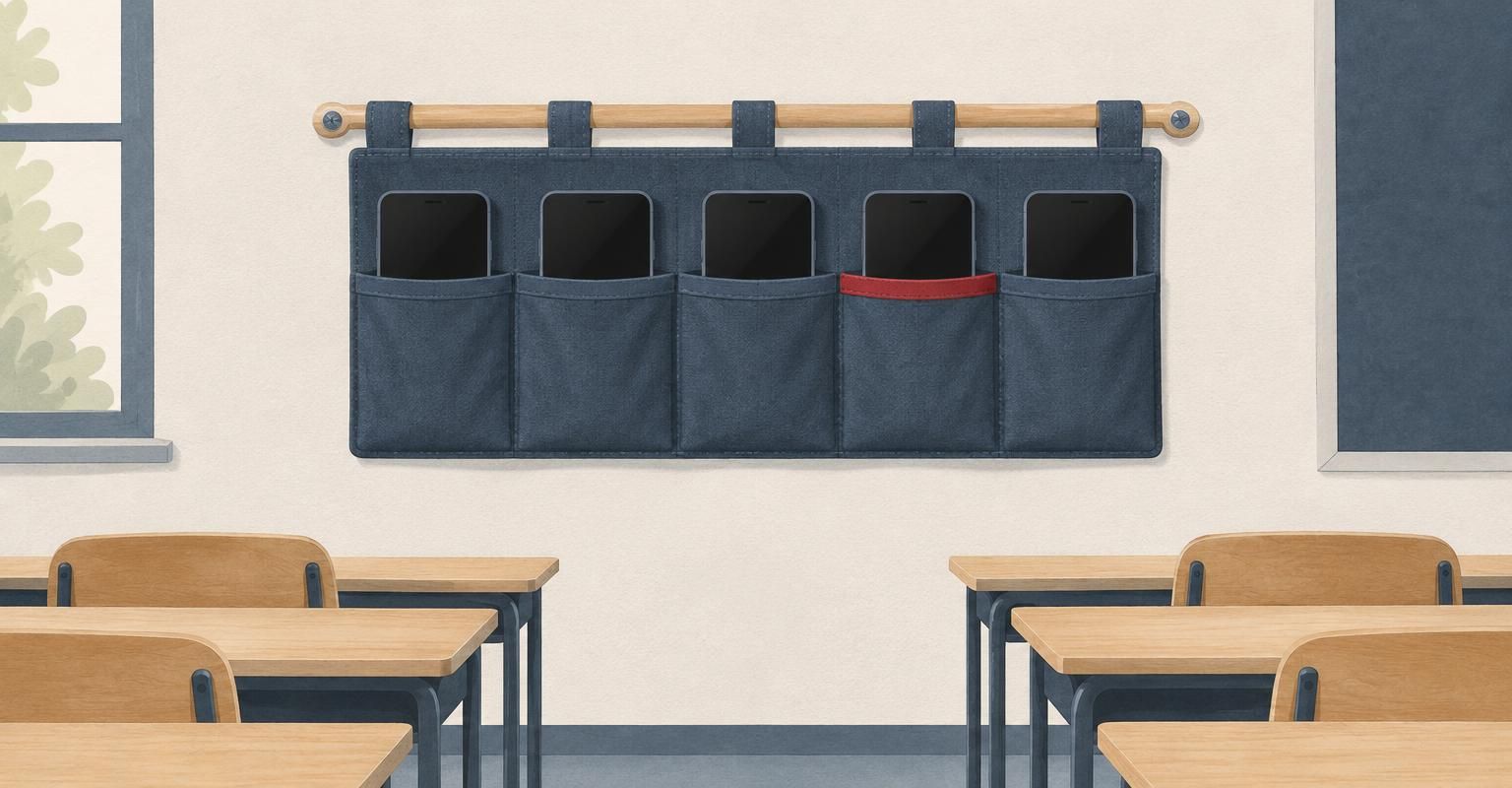
The government, Enhedslisten and Alternativet have agreed to ban mobile phones in Danish primary and lower secondary schools, 10th grade and after-school programs from the 2027/2028 school year.
The deal was announced by the Ministry of Children and Education in a press release on Monday morning, according to Berlingske’s live politics coverage. It covers grundskolen, 10th grade and fritidstilbud, the publicly run after-school programs.
The ban applies to phones and other electronic devices with internet access, per the agreement text. Computers and tablets used in teaching are exempt. DR reports the same scope and start date.
As reported by Ritzau, an earlier agreement from 2025 required each school to write its own local policy. That policy only had to make schools and after-school care mobile free up to 3rd grade. The new deal extends the rules all the way to 10th grade.
How schools will enforce the ban
Each school leader decides how the ban works in practice. TV2 Østjylland reports that phones can be collected at the start of the school day, or kept switched off in school bags. Individual exceptions are allowed for children where health considerations apply.
The agreement also requires content filtering on school networks, so sites without educational relevance can be blocked. Per Ritzau, that could include social media, gaming sites and shopping sites. Daily Northern, citing DR, adds that the deal also sets national guidelines for the use of AI in schools.
The European Commission’s Eurydice network notes that the 2025 agreement required those local policies from the 2026/2027 school year. The new ban therefore lands one year later, in 2027/2028, and replaces the local-policy model with a national rule.
Why the deal was presented on Monday
The announcement came on the day the government leadership met in Fredericia for a large summit on the folkeskole. The backdrop is the latest PISA results, which show Danish pupils performing historically poorly. Prime Minister Mette Frederiksen and Education Minister Magnus Heunicke were among those taking part.
TV 2’s political editor Hans Redder called the future of the schools a major priority for the government, and described the ban as a far-reaching measure. Berlingske also reports criticism from Simon Emil Ammitzbøll-Bille, a former Liberal Alliance minister. He questioned whether the state should ban phones at parent-owned free and private schools.
According to Mig og Aarhus, citing Puls, school leaders and independent-school representatives told media in September that they did not expect a phone ban to have a major effect on PISA results.
What the ban means for international families with children in Danish schools
In the Danish education system, grundskole covers the compulsory school years, while fritidstilbud refers to SFO and school clubs. Tidende, drawing on Ritzau, reports that the ban also covers efterskoler, municipal youth schools and international schools, and that it applies during breaks as well as lessons.
For families who rely on a child’s phone for contact during the day, the practical arrangement will depend on the individual school, since the school leader decides how phones are collected or stored. The sources available do not yet confirm every detail for free and private schools, which Ammitzbøll-Bille says are included. The rules take effect from the 2027/2028 school year, so current arrangements under the 2025 local-policy model continue until then.