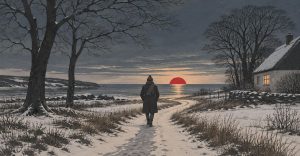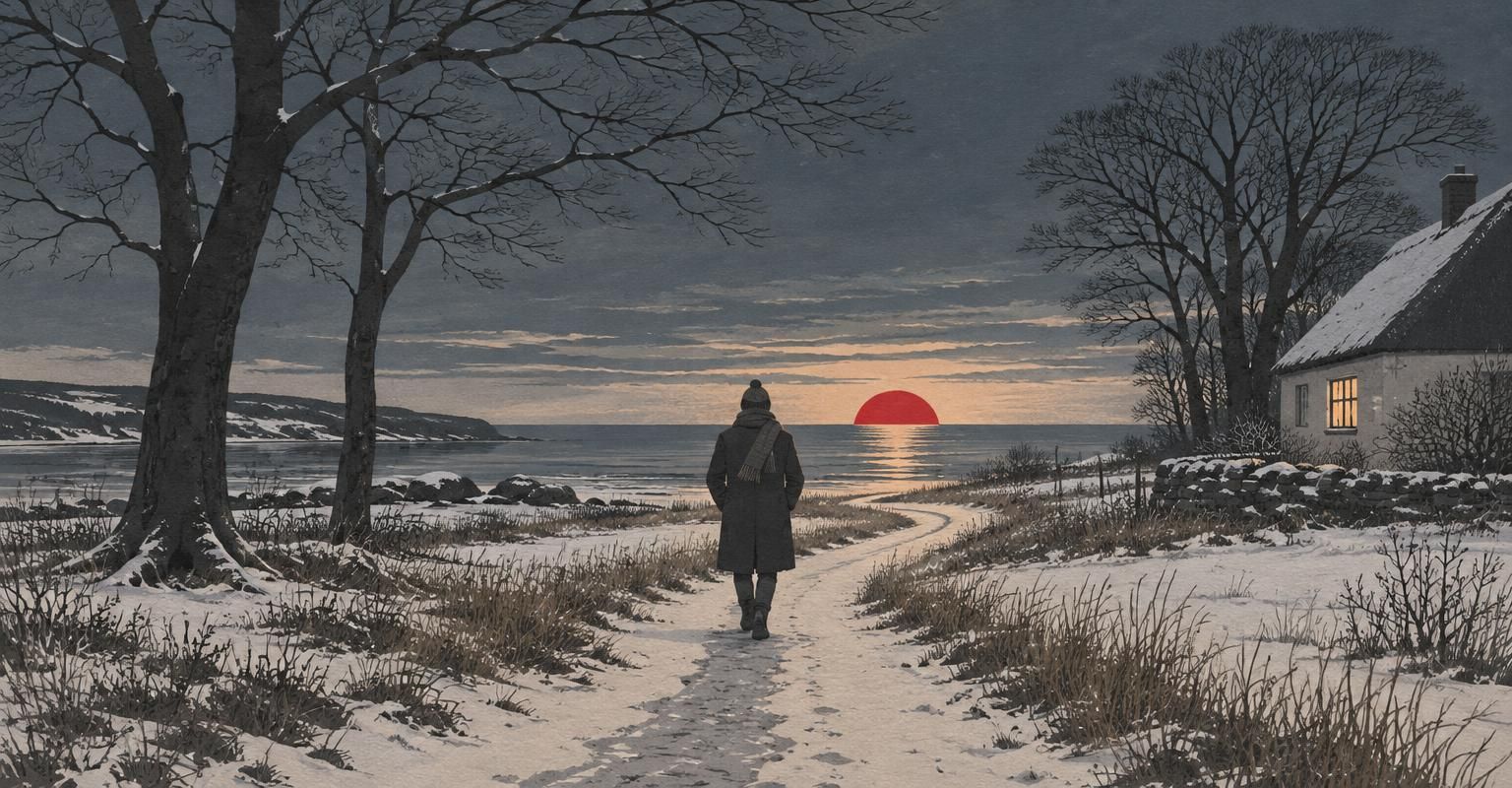
A 29-year-old man from Holbæk, Andreas Pahn, says the dark autumn months drain his energy, and this winter he has decided to get outdoors more and invite others to walk with him.
TV2 reported on November 12, 2026 that Pahn feels the loss of daylight in both his head and his body. He says he loses energy, gets more tired, and wants to switch off the alarm clock and go back to sleep. In previous years he gave in to that feeling, according to TV2.
In early October he wrote a post in a Facebook group describing how winter affects him. The post was also meant as an open hand to others who feel the same, with an invitation to go for walks together. It has drawn more than 500 reactions and 30 comments, and several people have reached out, though no concrete walking plans have been made yet.
A chief physician separates “vintersløvsind” from winter depression
Nicolas Rescalvo Hansen, chief physician at Psykiatrien Øst in Region Sjælland, told TV2 that Pahn’s plan is sensible. He said it is natural to feel the growing darkness in the body, partly because the brain releases more of the light sensitive hormone melatonin during the long winter nights. He also recommends light therapy lamps and daily walks.
Rescalvo Hansen defines real winter depression as a significant functional impairment outside the normal range that returns each autumn and winter. He contrasts this with what he calls vintersløvsind, the general tiredness and lower drive that many people feel when it gets dark. As noted by TV2 East, which ran the same story, he urges care with the everyday use of the word vinterdepression out of respect for people who are genuinely ill.
The six tips listed in the TV2 piece
The article lists advice credited to Sundhed.dk and Rescalvo Hansen. It says to seek out light, either by traveling south with sunscreen or by staying outdoors as much as possible during daylight hours. Where natural light is not available, it describes treatment with artificial daylight from a special lamp, preferably 10,000 lux, and advises consulting a doctor first.
Tanning beds and computer screens have no effect, per the same list. The remaining tips are to brighten rooms at home and at work, to build up light exposure during summer and autumn, to protect sleep and a stable daily rhythm, and to be physically active at least 30 minutes a day.
What the dark season means for internationals in Denmark
The advice in the TV2 article draws on Sundhed.dk, the public Danish health portal that hosts both the patient handbook and the handbook used by doctors. Its Patienthåndbogen describes winter depression as recurring depressive episodes that begin and lift at roughly the same time of year for at least three years, and states that it is not an official medical diagnosis. The same page puts the estimated prevalence at 5 to 10 percent of the population and names light treatment as the first choice of treatment.
For people who moved here from sunnier countries, the practical route is the same as for any resident in the Danish healthcare system. A general practitioner, your egen læge, is the first point of contact and can assess symptoms and refer onward to psychiatry if needed. The Lægehåndbogen on Sundhed.dk advises patients with depression to avoid isolation and keep a normal daily rhythm, which matches what Rescalvo Hansen told TV2 about company being healthy in the dark months.