Aalborg and Helsingør are the last two Danish candidates to become European Capital of Culture in 2032, the Ministry of Culture announced on November 12, 2026.
A jury has selected the two municipalities as finalists, according to a Ministry of Culture press release reported by Kristeligt Dagblad via the Ritzau news agency. The winning municipality is expected to be announced in the autumn of 2027.
Culture Minister Zenia Stampe of the Social Liberal Party called the result very big news. Per the ministry statement, she said the two municipalities have very different cultural scenes, but that both could become an excellent European Capital of Culture. She also praised the work both put into their applications.
The two bids and the jury
Aalborg has named its project Aalborg and Around, according to the European Commission as cited by Ritzau. It is built on cooperation with several other North Jutland municipalities and with Sermersooq Municipality in Greenland. The project addresses climate challenges, social insecurity and democratic pressure.
Helsingør is in the running with the project To Be, which concerns how culture can help solve some of Europe’s challenges. Its themes include loneliness, young people’s wellbeing, climate change and social cohesion. NordiskPost reported in October 2026 that Helsingør runs its bid under the name Elsinore 2032.
Ritzau describes the jury as having ten members appointed by the EU institutions. NordiskPost reported in October 2026 that the selection panel has 12 members, two appointed in Denmark and ten chosen by the EU institutions. Both municipalities have presented their applications to the panel.
TV2 Nord reports that, per Aalborg Municipality’s own press release, a delegation including the mayor presented the city’s vision at the ministry on Wednesday, November 11. TV2 Nord puts the final decision in September 2027. TV2 Kosmopol reports that both municipalities have moved on to the final round.
Why the shortlist comes now
NordiskPost reported that both applications were delivered to the Ministry of Culture before the deadline of October 5, 2026, and that these were the only Danish cities to apply in time. Aalborg’s own project timetable at aalborg2032.dk lists November 2026 as the month the shortlisting decision is made.
Under the procedure set out in the Ministry of Culture’s call for applications, the panel agrees a shortlist and Denmark then formally approves it based on the panel’s report. Denmark will host a European Capital of Culture in 2032 together with Bulgaria. The EU project was created in 1985, and two Danish cities have held the title so far: Copenhagen in 1996 and Aarhus in 2017.
What the title could mean for internationals in Aalborg and Helsingør
A European Capital of Culture is a city that spends a year focusing on art, culture, music and history through events and activities, as Ritzau describes it. The title is awarded through an EU procedure, and the host municipality, or kommune, runs the year’s program. It carries no change to residence rules, work permits or other administrative matters handled by SIRI or borger.dk.
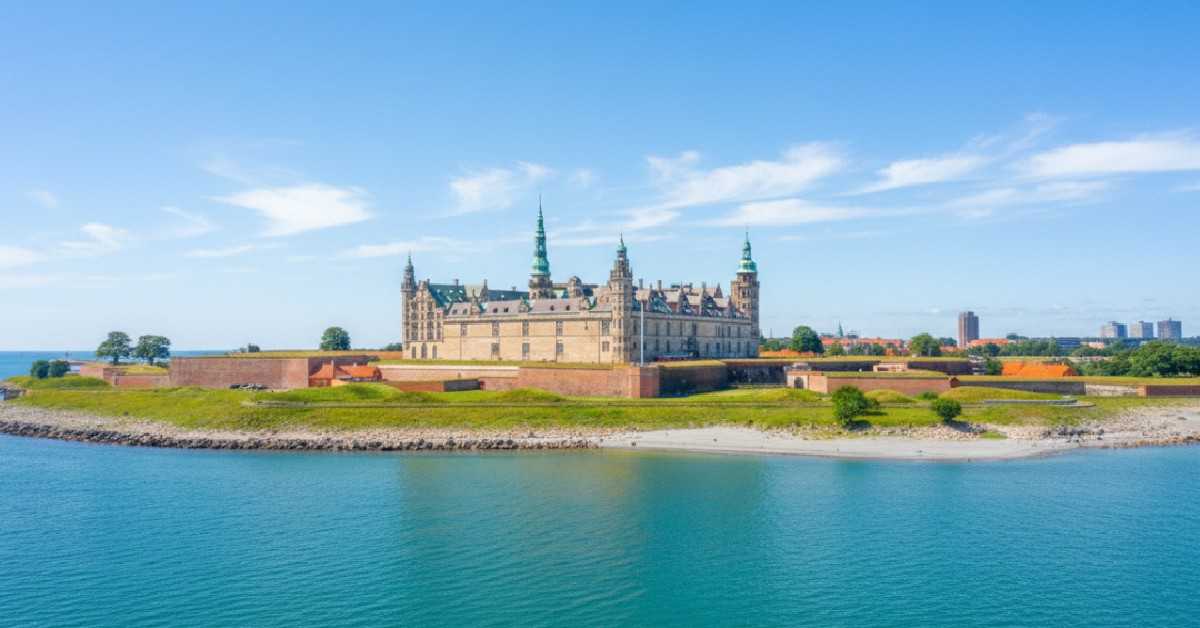
For foreign residents in either area, the practical effect depends on the 2027 decision, and the programming details for 2032 are not yet public. An EU evaluation from 2024, cited by Ritzau, found that the Capital of Culture project has contributed to increased tourism, more cultural activities and stronger communities. Both regions already attract visitors, including to Kronborg Castle in Helsingør and Budolfi Church in central Aalborg.
If Aalborg wins, the stated cooperation with other North Jutland municipalities and with Sermersooq in Greenland means activities would not be limited to the city itself. If Helsingør wins, the bid’s stated themes include loneliness and social cohesion, which the municipality links to Europe-wide challenges. What is not yet known is the budget, the event calendar or how much of either program will be offered in English.