A new analysis from DR, published on August 16, shows that young Danes are increasingly moving to Aarhus, while a growing share of those drawn to the capital region settle in cheaper suburbs rather than central Copenhagen.
The analysis, published by DR on Sunday, maps how young people have moved between Danish municipalities since 2010. It is built on figures from Statistics Denmark and presented as an interactive municipal map. DR describes the change as a shift in the direction of the youth migration flow.
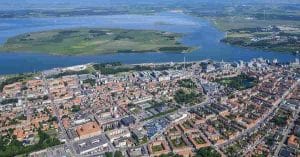
According to DR, Aarhus has since 2010 attracted a steadily larger share of young people from South, East and West Jutland, as well as from Funen and Bornholm. DR writes that the city pulls them with what it calls magnetic force. Aalborg, meanwhile, has managed to draw in more young people from the surrounding North Jutland region.

In a companion article published the same day, DR reports that more young people now choose Aarhus over Copenhagen. That piece states that one in three young people moving away from South Jutland now heads for Aarhus, based on Statistics Denmark data on 15 to 29 year olds. DR’s second article adds regional detail and accounts from young movers.
Suburbs instead of central Copenhagen
DR reports that a larger share of young people are dropping the idea of settling in expensive Copenhagen. Instead, they take up residence in municipalities such as Brøndby, Høje Taastrup and Glostrup. The analysis links that pattern to housing costs in the capital.
The underlying figures come from Statistics Denmark, which tracks internal moves by age and municipality. Its themed page on moves within Denmark records 83,748 moves in 2024 in which people aged 15 to 29 left their parental home. That is the most recently published annual figure.
In a news release from June 26, 2025, Statistics Denmark noted that most young people who leave the parental home move to a different municipality. The agency describes internal migration between municipalities as a central part of young people’s transition to adult life. Those series form the background to DR’s analysis.
Why the analysis comes now
The mapping is pegged to updated youth mobility tables in Statistics Denmark’s Statistikbanken. The FLYUNG1 and FLYUNG3 tables, which cover moves among 15 to 29 year olds by municipality of origin and destination, were updated on February 27, 2026. The refreshed series run from 2010 up to the most recent years available.
Earlier DR reporting from May 28, 2021 found that the four largest cities, Copenhagen, Aarhus, Odense and Aalborg, retained most young residents during their study years, while smaller municipalities saw net outflows. The new analysis concerns the balance within that group of large cities, and how the places young people settle have changed.