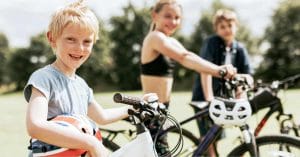
Most Danish parents want their kids to walk or bike to school, but only 58% actually do, and one in four kids gets driven in a car despite widespread concern about traffic chaos and children’s independence.
As the school year begins again in Denmark, a familiar scene unfolds at thousands of schools. Cars clog the roads. Parents idle in drop off zones. Kids pile out of backseats, often just a kilometer or two from home.
According to a new survey from Rådet for Sikker Trafik, 26% of Danish schoolchildren are driven to school during the warmer months. Meanwhile, 58% walk or bike. That leaves a gap between intention and reality that should worry anyone who cares about traffic safety and childhood independence.
The same survey shows that 82% of parents believe it’s important for kids to walk or bike to school. More than half, 55%, say they wish their child did it more often. They recognize the benefits. It teaches traffic skills. It builds resilience. It improves learning and gives kids daily exercise.
So why the disconnect? Distance tops the list of excuses, along with concerns about safety. But a significant chunk of the problem is behavioral. One in five parents say they drive because it’s easier. Another 17% say their child doesn’t bike safely enough yet.
The Self Inflicted Traffic Jam
Here’s the irony. The more parents who drive their kids to school, the more dangerous the school zone becomes. More cars mean more chaos, which breeds more anxiety, which leads more parents to drive. It’s a vicious cycle, and it’s entirely avoidable.
Jakob Bøving Arendt, managing director at Rådet for Sikker Trafik, put it plainly. If fewer families drove, the morning rush would calm down. That would make everyone feel safer, and more parents would let their kids walk or bike. The solution is collective, but it starts with individual choices.

I’ve watched this play out for years in Copenhagen. Streets around schools turn into parking lots between 7:45 and 8:15. Drivers honk. Cyclists swerve. Kids dart between SUVs. It’s stressful for everyone, and it didn’t have to be this way.
Learning Traffic Safety Takes Time
The excuse that a child doesn’t bike safely enough reveals a deeper misunderstanding. Kids don’t learn traffic skills by sitting in the back seat. They learn by doing, with adult supervision, over and over. Just like reading or swimming, it requires practice and patience.
Two thirds of Danish families live within two kilometers of their child’s school. That’s a walkable or bikeable distance for most kids, especially with some training. Yet only 37% of children bike to school, and 21% walk.

Rådet for Sikker Trafik is now running a campaign in 90 municipalities with signs reading “Børn på vej” or “Children on the way.” Police are conducting traffic checks near schools. The goal is to remind drivers to slow down and pay attention. But the bigger cultural shift has to come from families themselves.
A Question of Independence
Denmark prides itself on raising independent, capable children. Letting a seven year old bike to school alone is not unusual here. It’s part of the national identity. Yet the data suggests that ideal is slipping, at least in practice.
When I first moved here, I was struck by how many small children navigated the city on their own. It felt radical compared to the helicopter parenting culture I grew up with. But independence doesn’t just happen. It’s taught, and it requires parents to step back, even when it feels uncomfortable.

The survey found that 33% of parents whose kids don’t walk or bike believe the route is too dangerous. That’s a real concern in some areas. But 14% say drivers don’t show enough consideration for schoolchildren. That’s a problem parents can help solve by modeling better behavior and teaching their kids defensive skills.
The Bigger Picture
This isn’t just about traffic. It’s about what kind of childhood we want Danish kids to have. One where they develop spatial awareness, risk assessment, and physical confidence. Or one where they’re chauffeured from place to place, insulated from the world until they suddenly turn 18.
The tools are there. The desire is there. What’s missing is follow through. If you want your child to be self transporting, you have to invest the time now. Walk the route together. Bike it together. Talk about what to watch for and what to do. It’s not convenient, but it’s essential.
Denmark can do better than this. The infrastructure exists. The cultural values support it. Now it’s time for parents to close the gap between what they say they want and what they actually do.

Sources and References
Ritzau: Forældrene ønsker selvtransporterende børn, men hver fjerde bliver kørt i skole
The Danish Dream: Copy
The Danish Dream: Danish kids starting school lack social skills
The Danish Dream: Government to ban mobile phones in schools