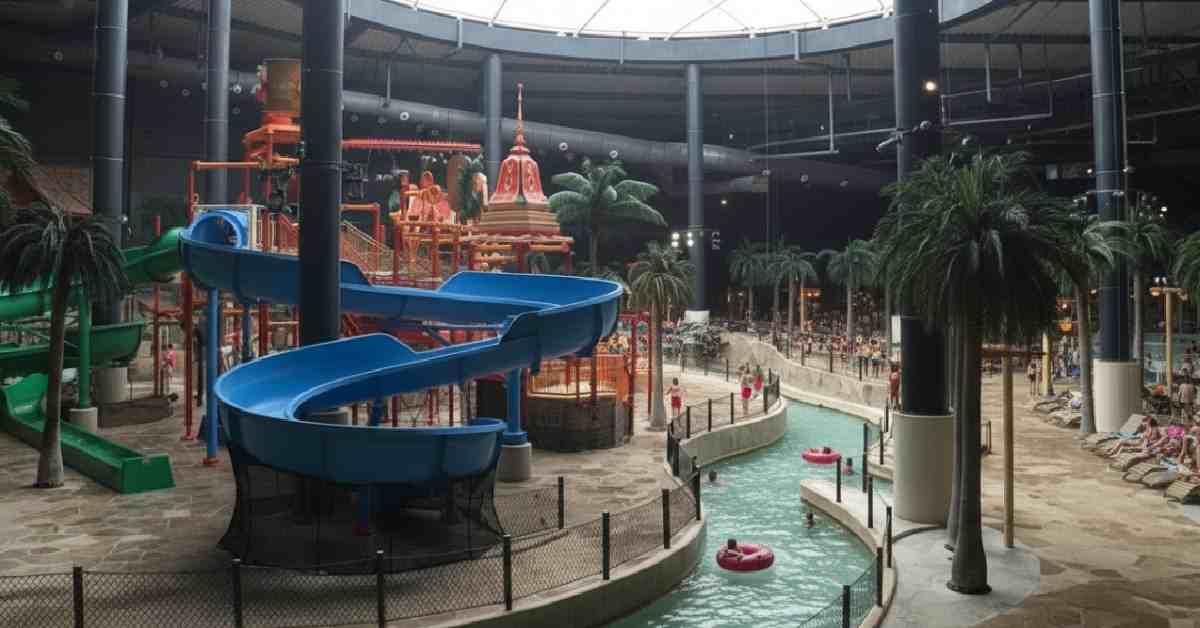
A man was airlifted from Lalandia after a water slide accident on July 12, 2026, the latest incident at a resort where documented clusters of serious injuries have built up since 2012 with no dedicated national register tracking how often Danish water parks break bones or damage spines.
A medical helicopter landed at Lalandia Rødby on Saturday afternoon to evacuate an injured guest following an accident on a water slide. According to TV2, the man was flown to Odense University Hospital. The park declined to provide further details about his condition or which attraction was involved.
No One Is Counting Water Park Injuries
Denmark has no public accident register for water parks and slides. That means neither tourists nor expats using major aqua resorts can easily see how often guests have been seriously hurt or how previous accidents were handled. According to the Danish Accident Register, maintained by the National Institute of Public Health, around 1,700 Danes suffer an accident every day, but it does not publish a breakdown specifically for water slides or aqua parks.
A 1999 study published in Ugeskrift for Læger estimated about 2,500 injuries per year in Danish swimming pools, based on an incidence rate of 50 per 100,000 inhabitants across around 800 pools nationwide. Falls, collisions with fixed objects, and collisions with other people accounted for 61 percent of recorded swimming-pool injuries. The study does not specifically analyse water-park slides, but those same contact mechanisms may also be relevant in slide environments.

The Tornado Cluster at Lalandia Rødby
In July 2012, doctors publicly warned about Lalandia’s Tornado slide at Rødby after at least five injured guests were treated at Nykøbing Falster Hospital. According to TV2, the slide was described as only 12 days old at the time, although ride-database sources list 2011 as its opening year. The hospital’s chief physician warned that the slide posed an unusual risk of neck and back injuries, calling it problematic for the spine.
TV2 ØST reported that several riders arrived with bruises and sprains after being thrown against the side of the raft or slide. In the following two years, a series of serious spine and back injuries linked to Tornado were reported by local hospitals and injured guests. According to a TV2 ØST Facebook interview, at least one victim publicly described long-term damage after riding the slide.

In that same interview, the victim said he broke his back on Tornado and felt pressured by Lalandia and its insurer not to speak to media or other victims. There is no publicly available national regulation explicitly dedicated to water-slide design or mandatory water-park injury reporting. According to searches of Retsinformation, operators are primarily covered by general product-safety and building regulations.
The System Treats It As Background Noise
Anyone injured in a Danish water park can pursue medical follow-up through the public health system, file compensation claims with the park’s liability insurer, and lodge formal safety complaints with municipal authorities or the Danish Safety Technology Authority. However, official information on accident registers and complaint procedures is largely in Danish. There is no dedicated official portal specifically for injuries in water parks, leaving foreign guests without a clear starting point.

For internationals who may not read Danish or know the complaints system, that gap makes it hard to assess risk or understand what legal and medical support is available after a serious injury. Authorities and operators treat these incidents as part of a broad accident category with no specific stats or rules for water parks, while doctors and victims have treated some slide-related injuries as serious enough to merit dedicated attention.
What a Kansas Tragedy Illustrates
Catastrophic water slide failures are not hypothetical. In Kansas City in 2016, a 10-year-old boy was decapitated on the Verrückt slide. Indictments alleged that park management knew of design problems yet kept the attraction open. The combination of extreme height, design flaws and oversight failures led to grand-jury indictments and the permanent closure and dismantling of the slide, though charges were later dismissed.

According to the National Institute of Public Health and TrygFonden, Denmark recorded 1,185 deaths from drowning between 2001 and 2020. According to SikkerTrafik and DTU transport-economic unit prices, each serious injury can cost society around 7 million kroner in lost welfare and medical expenses. If one applies those traffic-accident unit costs hypothetically to serious water-park spinal injuries, the figure suggests substantial hidden societal costs that remain unmeasured because no one is systematically counting.
The case will be logged in medical and emergency records, but there is no public, water-park-specific register that would make Saturday’s helicopter evacuation easy to trace or count alongside the injuries that came before it.