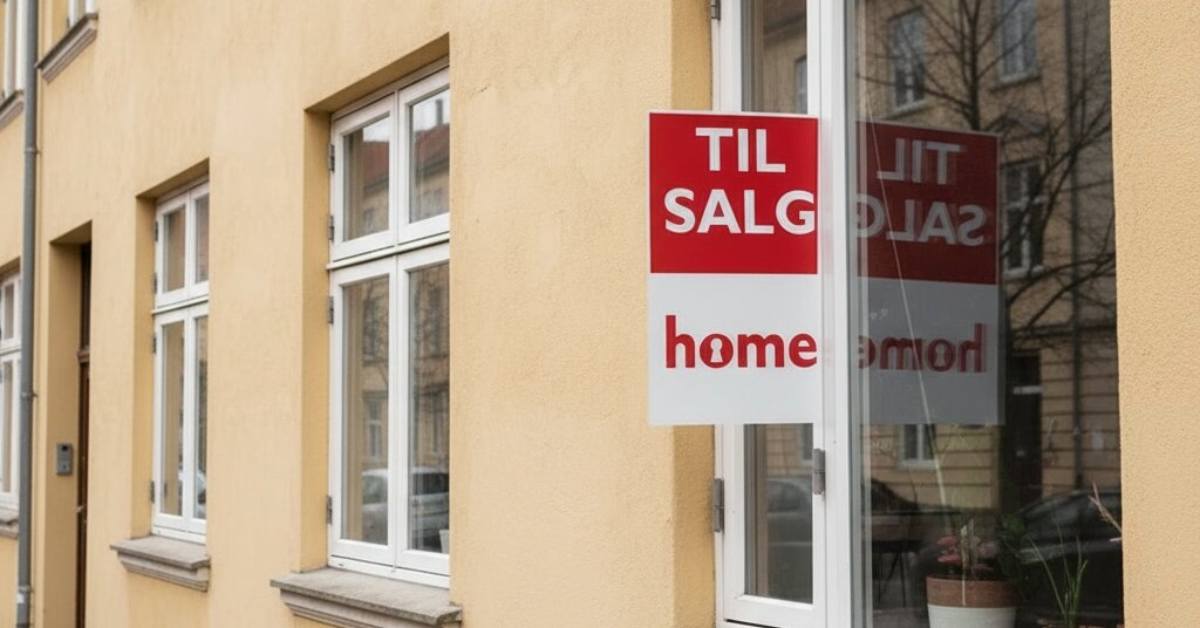
Central Copenhagen’s owner-occupied flats hit 71,810 DKK per square metre in early 2026, a 51% jump in five years that far outstrips national house price growth, even as listing numbers rise and properties sit longer on the market in several of the capital’s most expensive postcodes.
Denmark’s housing market is still climbing, but cracks are starting to show where it matters most. According to Finance Denmark’s boligmarkedsstatistik, national house prices reached a record 18,626 DKK per square metre in the first quarter of 2026, up 6.8% year on year. Yet that headline figure masks a more interesting story in Copenhagen, where prices have risen significantly faster than the rest of the country over the past five years but are now paired with rising inventory and longer selling times.
The postcode gap is widening
According to Statistics Denmark’s StatBank BM011, the average price per square metre for owner-occupied flats in central Copenhagen postcode 1050 climbed from 47,669 DKK in Q1 2021 to 71,810 DKK in Q1 2026. That is a 51% increase over five years, compared with roughly 30% nationwide for houses. A typical 80 square metre flat in the city centre now costs more than 5.7 million DKK before transaction fees, stamp duty and estate agent commissions push the real bill higher still.
For internationals living in Denmark, the squeeze is especially acute. According to Statistics Denmark’s StatBank BEF5, foreign nationals make up around 12 to 13% of Copenhagen’s population but only 8 to 9% nationally, meaning internationals are more likely to live in high-price urban municipalities, though official statistics do not track housing prices specifically by nationality. According to guidance from major Danish banks, foreign buyers often face stricter documentation requirements and may face limits on borrowing for customers paid in foreign currencies or holding temporary visas.

Fresh listings climb as buyers hesitate
According to Boligsiden’s market index, the number of homes for sale in Copenhagen has ticked up recently, and properties are staying on the market longer than earlier in the year. Price reductions are also becoming more common. That combination suggests sellers’ expectations have not yet caught up with buyers’ caution, a classic early signal that a white-hot market is beginning to cool.
Nykredit still forecasts national house prices will rise 5.7% this year, 3.0% in 2027 and 2.2% in 2028. But Spar Nord projects an even more dramatic 17.4% rise for Copenhagen owner-occupied flats in 2026, followed by a sharp deceleration to just 3.1% in 2027 and 2.7% in 2028. The divergence hints that the capital’s boom may be running ahead of fundamentals, and the slowdown will be steeper there than elsewhere.
New laws target the same hotspots
Just as the market shows signs of strain, Denmark is pushing through a raft of housing measures aimed squarely at expensive urban areas. In June 2026, the government tabled a bill to expand cost caps for almene housing, the non-profit social stock that serves lower-income and international tenants. According to the Ministry of Children, Elderly and Housing, the law allows municipalities in Greater Copenhagen and Aarhus to raise the maximum construction cost by 20% above the national standard, double the previous 10% allowance.
Crucially, the extra 10% must be financed through a municipal top-up loan that does not count toward tenants’ rent. That lets developers build in high-price neighbourhoods without pushing monthly housing costs higher for residents. The bill is scheduled to enter force on September 4, and the government estimates it could enable 10,000 to 14,000 extra almene units over the next decade, part of a broader promise to deliver 25,000 new non-profit homes in ten years.

A parallel change to the Planning Act now allows councils to require up to 25% of units in new housing areas be owner-occupied, a tool they did not have before. Together, the measures aim to create mixed-tenure neighbourhoods in precisely the postcodes where price growth has been most extreme.
Critics say it may not be enough
Not everyone is convinced. Construction and landlord groups warn that raising cost caps could simply fuel further inflation without tackling underlying land prices or speculative demand. They point out that 25,000 almene units over ten years looks modest against Denmark’s forecast population growth of more than 200,000 by 2031, as projected by Forenet Kredit based on Statistics Denmark data. Dagens Byggeri ran the headline, Regeringens nye lovforslag løser ikke boligmarkedets problemer.
Some economists also caution that encouraging more owner-occupied construction at historically high prices could lock households in at the market peak, leaving them vulnerable if a correction arrives. Municipalities face increased financial exposure through the new top-up loans, and it is unclear whether all councils will actually use the full 20% flexibility.

What buyers and renters can do now
For prospective buyers, public data offers a tactical advantage. Boligsiden’s market index publishes local listing numbers, price cuts and time on market by area, letting you spot neighbourhoods where sellers are starting to bend. Statistics Denmark’s BM011 table breaks down transaction prices by postcode, helping you identify micro-markets where growth has already slowed or peaked.
Checking adjacent municipalities like Gladsaxe, Tårnby or Rødovre shows per-square-metre levels 20 to 30% below inner Copenhagen, translating into monthly mortgage savings of several thousand kroner on a typical 80 square metre home. For internationals priced out of ownership, the new almene projects will open via municipal housing associations once construction begins, usually through waiting lists for anyone registered in the CPR system.

Denmark’s mortgage regulation and new policy focus on mixed-tenure development suggest to many analysts that any cooling is more likely to be gradual than sudden. But the gap between central Copenhagen’s 71,810 DKK per square metre and the national average of 18,626 DKK is now so wide that even a modest correction in the capital would reshape affordability for thousands of buyers, many of them foreign. The next few quarters will show whether rising listings and longer sale times mark a genuine turning point or just a summer lull.