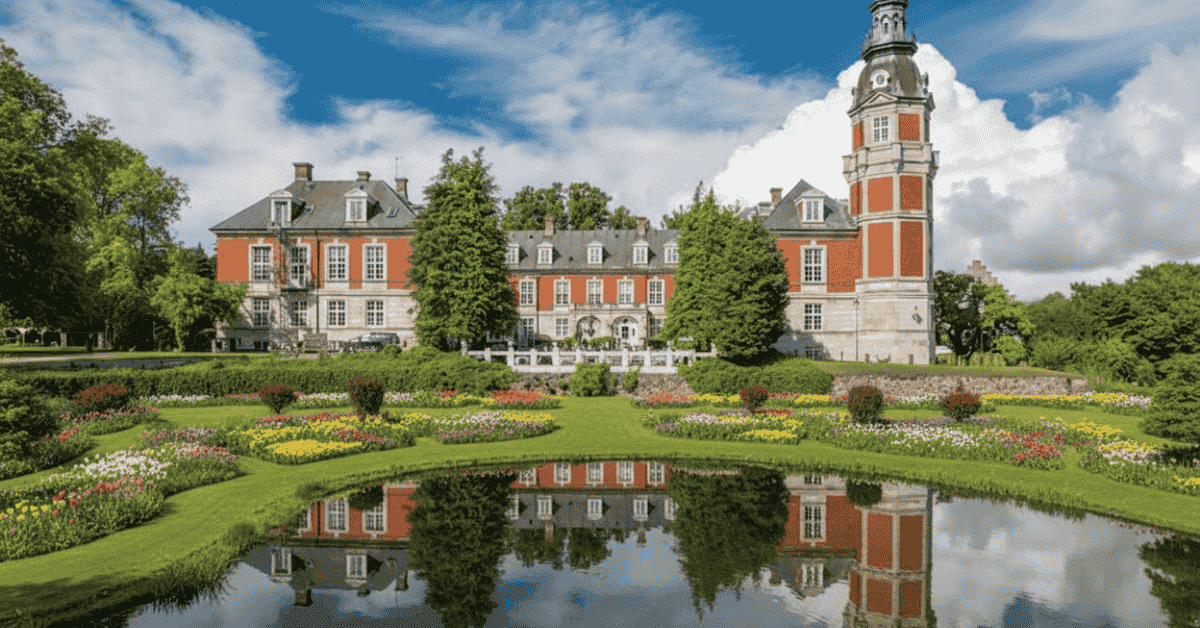
Jim Lyngvild’s public rebuke of tourists at Sostrup Slot omits a crucial detail: Norddjurs Municipality treats the castle as a recreational and heritage-significant area, and Drakonheart’s own guidance confirms visitors may walk in the surrounding nature but not enter the castle, even as the new private owners convert it into the Drakonheart universe for children with unique abilities.
When Lego heir Thomas Kirk Kristiansen and designer Jim Lyngvild took over Sostrup Slot on January 1, 2025, they inherited more than a 15,000 square meter castle complex. They inherited a planning context that quietly limits how closed off the estate can become.
The tension between private control and public expectation sits at the heart of Lyngvild’s recent call for visitor restraint. He and Kristiansen are building Drakonheart as a sanctuary for children with unique abilities, hosting weekend courses and a summer camp for Save the Children. As Lyngvild told TV2 Østjylland, he was one of those children himself, describing Drakonheart as a place for “krøllede hjerner.”
The Castle That Must Stay Open
According to Norddjurs Municipality’s announcement, the project will have significance both locally and nationally. The municipal announcement notes that Sostrup is covered by a local plan and lies in an area Norddjurs treats as a recreational and heritage asset. This is not a royal palace with regular opening hours and 125 kroner tickets like Amalienborg. It is a private estate where Drakonheart’s own FAQ confirms that visitors may walk in the surrounding nature but may not enter the castle buildings.
For internationals navigating Danish castles, this creates confusion. Kronborg in Helsingør is open most days from late April to late December. Hvidkilde and other Funen estates market themselves internationally as photogenic heritage sites. Regional tourism listings for Sostrup, including VisitAarhus, do exist in English and state that the castle is not open to the public, but they offer no detailed ticket rules or photography guidance.

From Monastery Scandal to Social Project
Sostrup’s past complicates the present. The estate functioned as a Catholic monastery and religious institution until allegations of psychological and physical abuse emerged around 2014 to 2015. As reported by Kristeligt Dagblad, the property became known as a site marked by accusations of harm to young women in the convent, describing it as “berygtet.”
Norddjurs Municipality explicitly frames Drakonheart as an opportunity to repurpose a troubled heritage site into a welfare oriented institution. According to the municipality’s December 2024 announcement, the castle would become “et univers for unikke børn” with local and national impact. That dual ambition, safeguarding vulnerable children while supporting regional development, places extraordinary demands on site management.

Why Visitors Get It Wrong
Eurostat data show a marked increase in foreign overnight stays in Denmark since 2019, with German visitors remaining the largest foreign group. Many of these visitors explore non royal castles expecting the same open access norms they find at major attractions.
Sostrup offers limited clarity for international visitors. While VisitAarhus states in English that the castle is not open to the public, and Drakonheart’s FAQ explains in Danish that walks in the surrounding nature are permitted, detailed guidance on photography rules is not provided in standard English language tourism resources. Expats may need translation tools or local contacts to navigate the full picture.

The result is predictable friction. According to TV2 Echo’s coverage, Lyngvild describes spending “alle sine vågne hverdagstimer” on Drakonheart. When tourists arrive unannounced, treating the castle as another stop on a Funen heritage tour, the collision between private project and public assumption becomes acute.
What Expats Should Do
Treat Sostrup as a semi private educational facility, not a drop in tourist attraction. Check Norddjurs Municipality’s website and any official Drakonheart channels before visiting. Assume areas marked as school or camp zones are off limits, and avoid photographing children or staff in line with Danish privacy norms.
For a more straightforward castle experience, prioritize clearly managed sites like Amalienborg, Christiansborg, or Kronborg, where detailed visitor terms and English language support are standard. If questions arise about access rights at Sostrup, contact Norddjurs’ planning or cultural departments directly. English support may vary, but these offices handle heritage site issues regularly.

The Sostrup case is a concrete reminder that “castle” does not automatically mean “tourist attraction” in Denmark. Checking local plans and municipal communication matters as much as reading glossy travel guides. In practice, Sostrup allows walking in the surrounding nature while keeping the castle itself closed to protect the children using the premises. That balance is reflected both in Norddjurs’ planning framework and in Drakonheart’s own guidance, and visitors ignore it at their own confusion.