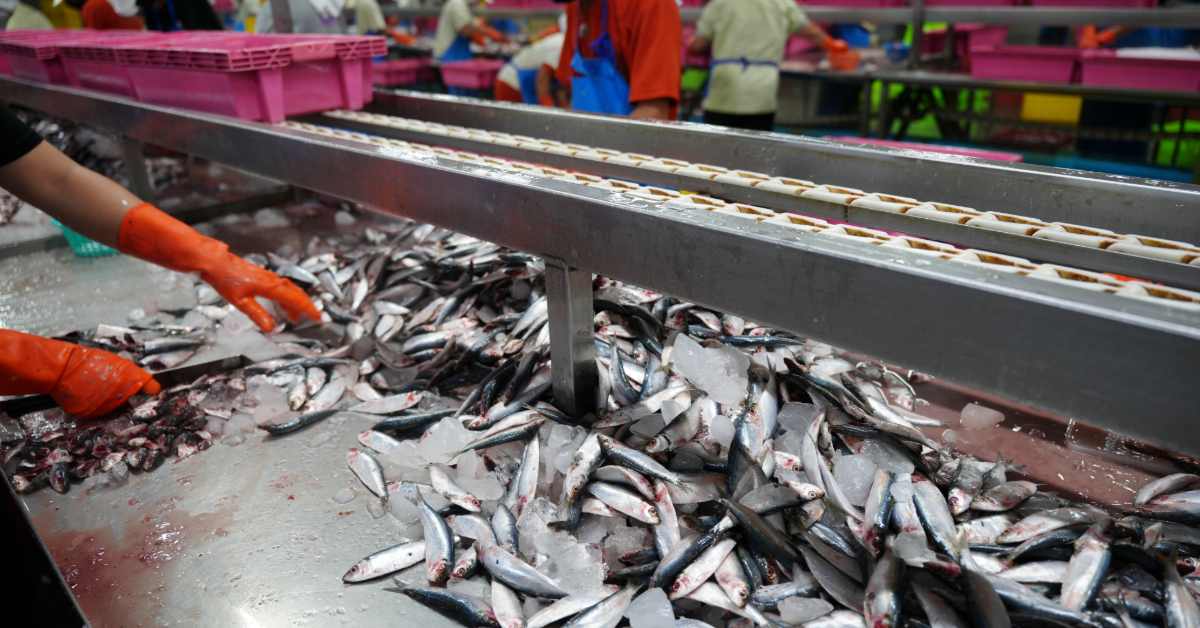
After many years in which Esbjerg’s strong fish odours had largely faded from public debate, residents say the town smells like fish again. Yet official data reveals a striking disconnect: while residents near Hjertingvej report reeking odours from fishmeal, Danish fisheries account for just 0.4% of national CO₂ emissions, and emissions from the sector fell by about 60% between 1990 and 2017, according to Danmarks Fiskeriforening.
The complaints flooding into Esbjerg Municipality sound like a throwback. Citizens describe the unmistakable smell of fishmeal production wafting over neighbourhoods near the harbour. Yet the industrial reality has shifted dramatically since the 1990s. According to Statistics Denmark, Denmark’s entire landbrug, skovbrug og fiskeri sector emitted 11.0 million tons of CO₂ equivalents in 2024, roughly 29% of the nation’s territorial emissions. Within that combined figure, the actual fisheries share is minuscule: according to Danmarks Fiskeriforening’s calculation, fisheries account for just 0.4% of total national CO₂ output.
What Miljøstyrelsen Found
In June 2023, biologists from Miljøstyrelsen conducted on-site inspections and smell patrols at the TripleNine fishmeal plant. They identified outdoor steel tanks containing old fishmeal residues as a specific odour source. The tanks had been moved outside during emergency roof repairs and emitted a strong smell in the immediate surroundings during warm weather.

Miljøstyrelsen ordered TripleNine to clean the tanks, which the company reports it has done. But Tanja Smetana, a biologist with Miljøstyrelsen, declined to confirm the plant as the sole culprit. She noted that several potential odour sources exist in the industrial harbour area. Even after remediation, Esbjerg will not necessarily become odour-free, she warned.
The Esbjerg Fish Smell Climate Paradox
According to Danmarks Fiskeriforening, modern Danish fisheries cut CO₂ emissions by about 60% between 1990 and 2017, driven by fleet modernisation and fuel efficiency. Life-cycle analyses from DTU Aqua show that a whole cod has a climate footprint of 1.2 kg CO₂ equivalents per kilogram. Mussels clock in at just 0.1 kg per kilogram, compared to beef at 13.9 kg per kilogram.
These figures underscore a crucial point. The Esbjerg fish smell problem is about local nuisance, not climate impact. As reported by DTU Aqua, roughly 75 to 95% of a fish product’s life-cycle emissions come from catching, not from land-based processing. The odour wafting over residential streets is decoupled from Denmark’s broader fisheries climate footprint.

For internationals living in Esbjerg, many employed in offshore energy or logistics, the situation creates uncertainty. What are they breathing? Who is responsible? How quickly can authorities compel changes? Most documentation and complaint channels operate primarily in Danish, adding a layer of frustration.
How Esbjerg Changed
Esbjerg was once one of Denmark’s major fish landing ports. But landings and fish-processing activity have shifted over recent decades. More activity now happens in Hirtshals and Hanstholm. Esbjerg has pivoted toward offshore energy, wind, oil and gas logistics. The town’s fish smell reputation now sits at odds with its economic profile.
According to Statistics Denmark’s StatBank, emissions from landbrug, skovbrug og fiskeri peaked around 14 to 15 million tons CO₂ equivalents in the mid-2000s. By 2024, the figure had fallen to 11.0 million tons. The fisheries slice of that pie is tiny. Yet a single poorly managed set of tanks can still make a whole neighbourhood feel like nothing has changed.

What Residents Can Do
Affected residents, including expats, can file formal environmental complaints with Esbjerg Municipality and Miljøstyrelsen. Citizens should document the time, location, intensity and health effects of odour incidents. Municipal environmental departments typically handle reports via web forms or phone, primarily in Danish. Some municipalities offer assistance or information in English, especially larger ones.
Workers near the harbour who feel affected by odours can raise the issue with their arbejdsmiljørepræsentant or workplace health and safety committees. There is no standard, automatic compensation scheme specifically for odour nuisance; persistent problems are usually handled through permits and orders. Regulatory pressure can lead to stricter permit conditions for companies or orders to change processes.

Miljøstyrelsen operates an inspection regime for environmentally regulated companies. Once a complaint is logged, authorities may carry out site visits, measure air quality or conduct smell patrols. The June 2023 inspection at TripleNine is a documented example. For internationals who struggle with Danish, requesting written summaries of inspection results in English can be practical. Some larger municipalities and national agencies provide selected guidance in English, particularly in sectors with international labour.
A New Old Problem
The return of the fish smell highlights a gap between sensory memory and statistical reality. With fisheries accounting for about 0.4% of national CO₂ emissions according to Danmarks Fiskeriforening, and relatively low CO₂e per kilogram compared to beef, they are a small part of Denmark’s greenhouse-gas profile. But legacy perceptions persist. Residents near Esbjerg harbour want action, not climate data. They want the smell gone.
Miljøstyrelsen’s cautious wording may be interpreted by some as reluctance to single out a specific firm. For foreign residents who do not speak Danish, language and unfamiliar complaint mechanisms can make it harder to navigate the process. That feeds frustration when odour problems drag on.