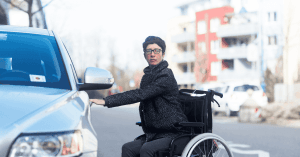
Danish police data show pram thefts are far rarer than bike thefts, yet when they occur they combine routine property crime with the nightmare of a missing infant. In at least one recent case, police have publicly stated their working theory was that the perpetrator intended to steal the pram and only afterwards realised a child was inside.
On July 2, 2026, a pram carrying a sleeping baby was stolen in central Randers in eastern Jutland. The child was found unharmed shortly afterwards, as reported by TV 2. For international parents raising children in Denmark, the incident highlights a collision between local custom and a poorly documented category of crime that official statistics struggle to track.
Denmark has one of Europe’s most distinctive parenting norms: letting babies nap outdoors in prams, even in busy urban centres. According to Denmark.dk, Danes routinely allow children to sleep outside in prams, a practice rooted in early 20th-century Nordic public health ideas about fresh air and infant health. For many internationals, it seems wildly risky. Yet after observing that locals do it routinely, most foreign parents adopt the habit too.
The numbers behind the norms
According to a Copenhagen Post report based on police data, pram thefts in Denmark numbered 369 in 2012 and rose to over 600 by 2016. Statistics Denmark does not publish a dedicated pram theft category, so precise recent annual figures are not available. What is clear is that pram thefts remain far less common than bicycle thefts, though both are recorded under broad theft categories without a direct published comparison.

Recent police notices in eastern Jutland have described cases where the working theory is that offenders targeted prams as objects rather than intending to take a child. In at least one publicly reported case, Østjyllands Politi has stated that investigators believe the perpetrator wanted to steal the pram and only then discovered a child inside. Police and official sources describe such incidents as rare but highly publicised.
According to Statistics Denmark, official crime statistics have no dedicated pram theft category. Such cases are recorded under general theft and, where relevant, broader categories such as deprivation of liberty. That makes trends hard to quantify and leaves parents, especially internationals, without a clear sense of risk.
No dedicated category, no clear picture
Statistics Denmark does not have a specific category for pram thefts, so there are no official breakdowns by citizenship or origin. As a general proxy, Statistics Denmark’s victimisation survey indicates that foreign-born residents report theft in public space at higher rates than Danish-born residents, particularly in Copenhagen and Aarhus. That suggests internationals may face higher exposure to opportunistic property crime, including pram theft.
Outdoor pram napping is common in Denmark and also seen in other Nordic countries, but is unusual in much of the rest of Europe. According to Denmark.dk, the practice reflects a deep cultural trust in public space that most newcomers from outside the region have not encountered before.
Cultural trust meets legal ambiguity
For internationals unfamiliar with Danish criminal law, it is not obvious where the line falls between acceptable outdoor napping and neglect. According to Borger.dk and police guidance, parents must protect children from unnecessary danger and keep them under supervision appropriate to their age. In practice, authorities expect parents to be able to check on sleeping infants regularly. That standard is rarely explained in English or during antenatal classes.

Insurance conditions also vary. Some household policies may exclude prams left outside unattended, while others may cover them if locked to a fixed object. These nuances are seldom explained to non-Danish policyholders. Some municipal guidance advises parents to keep children in view when they sleep outside in prams.
The expat dilemma
Some expat groups and international educators have raised concerns that new arrivals receive no clear briefing on both the cultural norm and the legal limits. According to seminar notes from International House Copenhagen in 2025, international families are often caught between social pressure to conform and uncertainty about safety. Without accessible guidance, they rely on hearsay and observation.
Outdoor pram napping is normal in Denmark and also practised in other Nordic countries, but remains unusual across most of Europe. That makes the Danish norm unfamiliar to the majority of newcomers arriving from outside the region.
What parents can do
Parents can reduce risk by maintaining visual contact with outdoor sleeping children, using physical locks for prams, and checking insurance coverage before assuming protection. According to Rigspolitiet, call 112 if a child is missing or if there is immediate danger. For non-urgent theft reports, contact police on 114.

International House Copenhagen and municipal family services can offer advice to international families. Many health visitors are able to give guidance in English. Borger.dk and Nyidanmark.dk offer general guidance on parental duties, though neither addresses outdoor napping directly. Insurance companies recommend documenting the pram’s make and serial number and locking it to a fixed object whenever left outside.