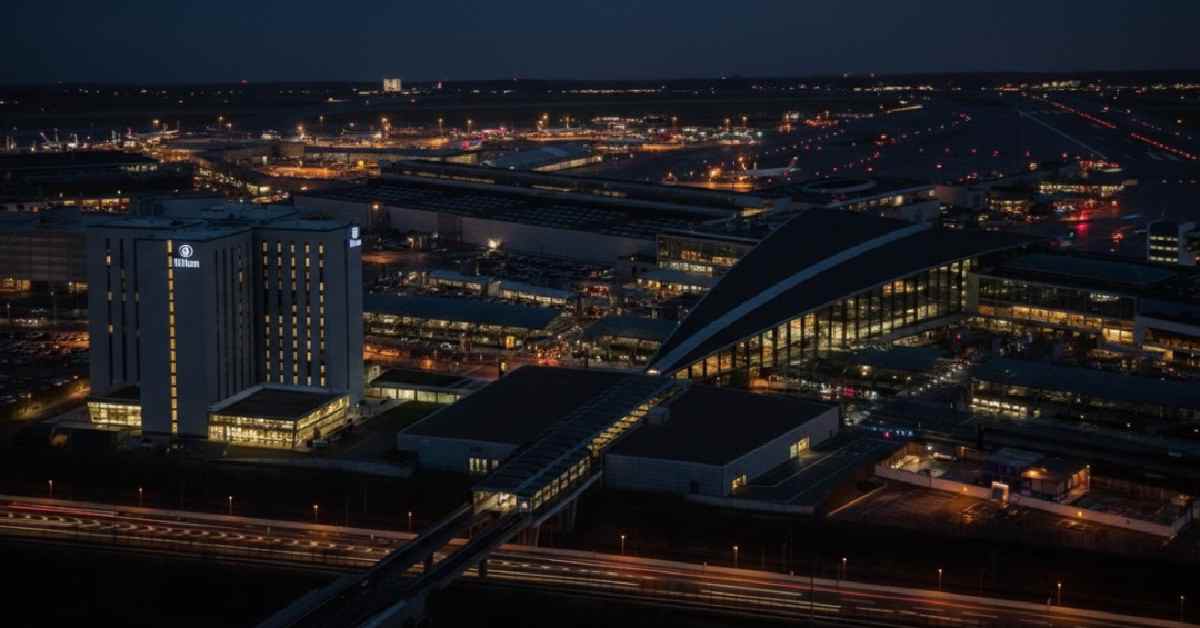
Copenhagen Airport admits its drainage can handle only “limited volumes” of heavy rain before water pools on taxiways and terminal areas, relying on sandbags and temporary pumps to keep flights running while a proposed sea dike remains years from approval.
The admission sits buried in a Danish climate adaptation case study, and it helps explain why Copenhagen Airport and the surrounding motorway are vulnerable to flooding. This week, thousands of litres of water had to be pumped off the Øresundsmotorvejen near the airport exits over a few hours, according to media reporting. Police closed sections and advised travellers to use public transport where possible, with diversions via Amager Strandvej for drivers arriving from Sweden.
The airport expects 10 million passengers this summer alone, around 400,000 more than last year, according to Copenhagen Airport. That works out to roughly 111,000 travellers per day in peak months, all funneling through a low coastal site whose permanent flood protection will not even reach political decision-making until late 2027.
Sandbags at the busiest Nordic airport
Copenhagen Airport handled 32.4 million passengers in 2025, its busiest year ever, more than Stockholm Arlanda or any other Nordic hub, according to Copenhagen Airports A/S annual results. Yet its own sustainability reports confirm that every time it paves a new patch of apron or taxiway, drainage capacity has to be expanded to match. Even then, during cloudbursts water still accumulates until workers deploy pumps and sandbags, as documented in a Climate Adaptation Denmark case study on Kastrup drainage.

The airport sits on southern Amager, a flat tongue of land between the Øresund and Køge Bay. According to Sund & Bælt, the state infrastructure company has been tasked with conducting an environmental impact assessment for a new lufthavnsdige that would wrap around the airport’s eastern perimeter and tie into the Ullerup and Vestamager dikes further south. Public consultation is scheduled for autumn 2027, with political processing to follow at year end.
That timeline means construction is still years away, with no completion date yet set. Until then, the airport, the motorway, and the Øresund railway all remain exposed to storm surges and intense rainfall of the kind that disrupted traffic this week.
PFAS in the puddles
Flooding at Copenhagen Airport is not only about volume. Decades of firefighting foam tests at the site left PFAS and PFOS contamination in groundwater and surface ditches around Fire Station West, according to Copenhagen Airport’s environmental reporting. The airport is now piping those ditches and installed an activated carbon treatment plant, which became operational in May 2024, to stop pollutants spreading when rain overwhelms the drains, as reported by Kemic Vandrens.

In other words, heavy rain can mobilize both water and chemicals. The climate adaptation case study notes that CPH expands drainage with each new paved area, but concedes that the system works only up to a point. Beyond that point, you get flooded taxiways, closed motorway lanes, and authorities working to prevent old contaminants from washing into surrounding wetlands and beaches.
What this means if you’re flying in or out
Airport officials already recommend arriving two hours early for Schengen flights and three for long haul. Add extreme weather and those buffers shrink fast. Police this week rerouted traffic from Sweden onto side roads and advised travellers to use public transport where possible rather than driving.
Public transport may be more reliable when roads flood. However, Sund & Bælt explicitly identifies the Øresundsbanen and the Øresundsmotorvejen as critical infrastructure covered by the future dike project, meaning they sit in the same flood zone as the runways, protected for now by the same incremental mix of drainage upgrades and emergency pumping.

Detailed English-language alerts about motorway closures or drainage failures are typically issued in Danish via police channels, Sund & Bælt notices, and local media. Navigation apps will show delays, but they will not explain that thousands of litres just got pumped off the carriageway or that sandbags are holding back water at the terminal.
Hard defences, slow timelines
Denmark is far from alone in shielding airports with dikes and pumps. Across Europe, warming air holds more moisture and delivers heavier downpours, especially in cities where concrete leaves water nowhere to go. Reports from 2025 described an increase in flood events and casualties compared to 2024, a trend consistent with climate science summarized by the IPCC and the World Meteorological Organization.

Copenhagen Airport’s geography makes the problem acute. It sits right on the coast, unlike Stockholm Arlanda or Oslo Gardermoen, which have more inland buffer. Sea level rise and storm surges hit the runways directly. Combining that coastal risk with contaminated groundwater from old firefighting foam has raised concern among authorities about preventing pollutants from spreading during heavy rain.
The proposed lufthavnsdige addresses storm surge and some rainfall, but construction is still years away with no completion date yet set. In the meantime, the airport that handles the vast majority of Denmark’s air passengers will keep relying on drainage systems that, by its own account, can cope with only limited volumes before water starts pooling and the sandbags come out.