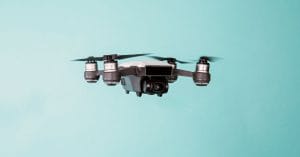
Nine months after police told the public that professional drones shut down Copenhagen Airport in what the prime minister called Denmark’s most severe infrastructure attack, investigators have quietly informed at least one central witness that what she saw was not a drone at all.
The revelation, published by investigative outlet Frihedsbrevet this week, punctures the official narrative of a coordinated hostile operation. It also exposes a jarring disconnect. Copenhagen Police logged over 100 separate drone reports on the night of 22 September 2025 alone. Yet according to Trafikstyrelsen’s drone register, only a few thousand drones are registered for operations that can enter controlled airspace near Danish airports.
The numbers imply that either many unregistered drones were involved, or some other factor such as misperception drove the wave of reports. As police themselves acknowledge, investigators have not yet resolved which explanation fits. Authorities have not reported recovering any drones or published radar imagery or radio-frequency logs.
What Actually Happened at Copenhagen Airport
The September shutdown closed CPH’s airspace for nearly four hours. Dozens of flights were diverted or cancelled. Thousands of passengers spent the night in departure halls or scrambled for hotel rooms. The following day saw knock-on delays across Scandinavia.
Prime Minister Mette Frederiksen branded it the most serious attack on Danish critical infrastructure. According to BBC and Al Jazeera, Defence Minister Troels Lund Poulsen went further, calling it a hybrid attack and part of a systematic operation by a capable actor. Within days, Aalborg and three smaller airports reported more unidentified drones. Analysts and some officials publicly linked the pattern to wider concerns about Russian probing of NATO defences.

No suspects have been publicly charged in connection with the 2025 airport drone incidents. Copenhagen Police confirmed they set up a dedicated investigation group and received over 100 reports and tips. They have found nothing tangible.
The Witness Who Changed Everything
The central witness interviewed by Frihedsbrevet was among the first to report the objects over CPH. After months of investigation, police told her their technical analysis indicated that what she saw was not a drone. That assessment does not appear in any official press release. It emerged only in oral feedback to witnesses.
The gap between public messaging about attacks and private evidentiary conclusions is now impossible to ignore. For the roughly 31.7 million annual passengers who pass through CPH at peak, around 56 to 60 percent of them international travellers according to CPH traffic reports, the uncertainty is more than academic. According to Statistics Denmark table TRANSPOR4, foreign citizens accounted for a clear majority of air passengers departing from Danish airports in 2023.
The Expat Angle
For residents of Denmark’s international community, Copenhagen Airport is the lifeline for work travel, family visits and residency renewals. According to Statistics Denmark’s FOLK1A data, about one in ten residents of the Capital Region are non-Danish citizens. When the airport closes on the basis of unverified sightings, those residents bear the cost alongside everyone else.

Under EU Regulation 261/2004, passengers may be entitled to compensation unless airlines prove extraordinary circumstances. Legal commentary suggests drone incidents are often argued as such by airlines, leading to disputes. Some airlines reject claims outright. Others have paid compensation in individual cases. The key is documentation: boarding passes, airline messages citing drones, receipts for accommodation. The national complaints body, Rejseklagenævnet, handles disputes. English templates exist, but the process is slow.
How Denmark Got Here
Denmark’s drone rules are strict. A two-kilometre no-fly zone surrounds public airports, with additional controlled zones extending up to 5 to 8 kilometres from runways depending on the type of airspace and drone. Maximum altitude is 120 metres for open-category drones. Mandatory remote ID applies to most operations above 250 grams. Within these zones, only holders of specific operational authorisations can fly. According to Luftfartsloven section 148a, fines reach up to DKK 50,000 per offence.
According to the UK parliamentary drone inquiry, the Gatwick incident in 2018 disrupted 140,000 passengers and cost airlines and the airport tens of millions of pounds. No conclusive drone evidence was ever made public. Early suspects were fully cleared. The pattern repeats: massive deployments, arrests, parliamentary inquiries and no confirmed drones.

In many such cases across Europe, operators remain unidentified and no drones are recovered. Commentators and some officials have compared the Danish incidents to other hybrid-type events such as Nord Stream sabotage, GPS jamming over the Baltic and unexplained drones over North Sea oil infrastructure. The label is convenient. The evidence remains thin.
What It Means Now
Commentators link the episodes to domestic debates about intelligence oversight after earlier scandals over illegal surveillance. Critics argue that loosely evidenced hybrid attack narratives risk normalising expanded powers without transparency. According to BBC reporting, officials say there is no evidence of Russian involvement and have not ruled out possibilities including a prank.

For travellers and residents, the core problem is uncertainty. The same lack of physical evidence that frustrates investigators makes it impossible to assess whether this is terrorism, espionage or a costly false alarm. According to EASA’s Annual Safety Review 2024, serious mid-air collisions involving drones and manned aircraft remain rare across Europe. Denmark’s actual drone safety record is exemplary.

The investigation continues. Politicians initially called it a hybrid attack, but police are now privately telling at least one key witness that what she saw was not a drone. The witness who saw it unfold now knows what police told her: that what she saw was not a drone.