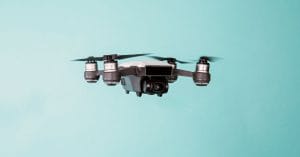
Danish police admit many reported “hostile drones” turn out to be aircraft or stars, yet the country has imposed nationwide flight bans and framed incidents as hybrid attacks, leaving both travelers and locals guessing what they are actually seeing in the sky.
When Danish soldiers on patrol reported lights hovering in the night sky near military installations this spring, the Transport Ministry invoked national security and grounded all civilian drones for five days. Violating the ban could land you two years in prison. Yet the Danish National Police quietly acknowledge on their crisis page that they receive a large share of calls about suspicious drone activity that later turn out to be ordinary aircraft, stars, or other celestial objects.
That admission is not making headlines, but it should. For anyone living in or traveling through Denmark, it raises an uncomfortable question: how many of the closures at Copenhagen Airport, Aalborg, and military bases over the past year were triggered by actual hostile drones versus distant aircraft lights?
Red and Green Means Plane, Green Alone Means Maybe Drone
Banedanmark, which runs Denmark’s rail network, has published an internal checklist for staff assessing drone reports. The guidance is explicit: if you see both red and green lights together, it is probably an aircraft. Only a single green blinking light may indicate a drone following night flight procedures. The police page echoes this, urging callers to observe the object long enough to rule out planes or celestial bodies before dialing 114.

The instructions are detailed to the point of tedium. Estimate height, speed, whether it carries objects, and the presence of nearby infrastructure. Film long sequences without zooming. Note serial numbers if you spot them. This level of granularity reflects how hard it is to tell a quadcopter from a Cessna 60 kilometers away in the dark.
The Security Theatre Problem
Denmark has framed these incidents as a hybrid attack. Prime Minister Mette Frederiksen has pointed the finger at Russia. Transport Minister Thomas Danielsen defended the September flight ban by saying the country cannot tolerate foreign drones causing uncertainty, especially with EU leaders arriving for a summit. Germany has promised counter-drone systems using radar and acoustic sensors.
The political rhetoric is urgent. The operational reality is messier. There is no public breakdown of how many sightings were confirmed as hostile drones versus misidentifications. Police do not publish statistics on how often zoomed iPhone footage of a distant airliner sparked an airspace closure. That gap between the hybrid attack narrative and the we-get-lots-of-false-positives fine print leaves room for both overreaction and complacency.

I have watched this pattern unfold since moving here. Denmark takes security seriously, and that is mostly a good thing. But when soldiers are encouraged to report lights in the sky and the public is told better one call too many, the system becomes vulnerable to its own success. Every distant landing light becomes a potential threat.
The Expat Blind Spot
For internationals, this is compounded by language barriers. The detailed guidance from police and Banedanmark exists only in Danish. Most foreigners do not know to call 114 instead of 112 for non-emergency drone reports. They may not realize that red plus green equals plane, not drone. Airports serve a disproportionate number of non-Danish citizens. Around 30 percent of passenger nights in Danish accommodation in 2023 were booked by foreigners, yet there is no English-language outreach on how to assess and report suspicious objects.

This is not a trivial gap. If you are standing on the platform at Bornholm airport or waiting for a train near a military zone and you see something odd, you are part of the sensor network whether you speak Danish or not. But the instructions assume you do.
What Actually Works
The practical takeaway is simple. Before you call about a drone, watch it for more than a few seconds. If it has red and green navigation lights, it is almost certainly a plane. If it hovers or moves erratically with only a single blinking green light, then you may have something worth reporting. Film it with a stable background, no zoom. Note nearby infrastructure. Call 114, not 112, unless someone is in immediate danger.

Denmark is not alone in wrestling with drone anxiety. Gatwick, Frankfurt, and Oslo have all shut down operations over ambiguous sightings that were never confirmed. The difference here is the speed with which the political class has embraced the hybrid threat frame, even as the operational guidance quietly admits how often people mistake stars for surveillance.
I do not doubt that some of the reported incidents are real. But until Denmark publishes transparent statistics on confirmed hostile drones versus false alarms, it is hard to know whether we are living through a genuine security crisis or a very expensive misunderstanding. In the meantime, look for the lights. Red and green together means you can relax. Green alone means maybe grab your phone and start filming.