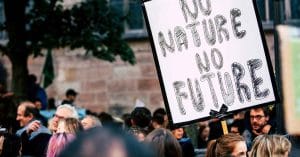
Denmark’s leading outdoor recreation council is calling on the next government to make nature a national priority, arguing that vast investments in nature restoration and drinking water protection should deliver tangible benefits for everyday Danes, not just biodiversity targets on paper.
Friluftsrådet, which represents outdoor and recreation organizations across Denmark, has laid out a four point plan for the incoming government. The message is clear: if Denmark is going to spend billions on new forests and wetlands to meet EU biodiversity goals, people need to feel it when they go for a walk.
I have watched this debate unfold over years of living here, and something fundamental has shifted. Nature policy used to be a niche topic, squeezed between agriculture lobbies and environmental groups. Now it is creeping toward center stage, driven by EU mandates, private foundation money, and a growing recognition that access to nature affects public health and quality of life.
The Stakes Are Higher Than You Think
Denmark has committed to protecting 30 percent of its land and sea by 2030, with 10 percent under strict protection, as part of the EU Biodiversity Strategy 2030. That builds on the global Kunming Montreal framework agreed at COP15. The problem is that Denmark currently has very little truly wild or strictly protected nature compared to other Nordic countries.
Multiple assessments, including a recent Nordic biodiversity review, conclude that while Denmark has strong research capacity and institutional frameworks, the actual state of nature remains poor. Habitats are fragmented. Species are declining. Political targets have not been met.
Friluftsrådet’s chairperson Dorthe Mølvig argued in a recent opinion piece that nature investments must deliver measurable returns in public welfare through better nature experiences for all Danes. She cited analysis from the climate think tank Concito estimating an annual added value of 17 billion kroner if nature experiences are integrated into the green transition, plus potential billions saved in healthcare costs through nature based disease prevention.
Four Concrete Demands
The council wants drinking water protection combined with recreational groundwater parks near cities. Four out of five Danes want at least half of the planned 250,000 hectares of new forest to be publicly accessible, according to surveys by the foundation Realdania. Yet the current Green Tripartite Agreement contains very few initiatives guaranteeing public access to new nature areas.
Friluftsrådet also calls for a unified outdoor recreation law modeled on Norway’s legislation, which consolidates access rights and promotes health and wellbeing. Right now, the right to experience nature in Denmark is scattered across multiple laws, making it a byproduct rather than a goal in itself.
The third demand is nature programs for all children in schools and institutions, integrating outdoor education and introducing kids to local outdoor associations. Mental health challenges among young people have become a political flashpoint, and Mølvig frames more nature and stronger community ties as part of the solution.
Finally, the council wants public access guaranteed in half of all new forests, with public pathways and trail networks in every new nature area, plus a significant increase in publicly owned forest. This is where ideology meets dirt roads and property rights, and where the incoming government will face tough choices.
Money Talks, and Private Foundations Are Talking Loud
While politicians negotiate, private money is reshaping the landscape. The Novo Nordisk Foundation awarded 200 million kroner in 2024 to the Danish Nature Foundation to purchase and permanently protect new nature and forest areas. That is not pocket change. It is land that will be taken out of production and managed for biodiversity and public access.
Meanwhile, the energy company European Energy struck a deal with the Danish Society for Nature Conservation requiring the company to buy nature land alongside new solar and wind parks. For every 100 hectares of solar panels, five hectares of nature. For every wind turbine, one hectare. The agreement tries to flip the script on the conflict between green energy and nature protection.
These partnerships raise questions I have heard debated in Danish living rooms and town halls. Are private foundations stepping up where the state has failed, or are they letting politicians off the hook? Does a wind farm plus nature offset count as progress, or is it greenwashing with extra steps?
The Land Use War No One Wants to Name
Denmark is one of the most intensively used landscapes in Europe. There is very little room left, and every hectare claimed for nature is a hectare not used for farming, energy, housing, or infrastructure. Agricultural interests warn that rapid nature restoration without adequate compensation will squeeze farmers and rural communities. Energy sector leaders point to the urgent need for large areas for solar and wind to meet climate targets.
Nature national parks and untouched forest projects have sparked local resistance, partly over concerns about animal welfare in rewilding projects with large grazers, partly over fears that wild nature with fences and roaming cattle will feel less accessible or safe to people who want to hike, ride horses, or walk their dogs.
Friluftsrådet’s emphasis on nature joy tries to bridge this gap, but the tension is real. More wild nature can enhance the experience for some and alienate others who prefer managed, predictable landscapes.
What a New Government Can Actually Do
The tools exist. Denmark has planning laws, nature protection legislation, conservation orders, Natura 2000 frameworks, state land purchases, and subsidy schemes for private landowners. A new government can tighten protection lines, increase funding for land acquisition and habitat restoration, or set binding targets for species recovery.



![How to Move to Denmark as an American [UPDATED 2025]](https://thedanishdream.com/wp-content/uploads/2024/12/HowtoMovetoDenmarkfromUSWithoutStress-300x157.png "How to Move to Denmark as an American [UPDATED 2025]")