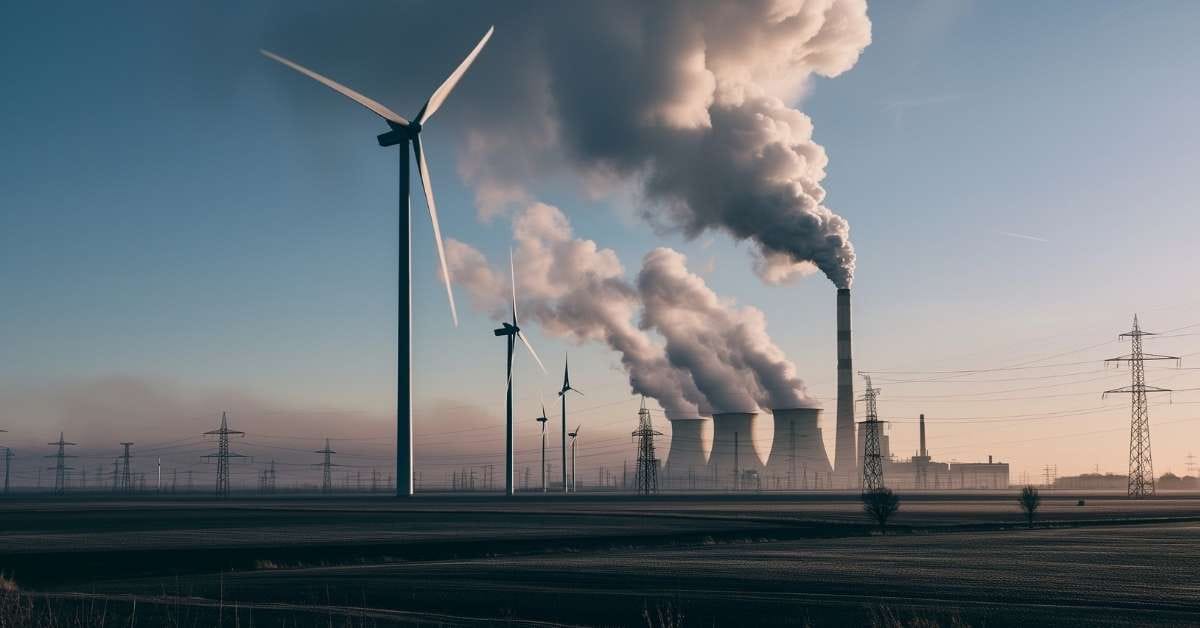
Denmark’s leading climate think tank is calling for an urgent independent audit of the country’s climate policy, warning that the government may be dangerously overestimating its progress toward the legally binding 70 percent reduction target by 2030.
Concito, one of Denmark’s most respected green think tanks, has issued a blunt message to politicians. Get a reality check on climate efforts now, before it is too late. The call comes as the current government works through policy negotiations, and the timing is deliberate. Denmark’s climate commitment is what Concito chief economist Torsten Hasforth calls a megaproject over all megaprojects. And like all megaprojects, it carries the risk of optimism bias and strategic misrepresentation.
According to Concito, the problem is not just political spin. It is structural. Denmark has never undertaken a transformation of this scale before, and there is no second chance. Unlike building a bridge where you can apply lessons learned next time, climate policy has one shot at getting the 2030 target right. The country is experimenting with unproven technologies at industrial scale, betting billions on carbon capture and pyrolysis, and assuming deployment speeds never before seen in history.
The Numbers Do Not Add Up
The Danish Climate Council, an independent body tasked with monitoring progress, has repeatedly warned that current policies are only conditionally sufficient to meet the target. Concito goes further. Its analysis identifies multiple areas where projected emissions reductions are unlikely to materialize. The carbon capture and storage tender, for example, is now expected to deliver 1.25 million tons of CO2 reductions by 2030, not the 2.3 million tons previously assumed. Feed additives for cows remain highly uncertain. Wetland restoration and afforestation are proceeding far too slowly.
Then there are the refineries. Denmark’s projections assume they will sharply reduce emissions by 2030. There is no evidence this will happen. These are not small miscalculations. They are foundational gaps that could leave Denmark scrambling in the final years of the decade.
I have watched Denmark tout its climate leadership for years. The rhetoric is polished and the ambition genuine. But ambition without delivery is just public relations. The Climate Act commits Denmark to a 70 percent reduction by 2030 compared to 1990 levels. That is a legal obligation, not a suggestion. If the government misses that target, it will face not only domestic embarrassment but also EU infringement procedures and potentially costly quota purchases from other member states.
Agricultural CO2 Tax Remains a Flashpoint
Agriculture is the elephant in the room. It accounts for roughly a third of Danish greenhouse gas emissions. Political negotiations over an agricultural CO2 tax have dragged on for years, with farming organizations demanding generous compensation and environmental groups insisting that without a robust tax, Denmark cannot close the gap cost effectively. The current subsidies for biogas and farm modernization have delivered modest results at best. In some cases, they have simply locked in intensive livestock production rather than transforming it.
The debate over green subsidies extends beyond agriculture. Denmark has launched multi billion kroner support schemes for Power to X, carbon capture, and green industry. These schemes are politically popular and align with EU state aid rules under the Green Deal. But the question Concito raises is fundamental. Are they delivering actual emissions reductions, or are they expensive industrial policy dressed up as climate action?
The EU Framework Tightens
Denmark does not operate in a vacuum. EU regulations including the Effort Sharing Regulation, the revised Emissions Trading System, and new transport and building sector caps set binding annual limits. Denmark must comply not only with its own 70 percent target but also with these EU ceilings. Failure means financial penalties or expensive quota trading. The revised EU framework leaves less room for creative accounting or optimistic projections. Every ton of CO2 counts, and every shortfall will have consequences.
The government’s response to these warnings has been measured. Ministers emphasize recent agreements and investments in renewable energy, offshore wind, and grid expansion. They argue that Denmark remains a green frontrunner and that progress is solid. But frontrunner status is not the same as being on track. Concito and the Climate Council are not asking for more cheerleading. They are asking for an honest, independent audit.
What a Real Audit Would Look Like
A proper climate audit would assess every major policy instrument. It would calculate the real cost per ton of CO2 reduced, identify measures that are underperforming, and expose where political compromises have diluted effectiveness. It would stress test assumptions about technology rollout, behavioral change, and economic growth. It would ask uncomfortable questions about whether some subsidies are primarily business support rather than climate tools.
This is not just technocratic box ticking. It is about accountability. Danish taxpayers are funding this transformation. Expats living here, myself included, watch the bills rise for energy, transport, and housing in the name of climate action. We deserve to know whether the money is being spent wisely or wasted on politically convenient but ineffective schemes.
The risk is that without a critical review now, the realization of failure will drip slowly into public consciousness over the next few years. By then, it will be too late to course correct before the 2030 deadline. Politicians will scramble, blame will fly, and Denmark will either miss its target or resort to expensive last minute fixes. That is not leadership. That is crisis management disguised as policy.
Sources and References